
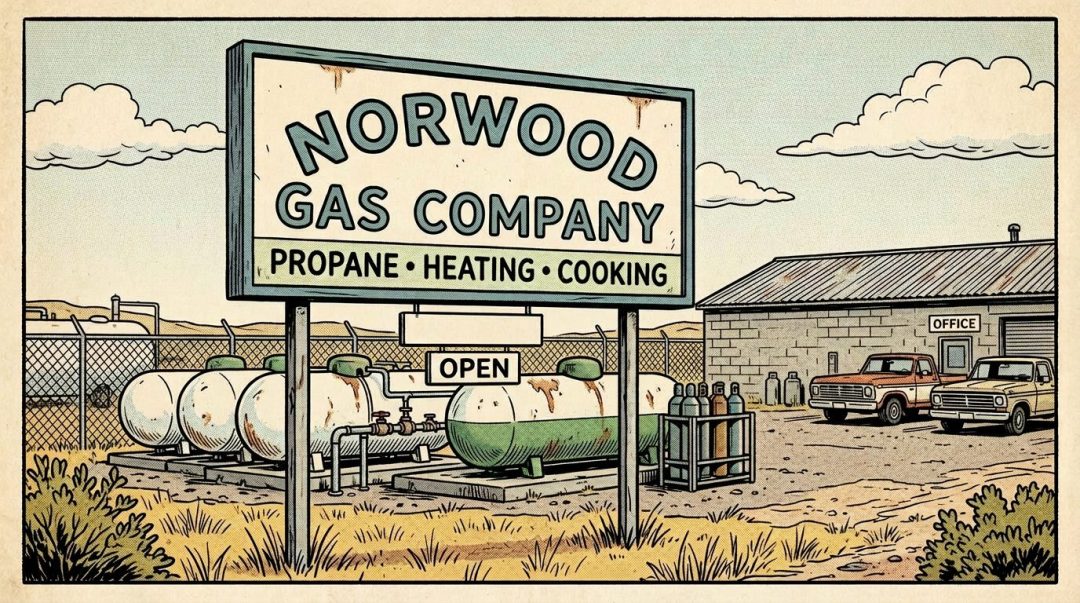
The Norwood Gas Co. is moving forward with plans to significantly expand its storage capacity to meet the projected heating demands of the town.
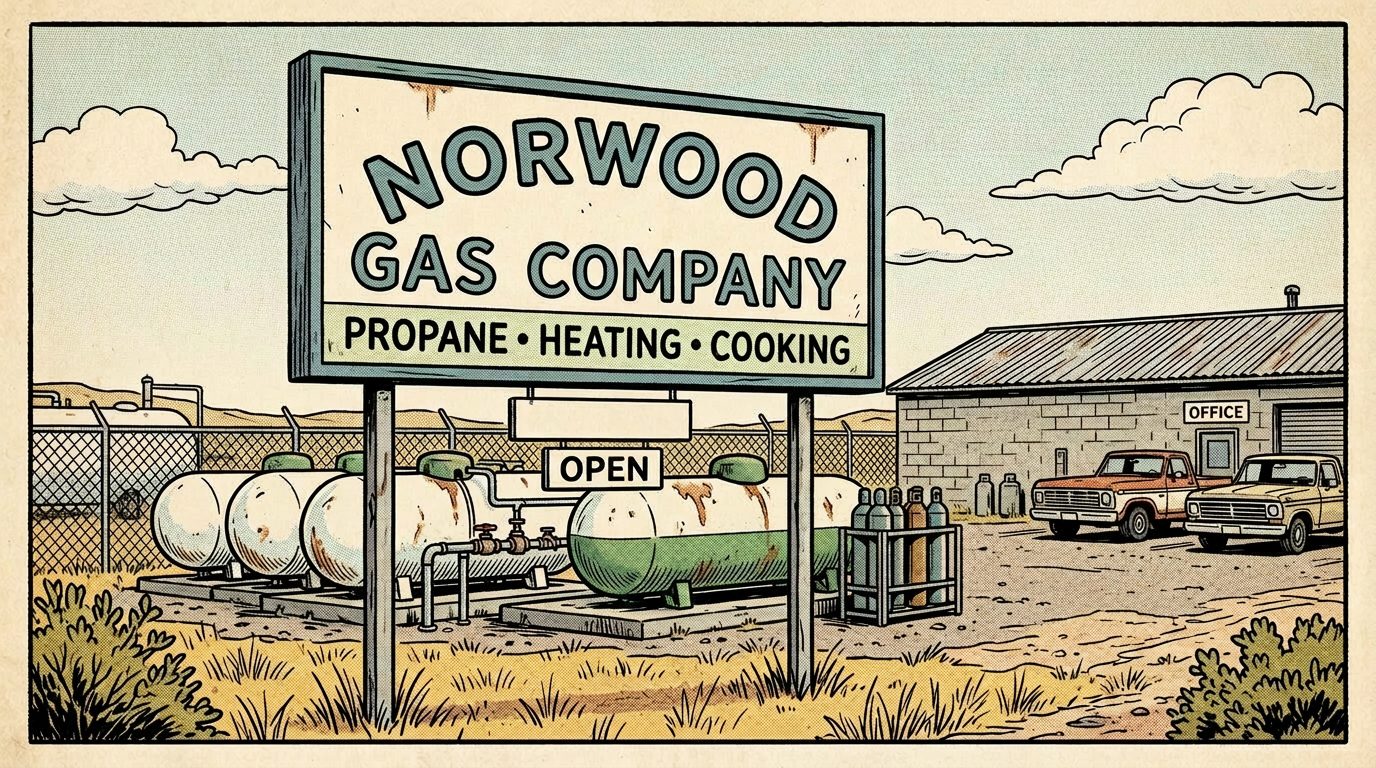
On July 08, 1970, it was announced that the state Department of Public Utilities (DPU) has scheduled a public hearing to review the company’s petition for the construction of two additional propane gas storage tanks. The hearing will take place on July 28, 1970, at 10 a.m. in room 210 of the Leverett Saltonstall Building in Boston. The proposed expansion is slated for the company’s seven-plus acres of land located off Dean Street, near Pleasant Street.
Richard H. Morrison, vice president and general manager of Norwood Gas, stated that if the petition is approved, the new tanks will secure the town’s gas supply for many winters to come. The company currently utilizes two tanks that were installed around 1957, which have served the community adequately for thirteen years. Mr. Morrison expressed a desire to have the two new structures operational by October at the latest to ensure sufficient supply for the upcoming heating season. Describing the appearance of the new tanks, he noted they would be approximately ten to twelve feet in diameter, characterized by a rounded, elongated shape he likened to a “cigar or a dirigible.” Addressing potential safety concerns regarding the liquid propane, Mr. Morrison remarked that the storage would be “like gasoline in terms of volatility.” He further emphasized that the gas company adheres to rigorous established building codes and storage requirements, often exceeding the necessary safety standards. While historical practice dictated that gas companies apply for storage licenses through local authorities, Mr. Morrison noted that current procedure involves petitioning the DPU for a permit to effectively exclude the land from local zoning laws—a process now being followed by other utilities in Massachusetts, such as the Mystic Valley Gas Co. and the Northampton Gas Co.
In a separate matter, the Building Code Board of Appeal met to discuss a variance request filed by Nassau Gardens Inc. regarding an apartment development on Neponset Street. Representing the owners, George Buehler sought a variance from the town’s building code, specifically concerning the framing of the first story of a 32-unit building. Michael Scully of the Norwood Construction Co., the general contractor for the project, testified that the deviation from the code occurred due to an “oversight.” The builders argued that the town’s requirement for “mortise and tenon” framing is no longer commonly used in modern Massachusetts building codes and results in excessive costs. Mr. Scully noted that the company had intended to follow the code but that correcting the current structure would require ripping out the first-floor walls.
During the hearing, Appeals Board Chairman James J. Drummey and board member George M. Eysie questioned the developers regarding the safety and structural integrity of the substitute joints. Mr. Eysie noted that the developer had received a prior special permit from the board with the express stipulation that the town building code be followed. John E. Reardon, chairman of the appeals board, stated that he would like to see the state building code board review the matter, as he believed state regulations might supersede local requirements regarding design movements and stresses. The board took the matter under advisement, with a final decision expected within ten days.
Archival Note: This article has been dynamically reconstructed from the original public record print archives of the Patriot Ledger
More…
-
Average Water and Sewer Bill in Norwood to Increase by Three Dollars Monthly-August 12, 1993
Norwood water and sewer bills will rise 8.8 percent, adding $3 monthly to average bills due to Boston Harbor cleanup costs and lower consumption.

-
Electricity Receipts Could Soften Tax Blow-July 15, 1988
Norwood officials reviewed the town’s financial outlook and found a rare bright spot amid rising municipal costs. Norwood officials reviewed the town’s financial outlook and found a rare bright spot amid rising municipal costs. During a discussion on tax pressures and revenue projections, selectmen noted that receipts from the town’s electricity department were trending higher…
-
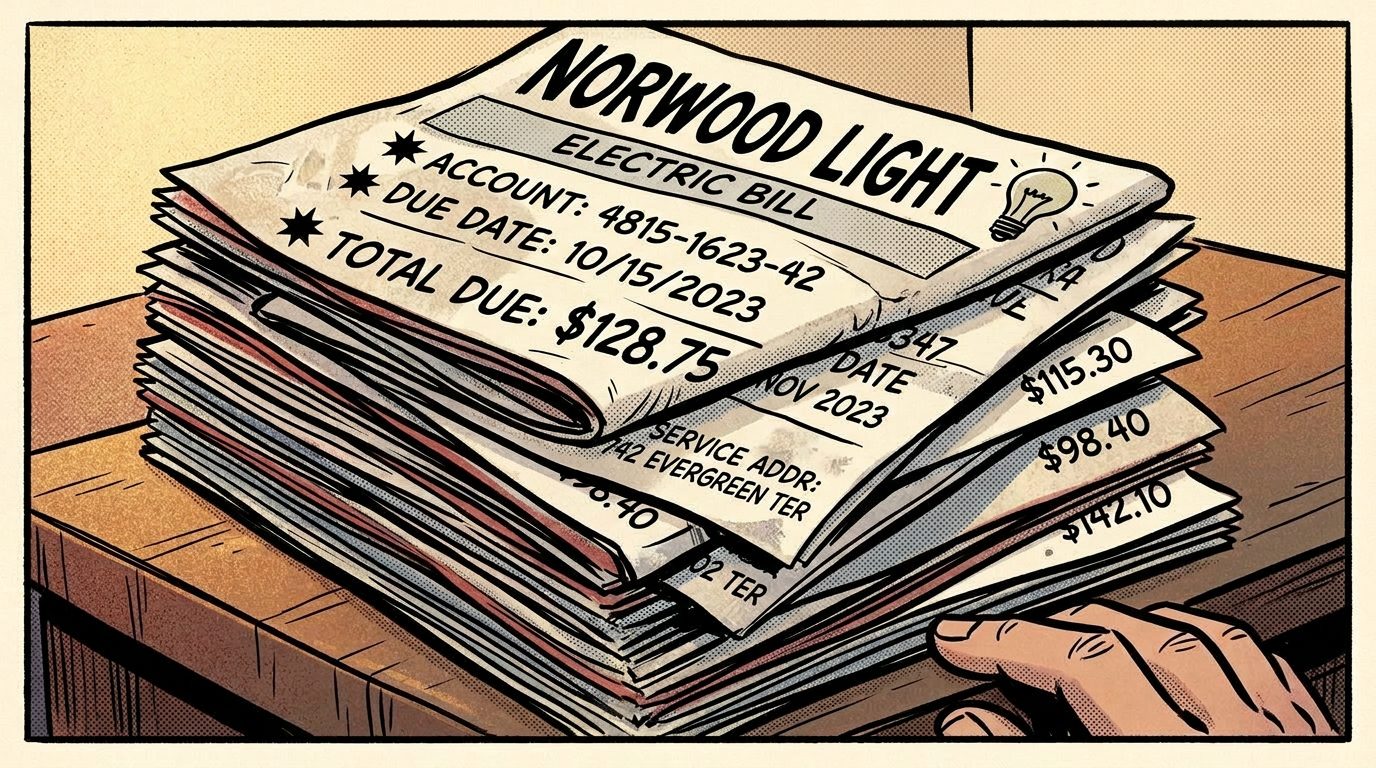
Norwood Light Department to Absorb Proposed New England Power Rate Increase, Protecting Local Ratepayers-August 24, 1983
Norwood will absorb a $450,000 New England Power rate hike without raising local electric bills, while zoning officials back a new downtown restaurant and Masoneilan declines closure talks.
-
Norwood to Comply with Order on Sewers-July 30, 1983
Norwood town officials and Attorney General Francis X. Bellotti reached a 1983 agreement to reduce illegal sewer connections and protect Boston Harbor.
-
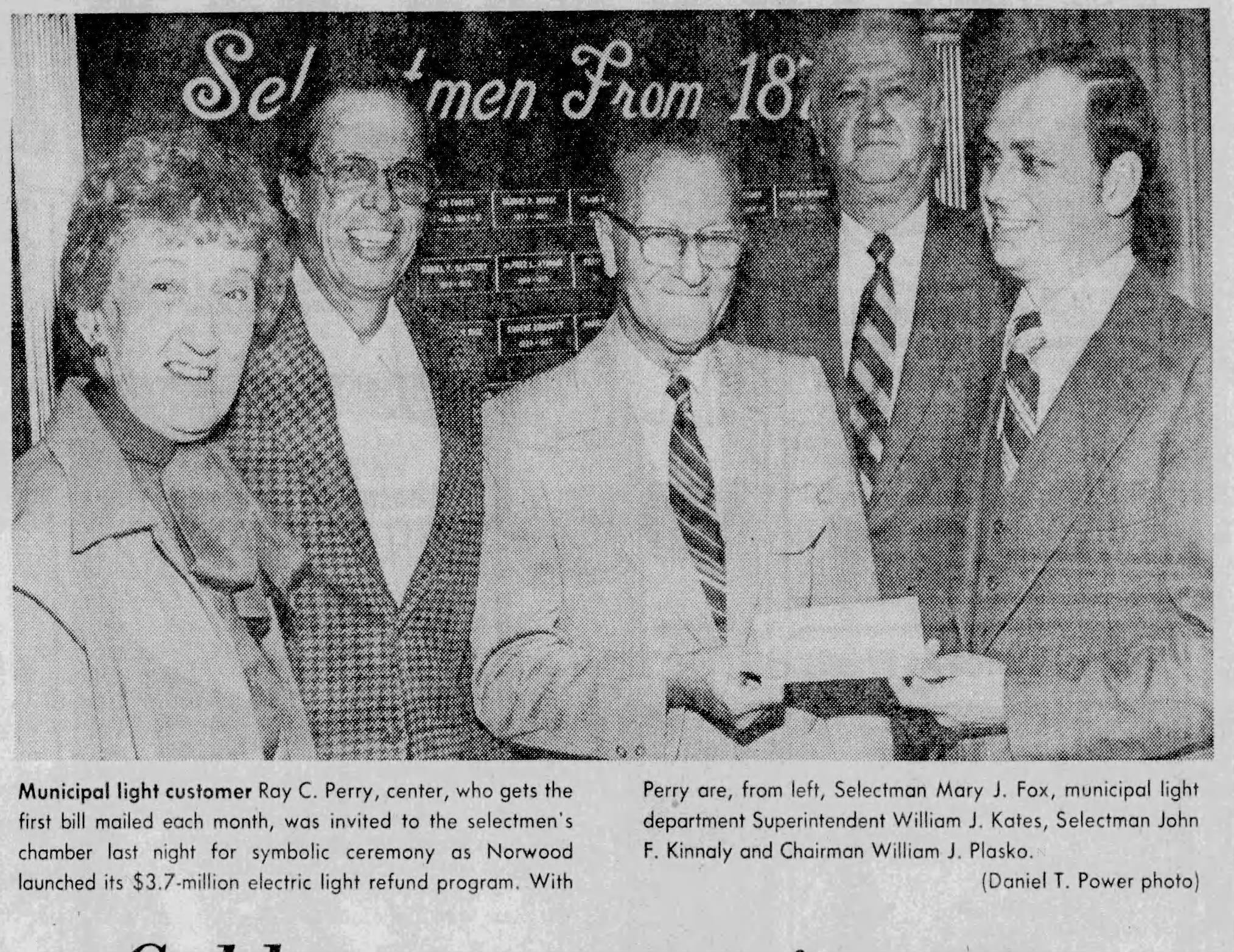
First to Get Bill is First to Get Edison Refund-October 8, 1980
Norwood Light Department begins distributing $3.7 million in Boston Edison overcharge refunds to local residents, averaging $118 for residential customers.
-
Norwood Implements Mandatory Water Conservation Amid Severe Drought and Infrastructure Pressures-July 23, 1980
Town Manager John J. Carroll has been granted emergency authority to impose a water ban as a dry summer strains Norwood’s water infrastructure.

-
Water Rate Study Committee Recommends 20% Hike-July 11, 1973
Norwood Water Rate Increase Proposal On July 11, 1973, the Norwood Water Rate Study Committee presented a formal report to the board of selectmen recommending a 20 percent across-the-board increase in water rates for both residential and industrial consumers. ⠀ C. Roger Pearson, chairman of the study committee, presented the findings, which were prompted by…
-
Tie Vote Blocks Elimination of Town Water Restrictions in Norwood-September 8, 1971
A 2-2 tie vote by Norwood selectmen keeps lawn-sprinkling and car-washing water bans in place, pending formal guidance from the Metropolitan District Commission.

-
Representative David Ahearn Opposes Boston Edison Company Electricity Rate Hike-July 29, 1970
Representative David Ahearn led opposition against a Boston Edison Company rate hike that threatened Norwood residents with $300,000 in added costs.
-
DPU Schedules Public Hearing On Firm’s Gas Request-July 8, 1970
Discover the 1970 legislative and municipal challenges in Norwood, from a critical gas supply expansion off Dean Street to a building code dispute on Neponset Street.
Discover more from Norwood Historical Society
Subscribe to get the latest posts sent to your email.