
Veteran Commuter Rail Advocate Warns MBTA’s $500 Million Southwest Corridor Project and Five-Year Back Bay Station Closure Threaten Franklin Line Service
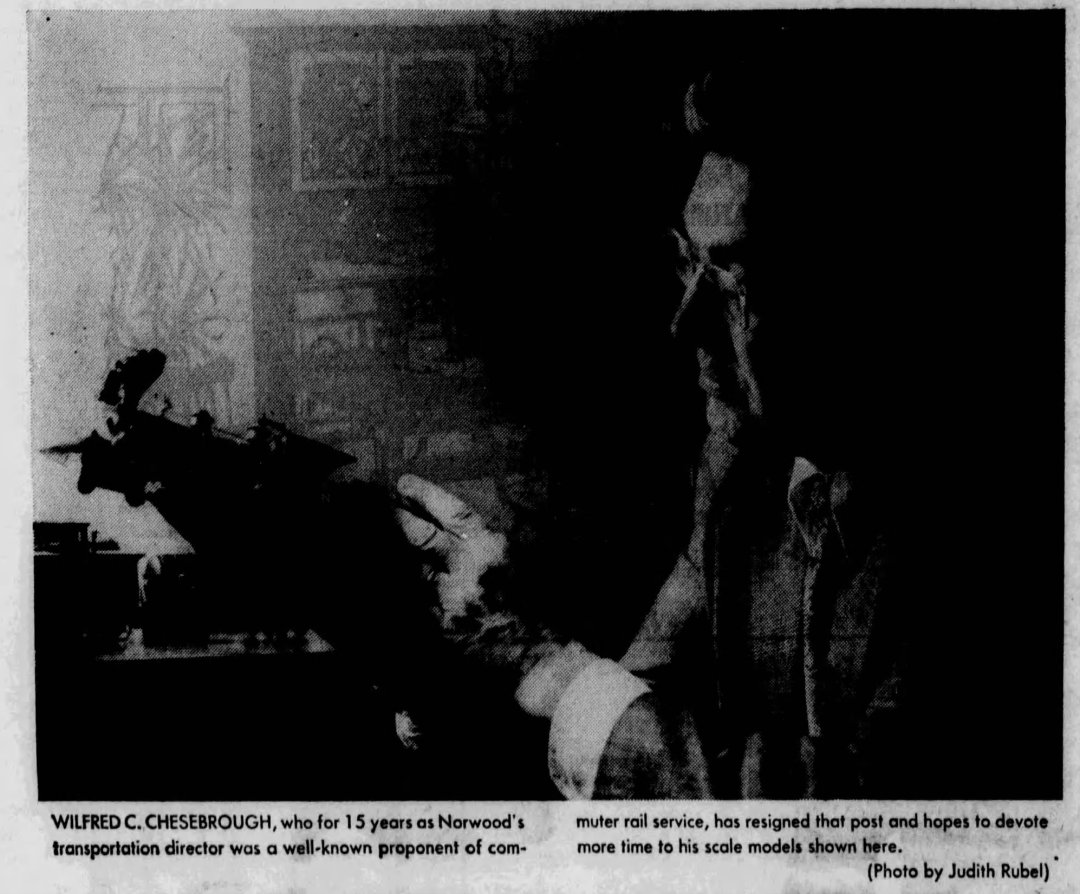
NORWOOD – After 15 years serving as Norwood’s volunteer Transportation Director, Wilfred C. “Bill” Chesebrough, 50, stepped down from the post in November 1976 to spend more time with his family and devote his energy to building intricate 1:48 scale model trains on his Neponset Valley Railroad. Reported in The Patriot Ledger on Tuesday, November 23, 1976—accompanied by a Judith Rubel photograph showing Chesebrough alongside his handcrafted models—the departing official reflected on a decade and a half of regional transit advocacy while issuing a stark warning for local rail riders.
A native of Stonington, Connecticut, who grew up along the main line, Chesebrough emphasized that his devotion to railroading was rooted in engineering logic rather than nostalgia: “My interest in trains is not romantic or nostalgic but is based on logic and practical considerations. The steel wheel on a steel rail is the best way to move things.” Looking ahead, however, the father of four predicted “ominous surprises in store for rail commuters in the next five to ten years.” He pointed to long-stalled federally funded track improvements along the Franklin Line through Norwood and warned that the MBTA’s nearly $500 million Southwest Corridor reconstruction—which called for rebuilding the Orange Line alongside the Penn Central main line, rerouting Franklin Line trains at Readville onto the Midland Branch into South Station, and closing Back Bay Station for five years—could stretch into a decade-long disruption. Because 40 percent of the Franklin Line’s 5,000 daily commuters disembarked at Back Bay, Chesebrough feared plummeting ridership would give the MBTA a financial pretext to abandon the line altogether, while turning the corridor into “a dusty, noisy strip mine” and delaying high-speed Boston-to-New York rail service.
Chesebrough counted his work on Governor Francis Sargent’s Boston Transportation Planning Review—formed after the cancellation of the Interstate 95 extension into Boston—as his proudest achievement for focusing state planners on commuter rail. Aside from a brief hiatus between 1972 and 1974 following a dispute with a former train transportation committee, Chesebrough had served continuously until selectmen invited him back in 1974; the Board of Selectmen planned to present him with the Town Seal two weeks later upon his return from an out-of-town trip. Hoping to advise his eventual successor, Chesebrough turned his focus to “freezing history” through his 30 O-scale models—including an 1869 Virginia City, Nevada gold-hauling locomotive—while challenging modern planners: “We ought to have the brains today to seduce people out of their cars.”
1976 Southwest Corridor Project Cost Adjusted to 2026 Dollars & MBTA Franklin Line Context
Inflation-adjusted using U.S. Bureau of Labor Statistics CPI data ($1.00 in Nov. 1976 ≈ $5.68 in 2026)
| 1976 Regional Transit Capital Project | 1976 Estimate | 2026 Equivalent |
|---|---|---|
| MBTA Southwest Corridor / Orange Line Relocation Estimate | ~$500,000,000 | ~$2,840,000,000 |
Archival Note: This article has been dynamically reconstructed from the original public record print archives of the Patriot Ledger
-
Norwood Resident Anna M. Roundy Leaves $125,000 in Charitable Bequests from $500,000 Estate-November 16, 1966
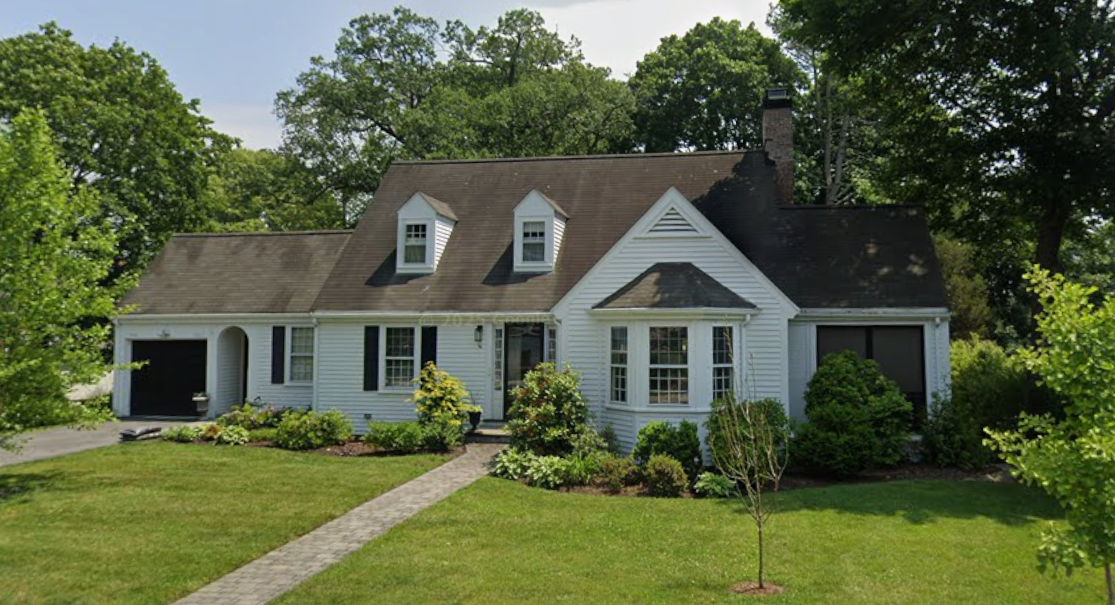
Probate records allowed by Judge James F. Reynolds revealed that Norwood resident Anna M. Roundy left $125,000 to charities, including $20,000 to Norwood Hospital and gifts to the Norwood Historical Society and Women’s Club.
-
Norwood Peace Corps Returnee John A. Ahearn Recalls Dominican Republic Service and Grassroots Co-Op Development-October 6, 1964
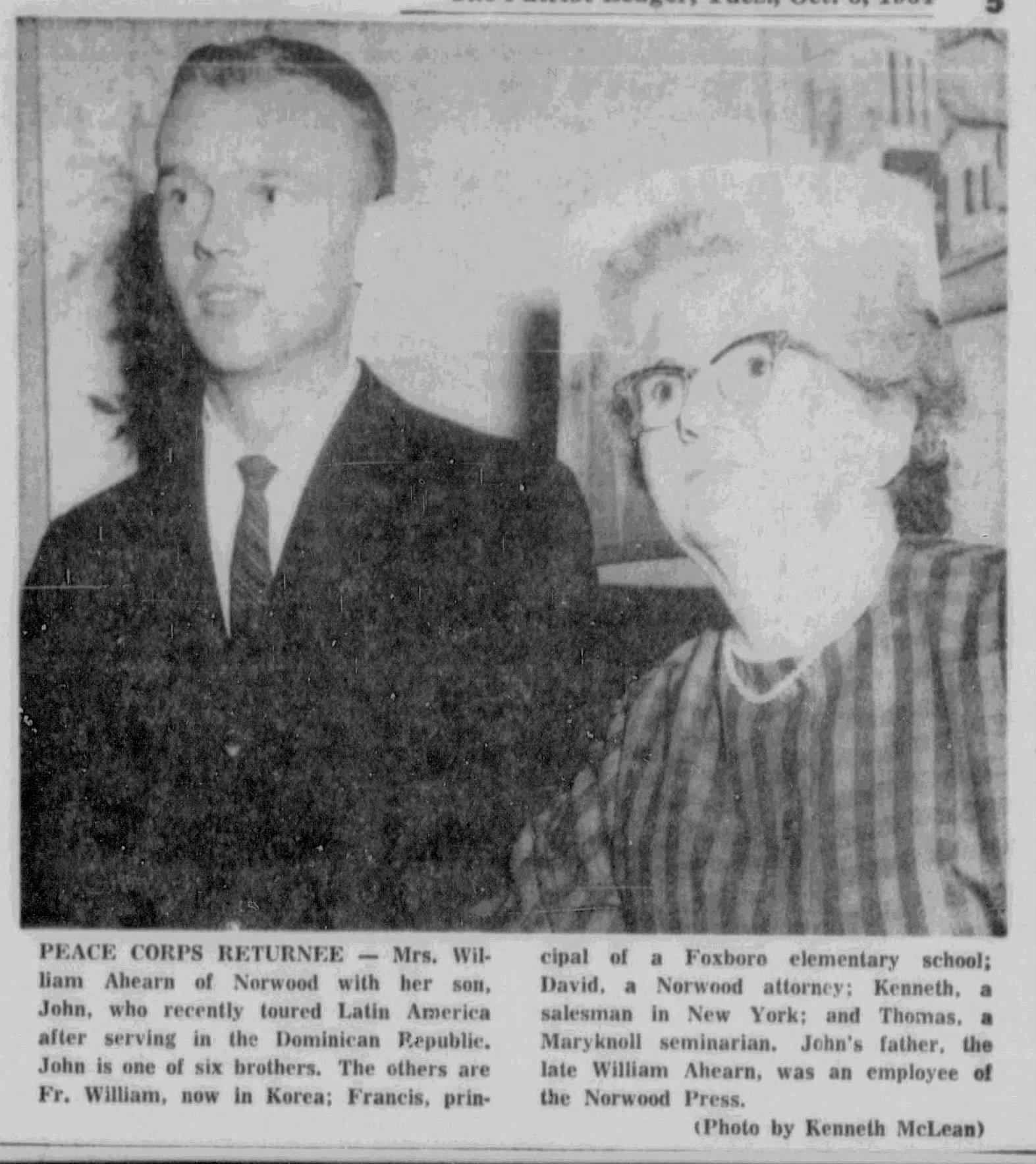
Norwood’s John A. Ahearn returns from an 18-month Peace Corps assignment in the Dominican Republic, detailing grassroots cooperatives and economic development.
-
Norwood Man Named New Dean At Brandeis University-July 16, 1963
Formerly the State Budget Commissioner, Morrissey takes on oversight of student services while continuing to lecture in politics.
-
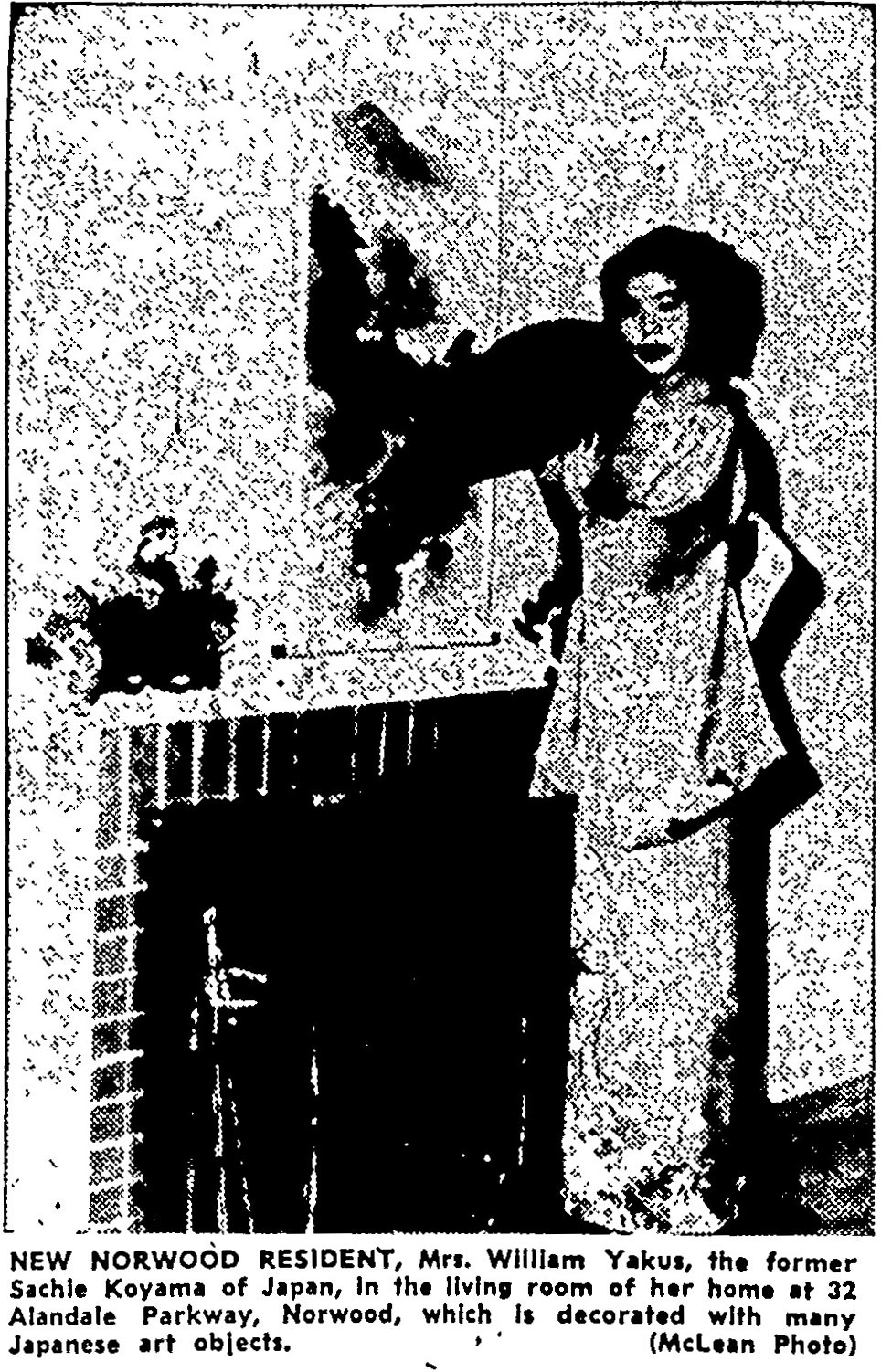
Japanese Bride Happy in New Norwood Home-November 3, 1956
Former Military Police Sergeant William Yakus and his bride Sachle have settled into an Alandale Parkway bungalow after marrying in Yokohama and moving to Norwood.
-
Norwood Welcomes New Residents Via Welcome Wagon-August 25, 1955
The Norwood Messenger welcomed numerous new families to town who were greeted in person by the official Welcome Wagon Hostess.

-
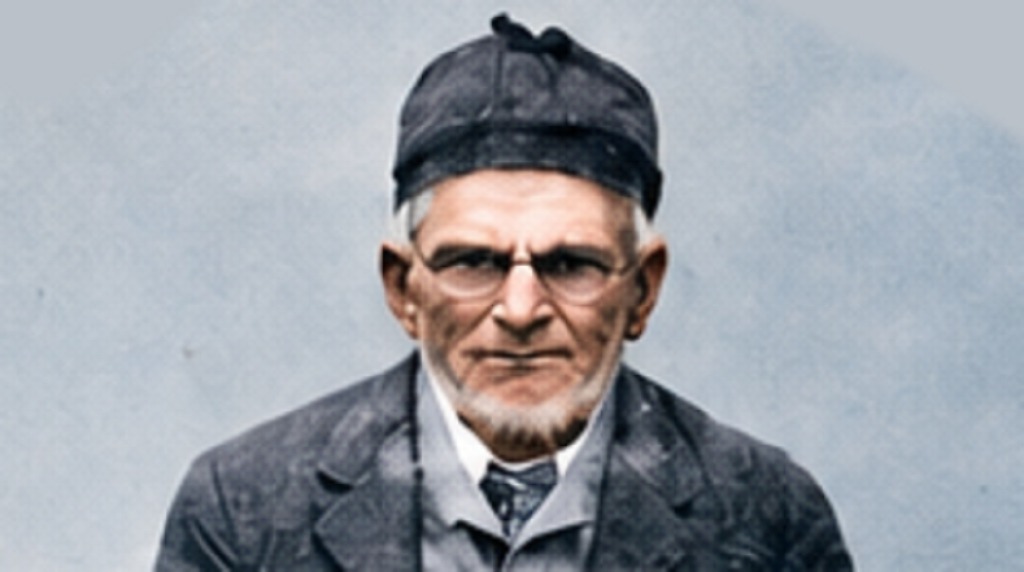
Jabez Sumner of Norwood Remembers Old Stage Coaching Days, And Relates Interesting Reminiscences-This Day In Norwood History-June 22, 1902
CHAMPION OF MODERN RAILROADS. One of the unique and interesting characters in Norwood is Jabez Sumner, who lives alone in Nahatan St, a very pretty residential thoroughfare, and who, for two or three generations, has been one of the best-known men in the village. He leads in part the life of a hermit, but takes…
Discover more from Norwood Historical Society
Subscribe to get the latest posts sent to your email.