
Committee Formed to Study Need for Second Junior High School
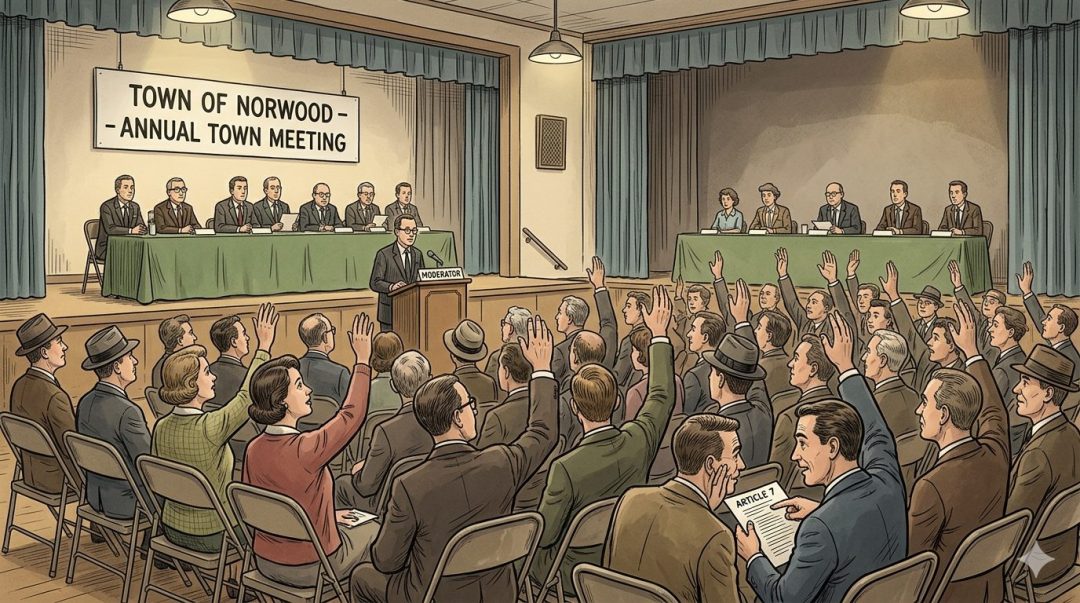
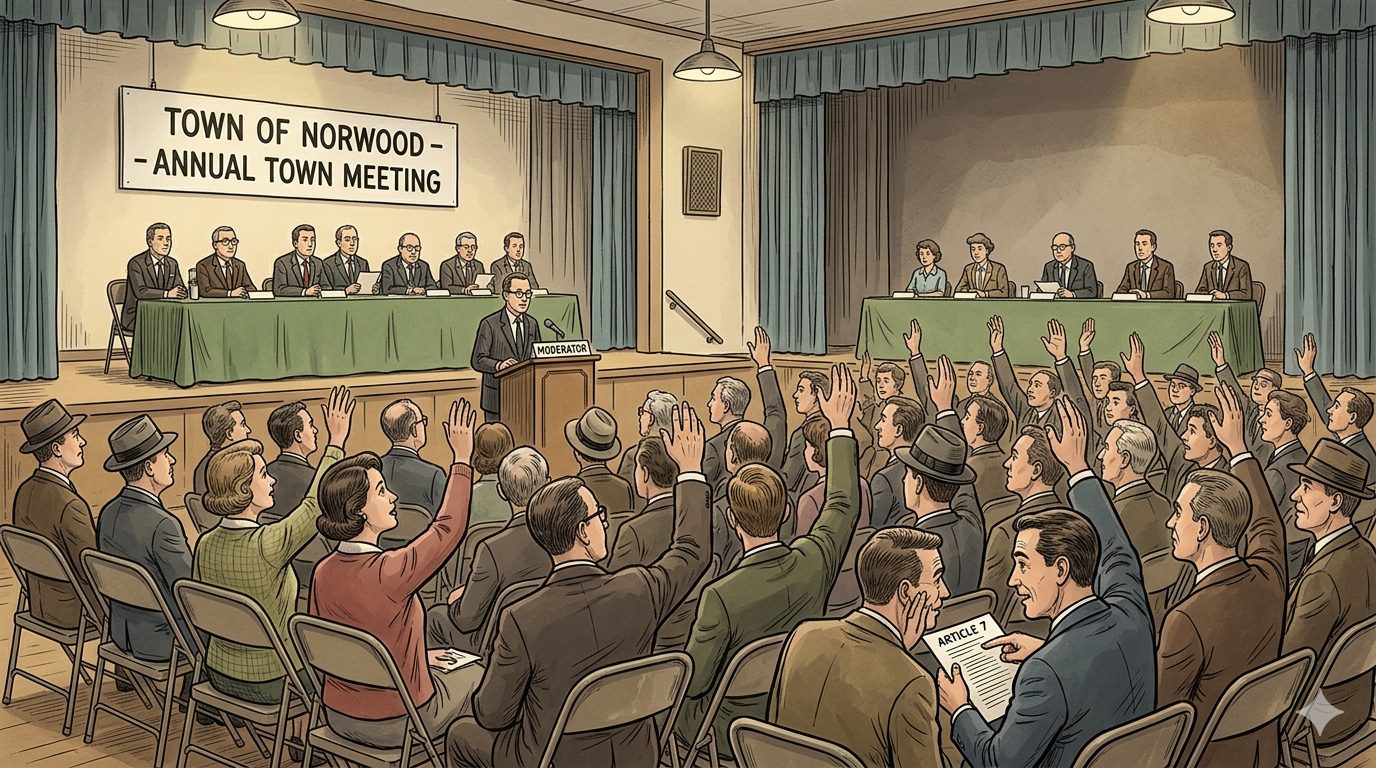
On this day in 1964, during an adjourned session of the annual Norwood Town Meeting, voters addressed one of the most critical issues facing the community: rising school enrollment. With an overwhelming majority, the body approved Article 7, authorizing the appointment of a seven-member committee to thoroughly investigate the need for a second junior high school in town.
For the past several years, the school administration and the School Committee had been signaling alarm over the increasing pressure on the existing junior high. Norwood’s population was booming in the post-war era, mirroring national trends, and the surge of students progressing through the elementary grades was now bottlenecking at the junior high level. Reports presented to the meeting highlighted classroom sizes exceeding recommended maximums, the conversion of non-traditional spaces like cafeterias and auditoriums for instruction, and a serious lack of specialized facilities like modern science labs and gymnasiums. It was clear to all that the current model was unsustainable.
The committee authorized by this vote was not merely a gesture; it was tasked with a comprehensive mandate. These seven members, to be chosen for their expertise in areas like education, municipal planning, finance, and construction, were directed to perform a full needs assessment.
Specifically, the committee was required to:
- Analyze current and projected student populations for the next 10-15 years.
- Evaluate the existing junior high school’s capacity, limitations, and potential for renovation (though previous studies suggested renovation would be both prohibitively expensive and a temporary fix).
- Identify and evaluate potential locations throughout the town for a new facility. Key considerations for site selection would include acreage, accessibility, traffic impact on surrounding neighborhoods, and proximity to major population centers.
- Determine the appropriate size and scope for a new school, including essential features such as the number of classrooms, science wings, music and art studios, and physical education facilities.
- Develop a realistic and detailed cost estimate for the entire project, from land acquisition to final construction, furnishing, and landscaping.
- Formulate recommendations regarding financing options, potentially including bond issues and potential state aid.
The approval of Article 7 was a monumental step forward for Norwood’s education system. It represented a collective acknowledgement that the future of the town’s children required significant investment and foresight. The creation of this study committee laid the groundwork for the future planning, design, and ultimate construction of a much-needed new school, ensuring that Norwood would have the modern educational infrastructure necessary to serve its growing student body for decades to come.
Discover more from Norwood Historical Society
Subscribe to get the latest posts sent to your email.