
⠀
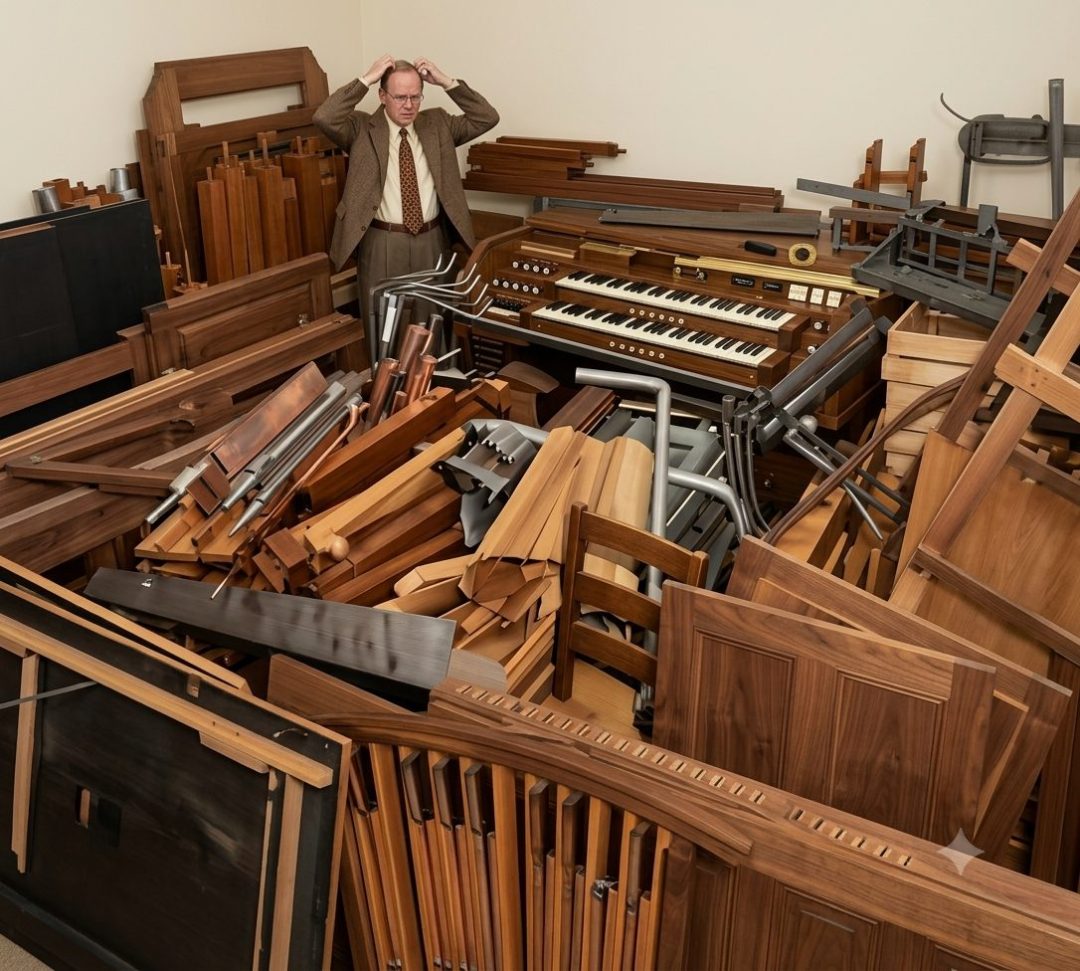
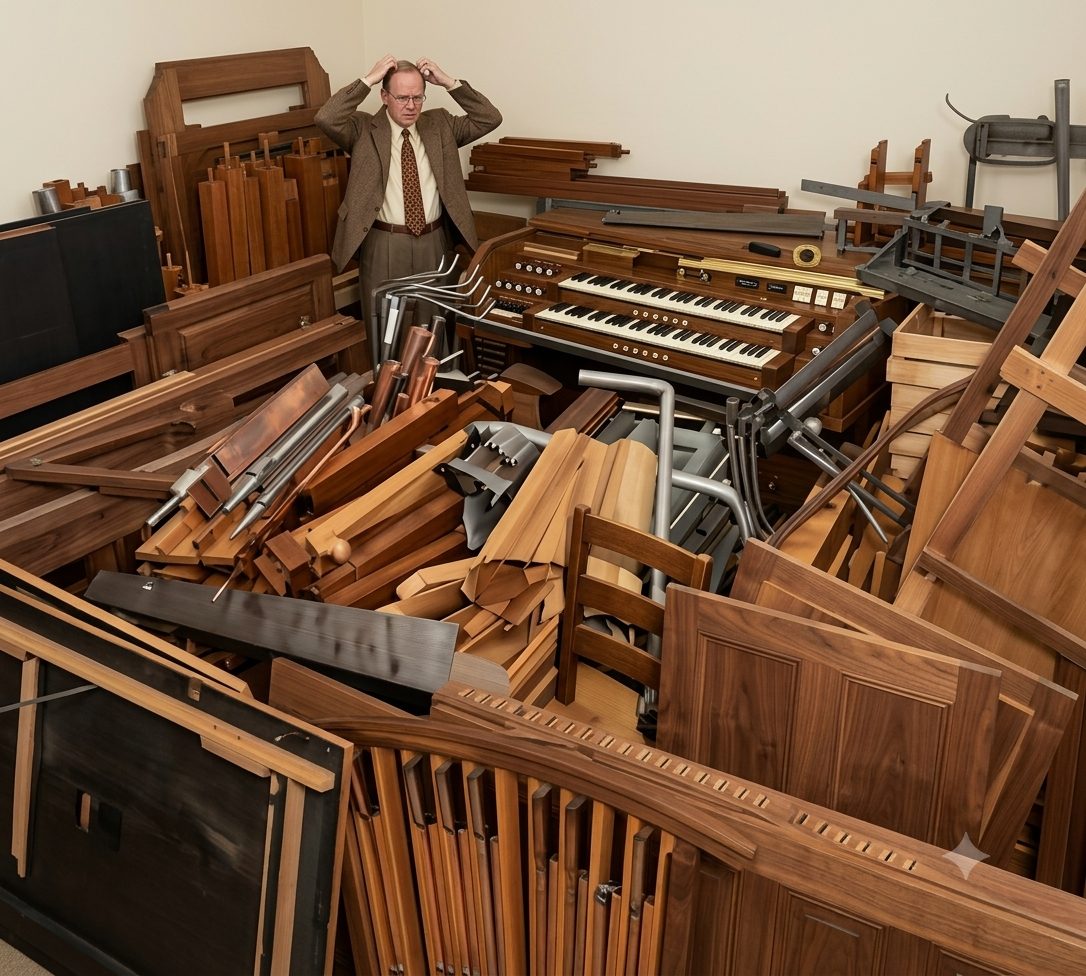
Two years ago, the organ lay disassembled, its many pieces scattered in a jumbled heap. Today, reassembled and handsome, its tones soar proud and sonorous throughout St. Catherine of Siena Church. And, thereby hangs a tale, representing the story of a cooperative parish venture that will see its completion by the end of the year.
Teenagers and adults worked together under professional guidance, putting the 1,476 pipes in place, revoicing the pipework and reassembling the organ itself at the church located in Norwood. They did carpentry work, constructing the substructure, or base, for the organ. They worked with a maze of wires. They smoothed and polished and refinished the instrument so that it stands as a monument to their devotion.
All funds came from donations to the church’s memorial organ fund. On occasion, work had to stop until more donations came in. The organ they bought, disassembled and reassembled two years ago for $2,000, is now the equivalent of a new organ that would cost well over $100,000. When the renovation is completed this year, the organ is expected to last for up to 100 years, with nothing more than minor repairs required. It is now one of the finer organs in the Boston Diocese, James Moritz, music director of the parish who coordinated the organ work, said as he sat at the keyboard in the choir loft.
It is, indeed, a fine instrument. It was built in 1874 by William B.D. Simmonds, who also built the organ for the Appleton Chapel at Harvard University, among others. James Moritz noted that St. Catherine’s Church now has one of the older organs in the area still in use. It came from St. John’s Church in Roxbury, which closed its doors fifteen years ago when it combined with St. Hugh parish.
Until a few years ago, St. Catherine’s had an adequate organ, made by the Estey Company of Vermont and installed in the church circa 1920. But over the years, the need for repairs became more frequent and more costly until, finally, pollution did it in. The leathers inside the instrument were cracking, James Moritz explained. They looked fairly clean on the outside but when we opened the leathers to check them, they were black with soot from the heavy traffic that goes by the church.
The Simmonds organ has two manuals and twenty-six stops. Eventually, it is planned to add a third manual so that classical organ literature can be performed more authentically. The playing mechanism is of the tracker variety, providing direct mechanical linkage between every key on the keyboard and the pipework. This, James Moritz said, gives a more precise musical control over the speech of the pipes. It is interesting to note that almost all the pipework has been revoiced and re-used, he added. It was well made pipework to start with and had great potential for revoicing.
Revoicing is the repositioning of the speaking parts of the pipe, each of which has six possibilities. We revoiced the pipes as we did to give the instrument a brighter, more cheerful and singing quality, James Moritz said. Two professionals contributed to the restoration of the organ. Thad Outerbridge of Beverly, a master private organ builder, did the major part of the tonal work. Timothy Thompson of the Beaudry Organ Co. of Lowell did the mechanical finishing, putting it all together, so to speak. James Moritz spoke with considerable pride about the interesting stops in the organ.
An Italian principal and a voce umana combine for a very heavenly sound effect. You can almost feel the waves of sound, he said. Another interesting stop, he added, is the three-rank mixture stop on the great manual which produces a very brilliant effect. One of the more satisfying side results of the cooperative parish effort comes from the ranks of the teenagers who helped with the restoration. Several of them became so interested in the work they are considering careers as organ builders, James Moritz said.
That’s a sensible goal because in the Greater Boston area there are five major organ companies. The community as a whole will also benefit from the fine organ now installed in St. Catherine’s. After all the final details are completed, James Moritz hopes to arrange organ recitals that will be open to the public.
We don’t expect to match the regular Sunday afternoon recitals given at the Notre Dame Cathedral in Paris, but we hope to give occasional concerts that will bring pleasure to many people, he said. The meticulous work undertaken by the parishioners and youth of Norwood stands as a glowing testament to community dedication and historical preservation within the religious life of the town.
Archival Note: This article has been dynamically reconstructed from the original public record print archives of the Patriot Ledger
Discover more from Norwood Historical Society
Subscribe to get the latest posts sent to your email.