
Town Representatives Decry State System as “Chaotic” and Approve Landmark Petitions by Wide Margins
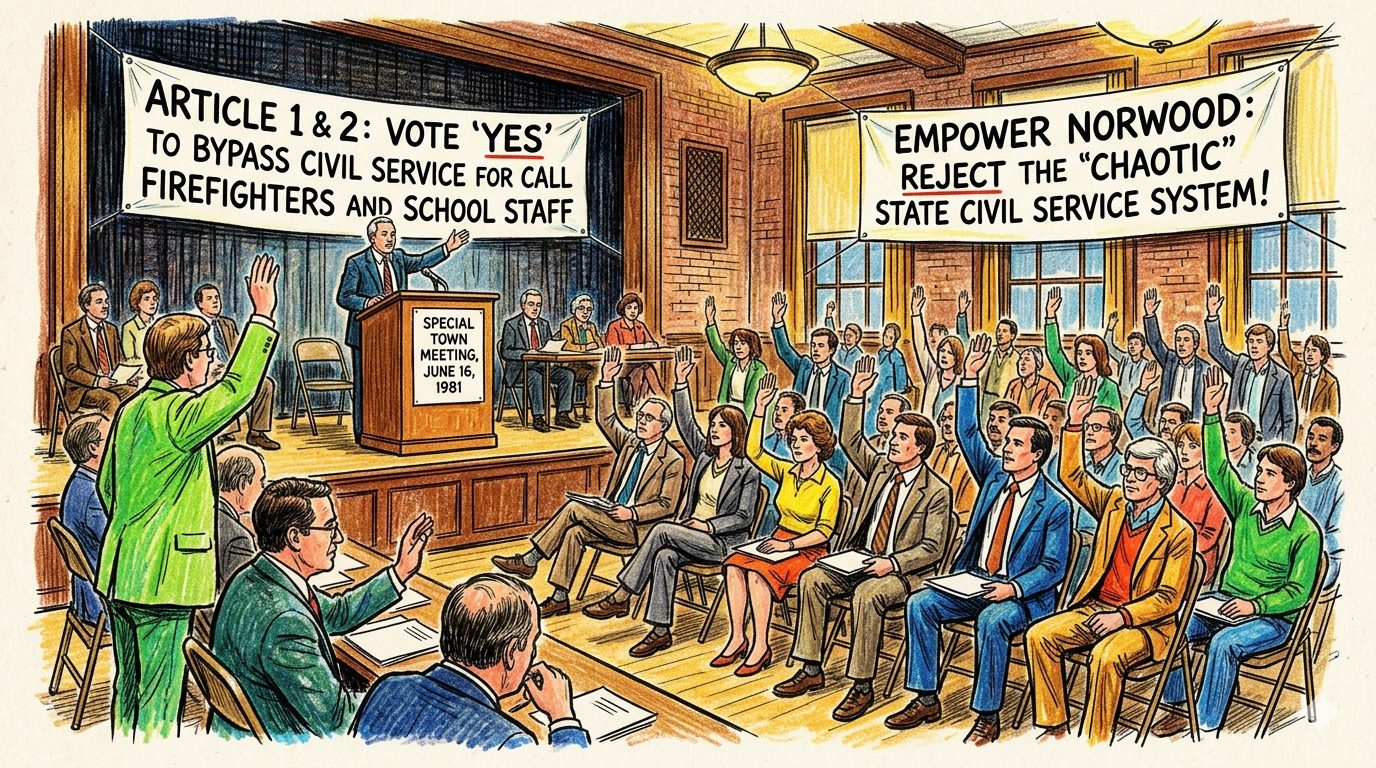
The state Civil Service system suffered a couple of moral defeats last night at a Norwood special town meeting. By a lopsided 4-1 margin, representatives voted to authorize selectmen to petition the state Legislature for authority to create a call fire force of about 15 personnel without Civil Service status. The call or reserve force would not supplant the all-Civil Service 62-man permanent department on normal shift manning. On a partial standing vote to record those opposed to the move, Moderator Robert C. Capasso declared 20 opposed against about 85 in favor, determining that a minimum quorum of 103 district members was present. In a similarly lopsided margin, town meeting approved a companion petition to completely drop Civil Service status for all future school department secretaries and clerks. About 10 members stood opposed, and Capasso stated the vote in favor was assumed to be at least 95.
There was surprisingly little debate on whether to revive the first reserve fire force in 24 years or whether to do so outside of Civil Service parameters. Fire Chief Thomas J. Barry Jr. was the prime proponent of the measure, utilizing an article submitted by selectmen at his request to address the floor. Chief Barry stated that the revival of the call force, which was originally discontinued in 1957, is a direct answer to problems during recent months enlisting enough off-duty men during localized emergencies. John W. Hayes of District 2 questioned the underlying motives, asking if past management disputes between the chief and union firefighters were behind the move. “Is this really not a club to get them in line?” Hayes asked, though Capasso intervened, advising Barry that he did not have to answer the query.
Chief Barry explained that call men basically would be civilians trained to help during emergency duty, anticipating that 12 to 15 men would be appointed to receive pay for training while on duty. The chief described Civil Service as “chaotic” in explaining his desire to bypass the state system on hiring and job status standards. During public board debates several weeks ago, selectmen expressed mixed feelings over whether the complex, ponderous state system outweighed its historical merit as a bulwark against political patronage. Eugene J. Doherty of District 2 told Barry he agreed that “Civil Service is in chaos but patronage is worse.” In response to gendered phrasing regarding “call firemen,” Pauline H. Wagner of District 3 asked, “What about women?” Barry smiled at the oversight and clarified that call force candidates would be judged strictly on physical capability. Conversely, Cheryl P. Carter of District 7 noted that as the wife of a Brookline firefighter, she recalled that Brookline had tried a call force but discovered the costs of training and outfitting were more expensive than calling in permanent firefighters on overtime.
During the brief debate on the school staffing adjustments, Mr. Doherty found no real need to drop Civil Service, claiming an easy, “walk-in” qualification exam was already available for those seeking school clerk jobs. Jean M. Hubbard of District 7 disputed this assertion, stating walk-in exams were unavailable for both secretarial classifications and noting it could take months before an exam list is certified for appointment. Rudith Berkowitz of the school committee solidified the argument for the petition, stating the proposal was reached by mutual agreement of the secretaries’ union and the school committee to put all secretaries on an equal footing and avoid dealing with provisional-status employees.
Archival Note: This article has been dynamically reconstructed from the original public record print archives of the Patriot Ledger
More Town Government Stories
-
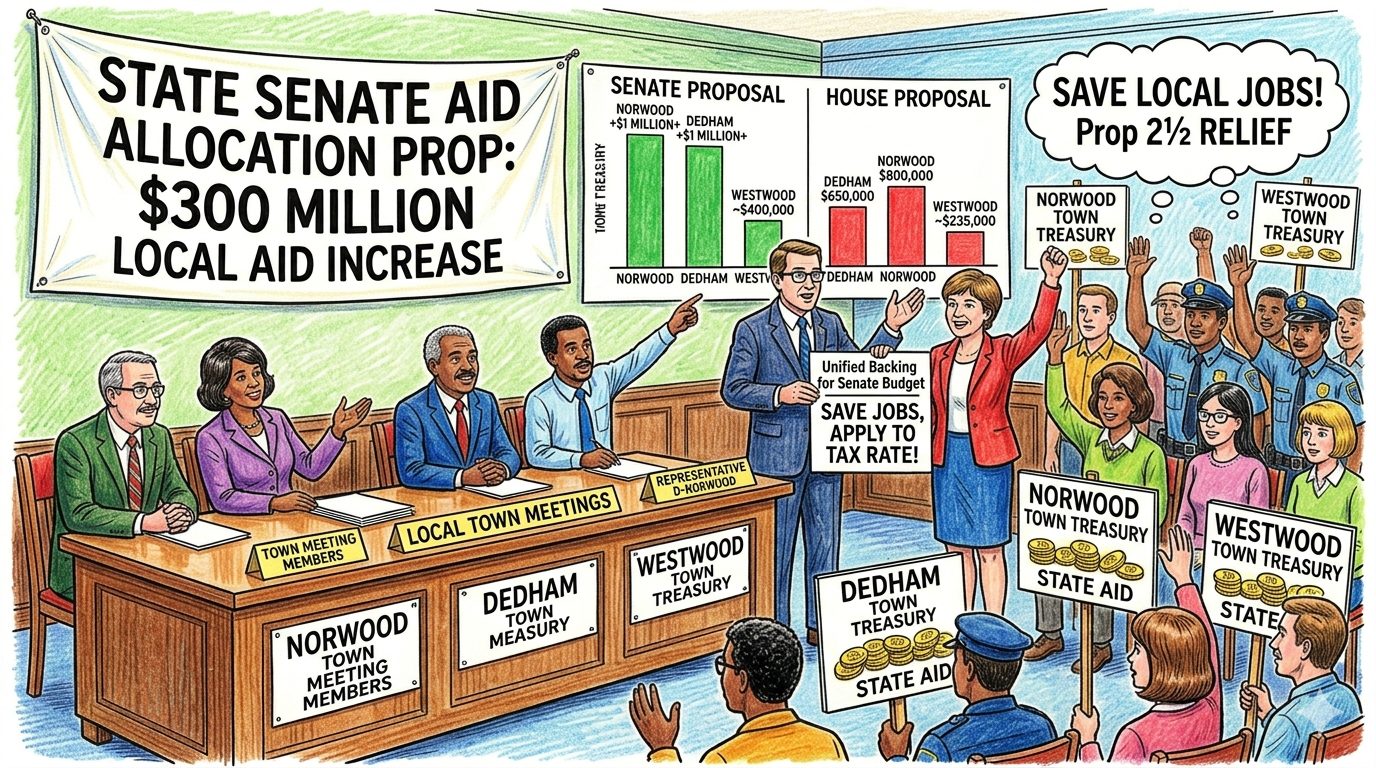
Senate budget gives towns $2.4M in aid-June 23, 1981
A bipartisan legislative front forms to secure critical financial relief for regional town treasuries facing immediate cutbacks.
-
Referendum Drive Seen Well Underway-June 23, 1981
A rapid grassroots signature campaign aims to stall a major town development project through a public ballot referendum.

-
Police Overtime Pay Causes Flap-June 17, 1981
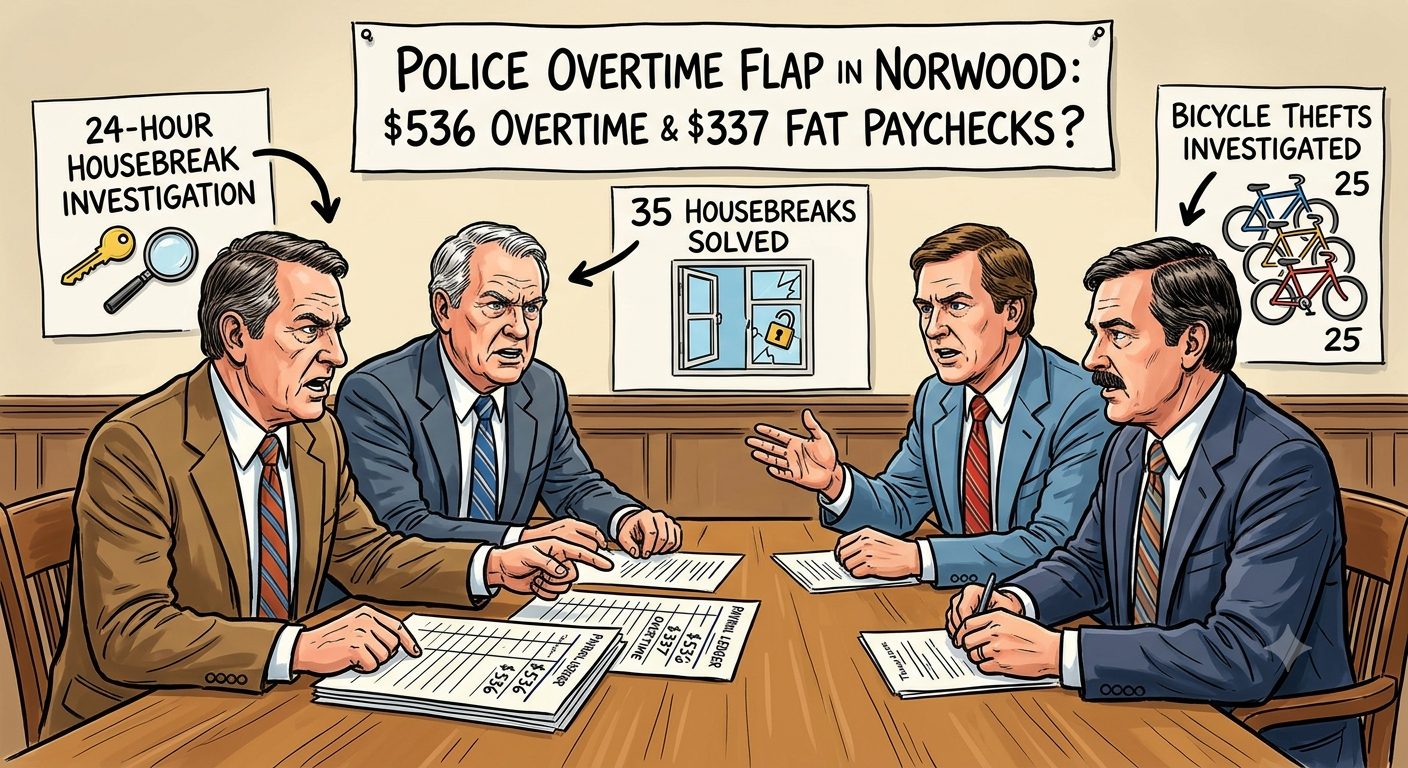
Selectmen Spar Over Fat Paychecks Following Around-The-Clock Housebreak Investigation One policeman got $536 in overtime pay last week. Another got $337. And two selectmen say that’s too much. “It’s not right for one man to work 35 hours overtime,” Selectman Walter J Dempsey said last night, adding, “536 bucks for my money is too much…
-
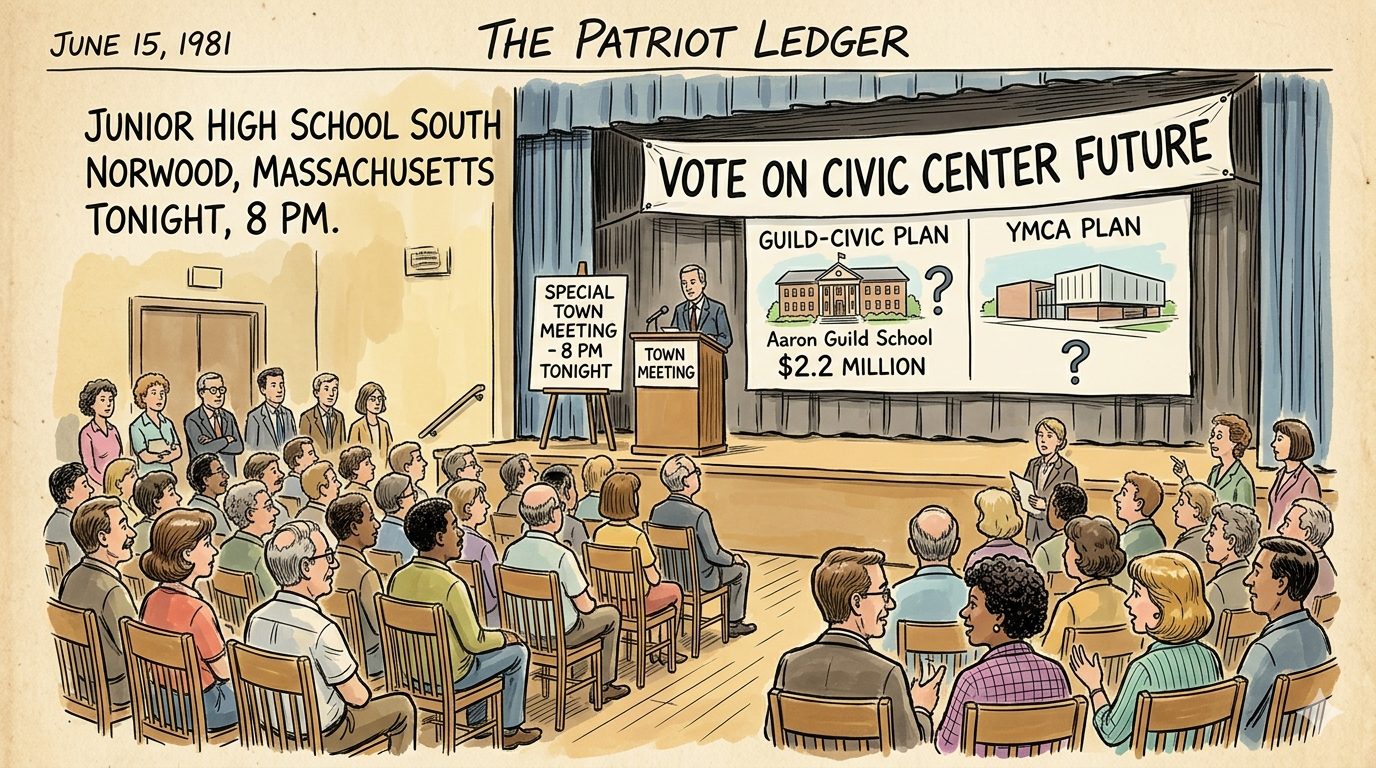
Civic Center Future Up For Vote-June 15, 1981
A high-stakes special town meeting agenda features a multi-million dollar Civic Center relocation choice and the $325,250 sale of Winslow School.
-
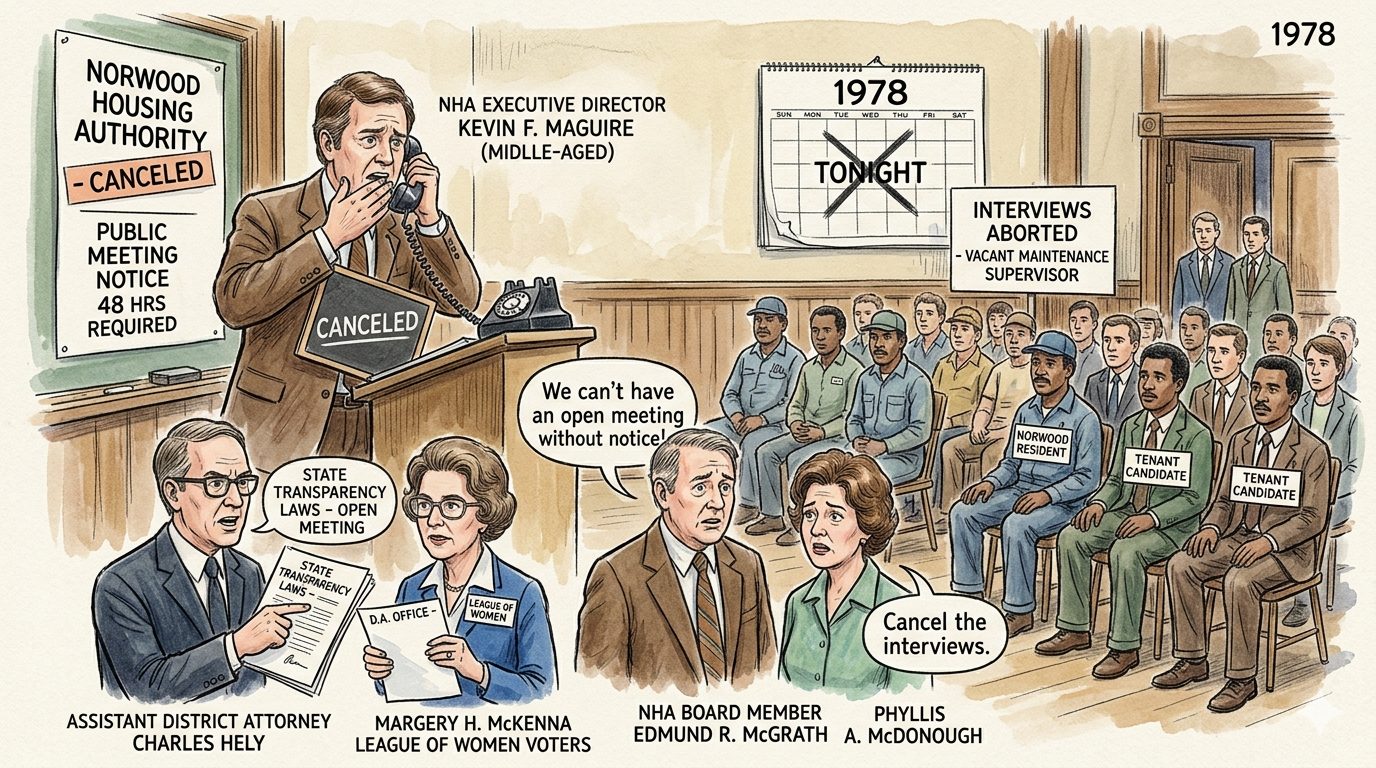
Housing Authority Candidate Screening Halted-June 16, 1978
League Watchdogs and District Attorney Block Closed Maintenance Interviews A sweeping attempt to accelerate administrative appointments inside the local municipal infrastructure collapsed under legal scrutiny last night. The Norwood Housing Authority was forced to completely abort a scheduled slate of 20 confidential candidate interviews for its vacant maintenance supervisor role after legal monitors formally warned…
-
Selectmen Outraged by FinCom Veto of Youth Summer Job Program Funding-June 26, 1974
Runaway teenage unemployment sparks a fierce municipal funding war as watchdogs lock horns over emergency summer public works spending.
-
Norwood FinCom’s Elias Refuses To Resign Amid Recall Threats-June 22, 1974
| A political standoff gridlocks the Finance Commission as a newly elected official breaks rank and drops out of municipal sessions
-
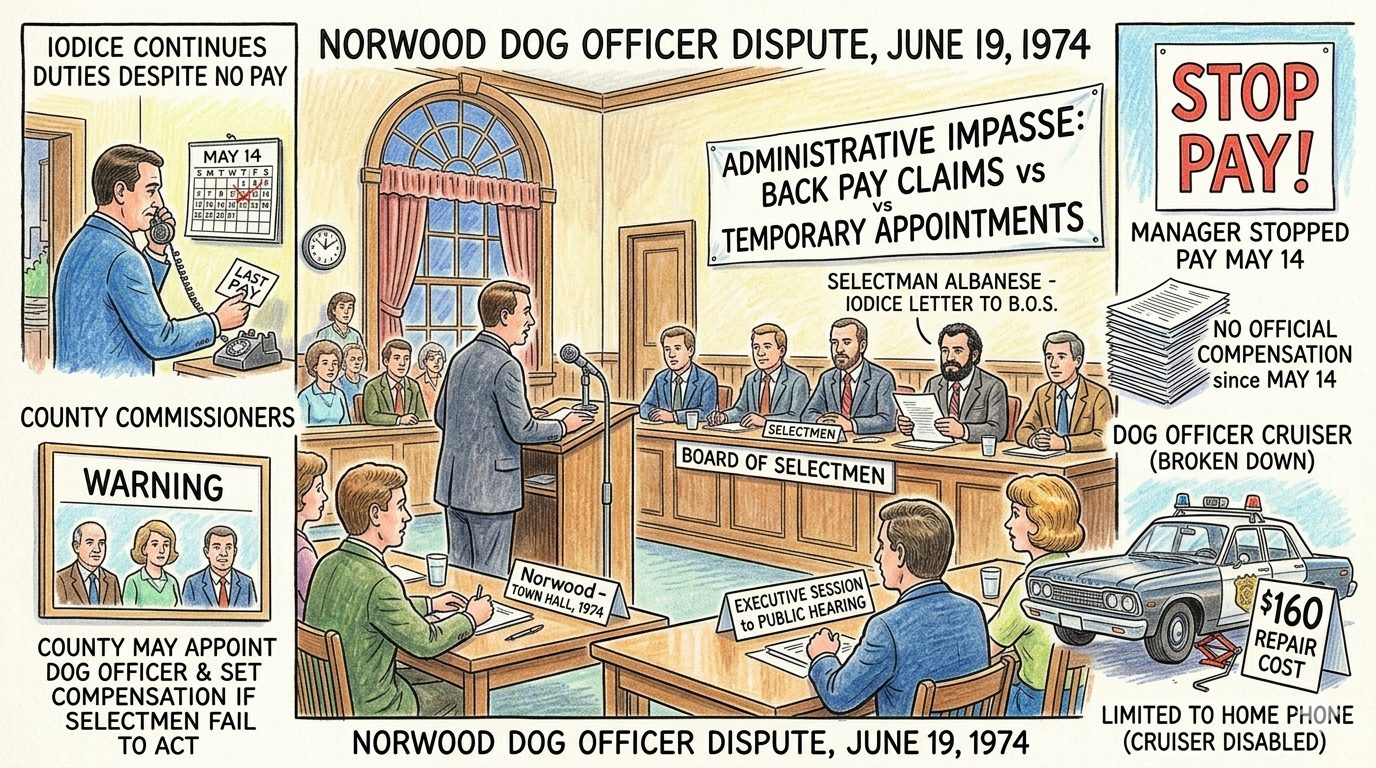
Dog Officer Row Unsettled-June 19, 1974
A breakdown in communication and transport leaves Norwood’s animal control duties in limbo during a fierce political standoff.
-
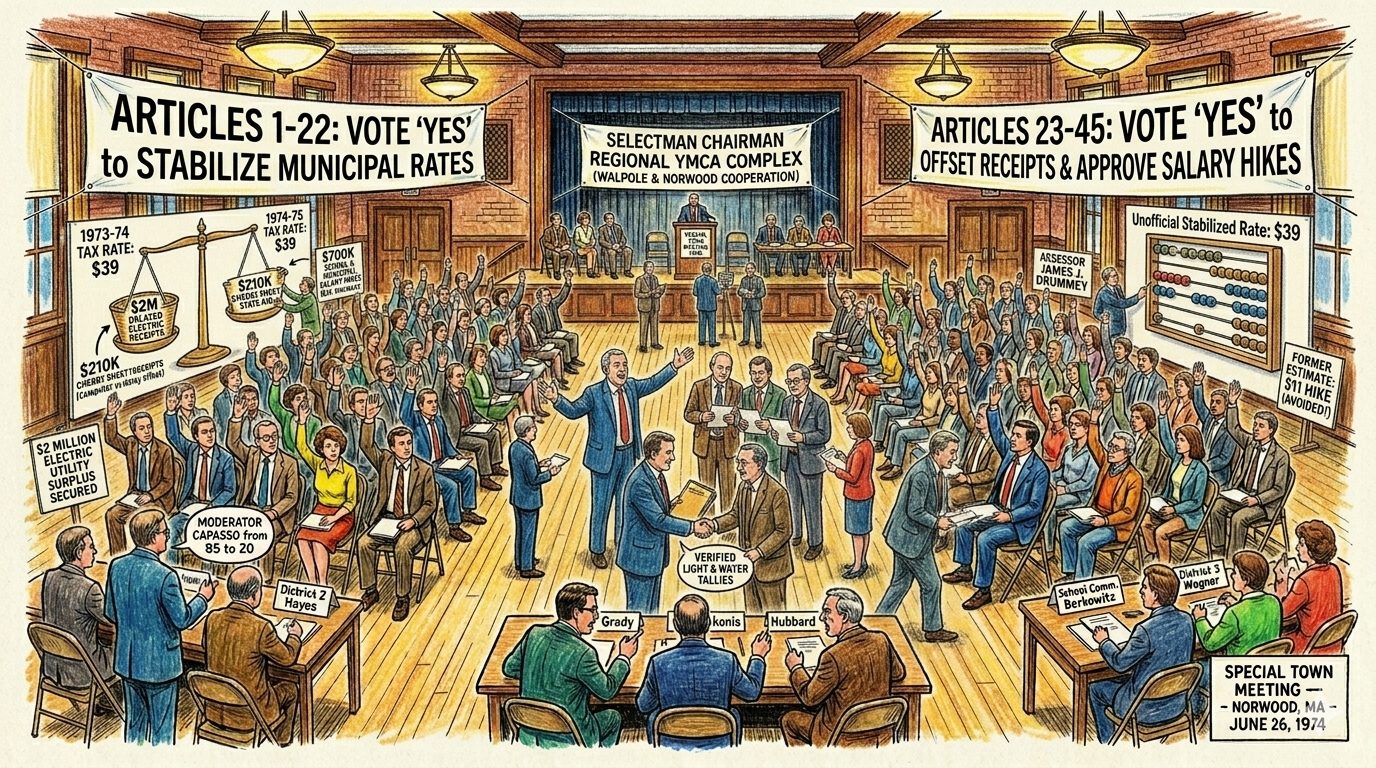
Delayed Computer Billing Receipts Spark Optimistic Tax Forecasts-June 18, 1974
Selectmen and assessors leverage delayed electric receipts and cherry sheet funds to keep tax rates at 39.
-
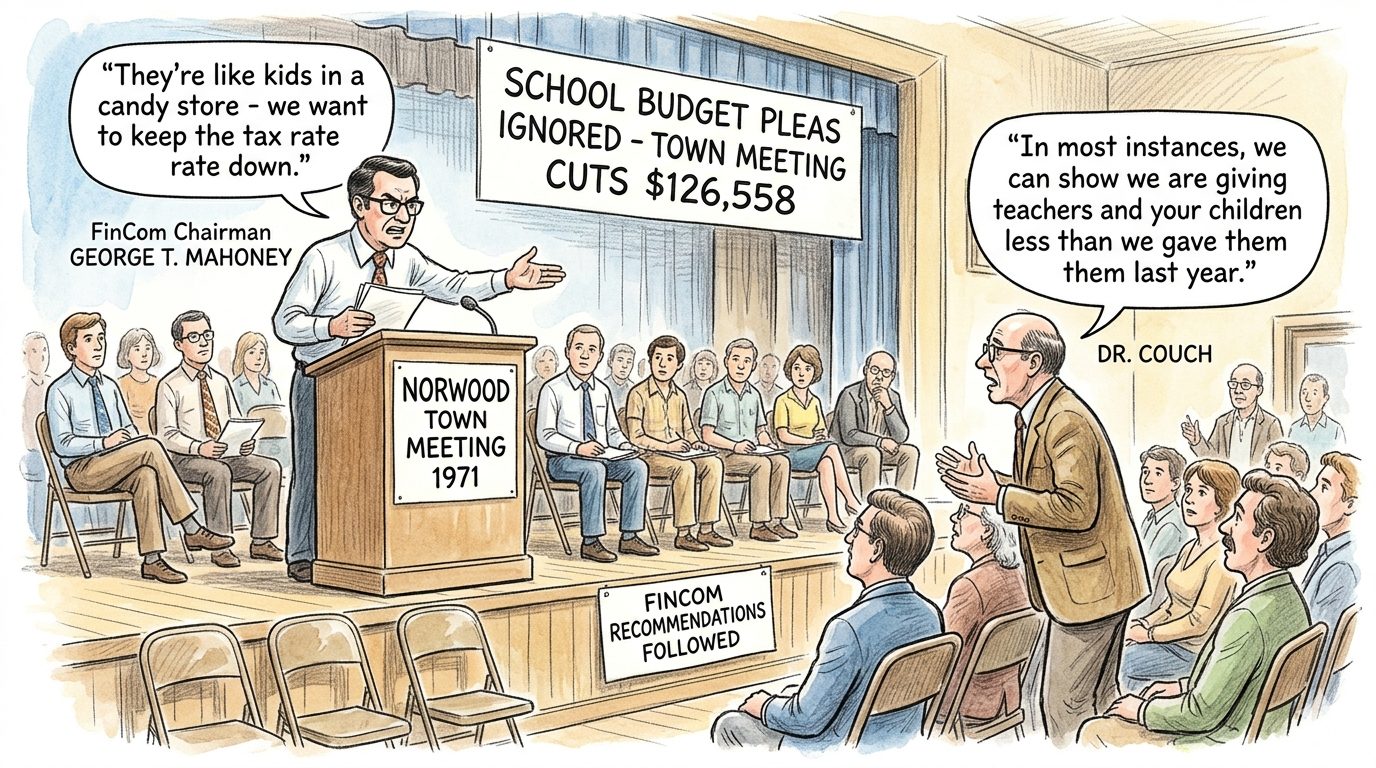
Meeting Ignores School Pleas, Cuts Budget By $126,558-June 15, 1971
A fierce debate over encumbered funds and municipal parity dominates a marathon Norwood Town Meeting session over the town budget.
Discover more from Norwood Historical Society
Subscribe to get the latest posts sent to your email.