
Joseph Curran Seeks Inventory Before Weighing 2-Percent Property Transfer Levy; Board Also Reviews $200,000 Hurricane Gloria Reimbursement, MWRA Rusty Water Study, and Youth Skateboard Park
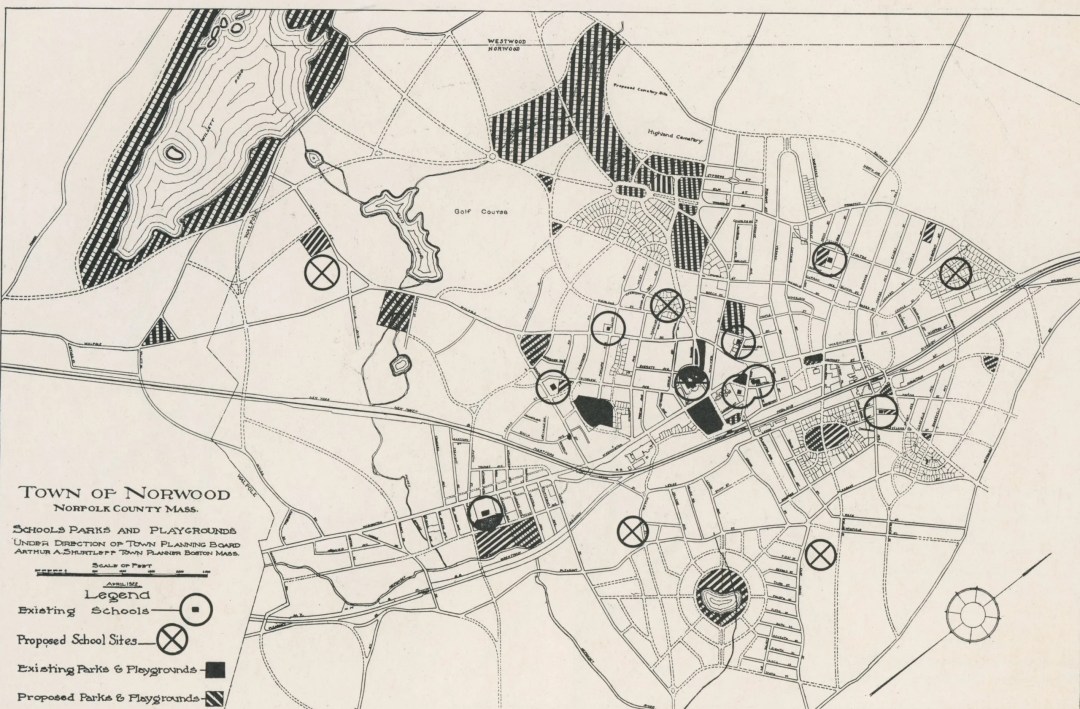
NORWOOD – Norwood’s Board of Selectmen voted on Tuesday night, November 26, 1985, to ask the Conservation Commission to prepare a comprehensive map detailing all town-owned conservation parcels alongside properties the commission might seek to acquire through a proposed municipal land bank. Reported in The Patriot Ledger on Friday, November 29, 1985, the request was initiated by Selectman Joseph Curran as a baseline step before the board decided whether to endorse creating a local land bank. Selectmen simultaneously directed Town Manager John J. Carroll to overlay all municipal recreation lands and potential recreation acquisitions onto the same map.
Under enabling legislation pending on Beacon Hill—which was not expected to clear the current legislative session but had been refiled for consideration in 1986—cities and towns could establish a dedicated land-bank fund by Town Meeting vote to purchase conservation acreage or active and passive recreation land. Revenue for the fund would be generated through a real-estate transfer tax of up to 2 percent of the gross sales value levied on anyone selling residential or commercial property in town.
The proposed funding mechanism immediately drew skepticism from members of the board. Selectman Walter J. Dempsey objected that while all residents would enjoy newly preserved open space, the tax burden would fall exclusively on property sellers and homeowners. Selectman Thomas A. Riolo echoed that hesitation—“I don’t like the idea of taxing people. I think a lot of people wouldn’t like the idea”—though he added he did not object to letting Town Meeting voters decide the question.
Advocates emphasized the practical conservation tools the fund would unlock. Joseph DiMaria noted that a land bank would enable Norwood to purchase conservation easements it could not otherwise afford—citing, as one example, securing public access or a boat launch onto the Neponset River behind the proposed Stone Ridge office park. Conservation Commission members added that land-bank revenues could preserve wetlands and swamp parcels, build walking trails, and open shoreline access for anglers and boaters along Norwood’s brooks and the Neponset River, as well as create neighborhood parks where open parcels remained available.
In additional municipal business during Tuesday’s session:
- Hurricane Gloria Reimbursement: Town Manager John J. Carroll reported that Norwood stood to recover up to 75 percent in combined state and federal disaster reimbursement toward the $200,000 the town spent responding to Hurricane Gloria, commending Assistant Town Manager Bernard C. Cooper for assembling the reimbursement documentation.
- MWRA Rusty Water & Sewer Studies: Carroll—who served on the Massachusetts Water Resources Authority (MWRA) board of directors—announced that an MWRA engineering study into Norwood’s persistent rusty water problem, originally slated for consultant selection in November, would not begin until January 1986. Following talks with new MWRA Executive Director Michael Gritzuk, Carroll also reported that a study of a Neponset Valley Relief sewer system would soon launch to alleviate trunk-line overflows serving Norwood, Canton, Westwood, and Walpole.
- Youth Skateboarding Park: Selectmen voted to ask the Recreation Commission to study establishing a dedicated skateboarding park in an effort to keep young riders off town streets.
Source: The Patriot Ledger • Friday, November 29, 1985
“I don’t like the idea of taxing people. I think a lot of people wouldn’t like the idea, but I don’t mind putting it before town meeting.”
| 1985 Norwood Hurricane Gloria Expense Item | 1985 Figure | Est. 2026 Value |
|---|---|---|
| Total Town Hurricane Gloria Response & Cleanup Cost | $200,000 | $596,000 |
| Potential State & Federal Reimbursement (75%) | $150,000 | $447,000 |
*Equivalent purchasing power based on U.S. Bureau of Labor Statistics CPI data.
Archival Note: This article has been dynamically reconstructed from the original public record print archives of the Patriot Ledger
-
What a Conservation Commission Would Mean-This Day in Norwood History-January 25, 1962

Article 9 of tonight’s Special Town Meeting is to see if the town will vote to accept the provisions of Massachusetts General Laws, Chapter 40, Section 8C, which authorizes the town to establish a Conservation Commission for the promotion and development of the natural resources and for the protection of watershed resources of the town.…
Discover more from Norwood Historical Society
Subscribe to get the latest posts sent to your email.