

Town Manager John P. Mogan Reverses Stance for 950 Commercial Customers While Floating New Apartment Deposit Proposal
NORWOOD – Early holiday cheer arrived for Norwood’s business community on Tuesday night, November 18, 1975, as the Norwood Board of Selectmen voted unanimously to drastically reduce municipal light department security deposits for new out-of-town commercial customers and eliminate deposits altogether for qualifying local firms. Reported in The Patriot Ledger on Wednesday, November 19, 1975, the reversal came after Town Manager John P. Mogan executed an abrupt policy shift—recommending that incoming businesses be required to post only a one-month estimated electricity deposit rather than the three-month deposit enforced over the previous two years.
Under the revised policy—taking effect immediately and impacting roughly 950 commercial customers—established Norwood businesses relocating within town would no longer face a three-month deposit requirement, provided they maintained a 12-month track record of paying their municipal light bills within the 10-day discount period (which granted a 5 percent prompt-payment discount from the billing date). Selectmen also added a five-day grace period beyond the 10-day discount window during which a business forfeited the 5 percent discount but remained in good standing.
Roughly 35 members of the Norwood Chamber of Commerce celebrated the unanimous vote at the conclusion of the meeting, hailing the outcome as a hard-won victory after more than a year of vigorous lobbying against Mogan’s repeated defenses of the three-month deposit rule. “We’re ecstatic,” declared Richard J. Smith, chairman of the chamber’s electric service deposits committee. “It’s a complete vindication of everything we’ve said for the last few years.”
Municipal Light Department Superintendent William J. Kates detailed the operational mechanics of the new rule, defining a new customer as a “new entity” without prior billing history in its classification during the preceding 12 months. Surety bonds would no longer be accepted as collateral, and if a new business remained in good standing for one full year, its cash deposit would be refunded. Conversely, any new firm failing to pay its monthly electric bill within five days after the discount deadline would immediately be required to post a three-month cash deposit in addition to paying its overdue balance. Mogan explained that the stricter three-month rule had originally been enacted about 18 months earlier after the town suffered financial losses from businesses that “came upon hard times,” noting that written notices explaining the revised terms would be mailed immediately.
Later in the same session, however, Mogan sparked an immediate clash by announcing he was considering reinstituting security deposits for residential electric customers “under certain circumstances”—specifically targeting residents of apartment complexes and “transient people in multi-family dwellings,” whom he cited as having a high rate of electric bill delinquency. Selectman Joseph W. Wall promptly vowed to oppose any residential deposit mandate: “I’ll be voting against it. Here we solved one problem and you’re going to create another.”
Archival Note: This article has been dynamically reconstructed from the original public record print archives of the Patriot Ledger
More Town Government Stories
-
Senate budget gives towns $2.4M in aid-June 23, 1981
A bipartisan legislative front forms to secure critical financial relief for regional town treasuries facing immediate cutbacks.

-
Referendum Drive Seen Well Underway-June 23, 1981
A rapid grassroots signature campaign aims to stall a major town development project through a public ballot referendum.

-
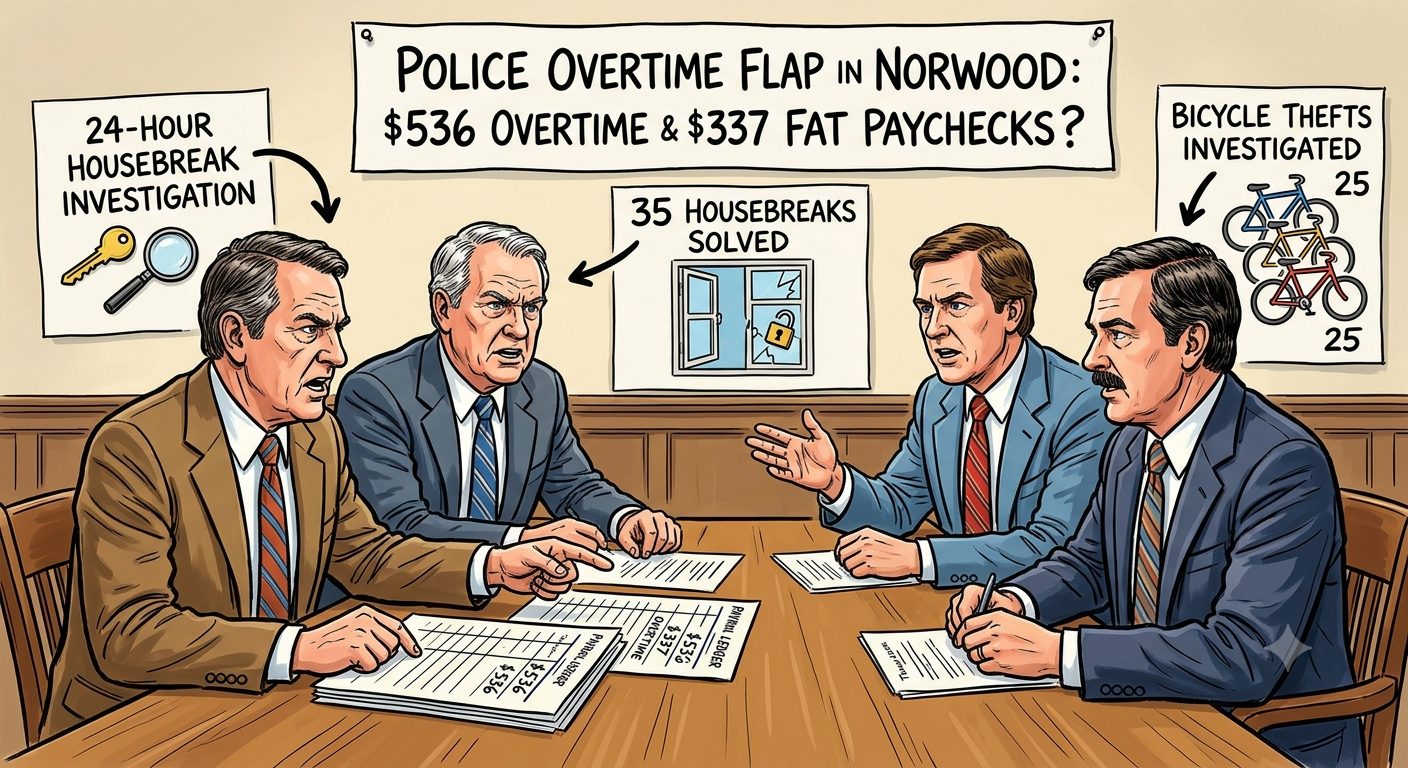
Police Overtime Pay Causes Flap-June 17, 1981
Selectmen Spar Over Fat Paychecks Following Around-The-Clock Housebreak Investigation One policeman got $536 in overtime pay last week. Another got $337. And two selectmen say that’s too much. “It’s not right for one man to work 35 hours overtime,” Selectman Walter J Dempsey said last night, adding, “536 bucks for my money is too much…
-
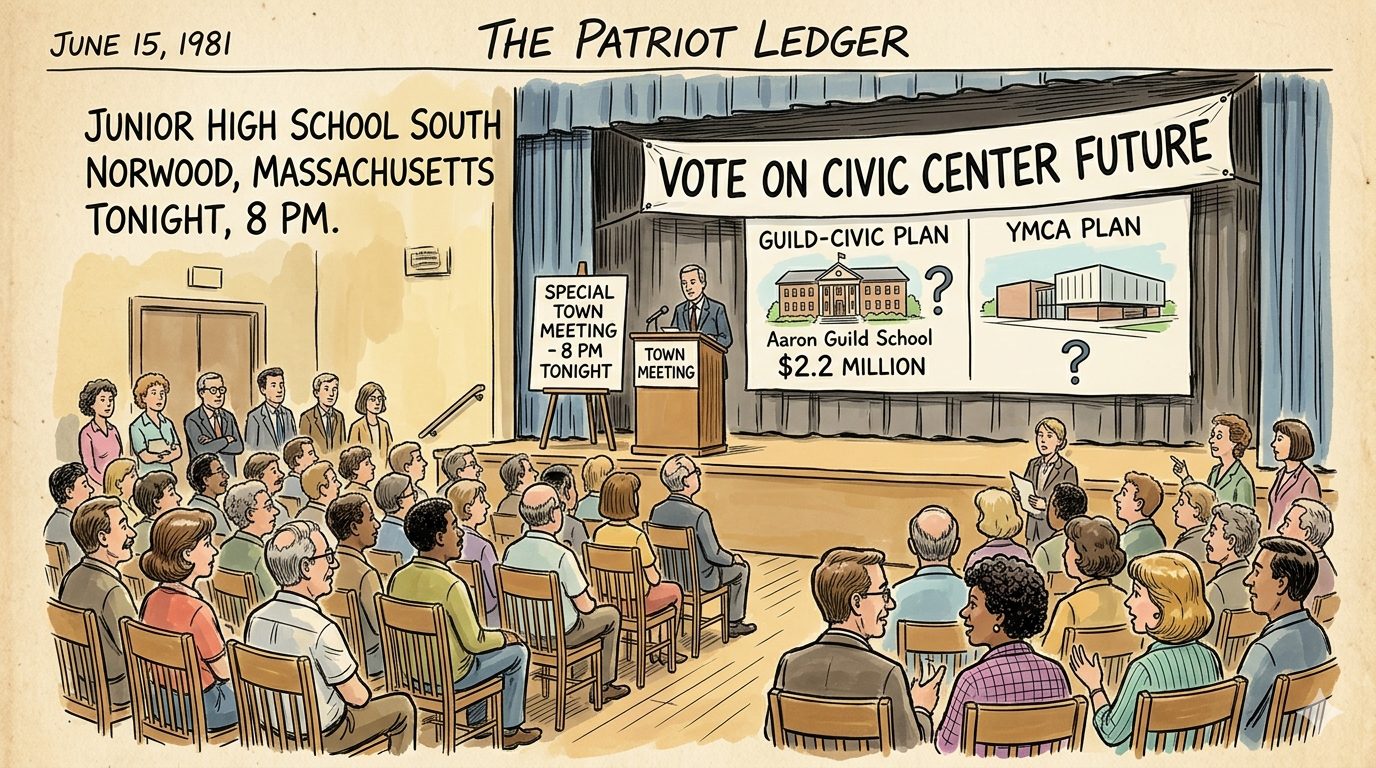
Civic Center Future Up For Vote-June 15, 1981
A high-stakes special town meeting agenda features a multi-million dollar Civic Center relocation choice and the $325,250 sale of Winslow School.
-
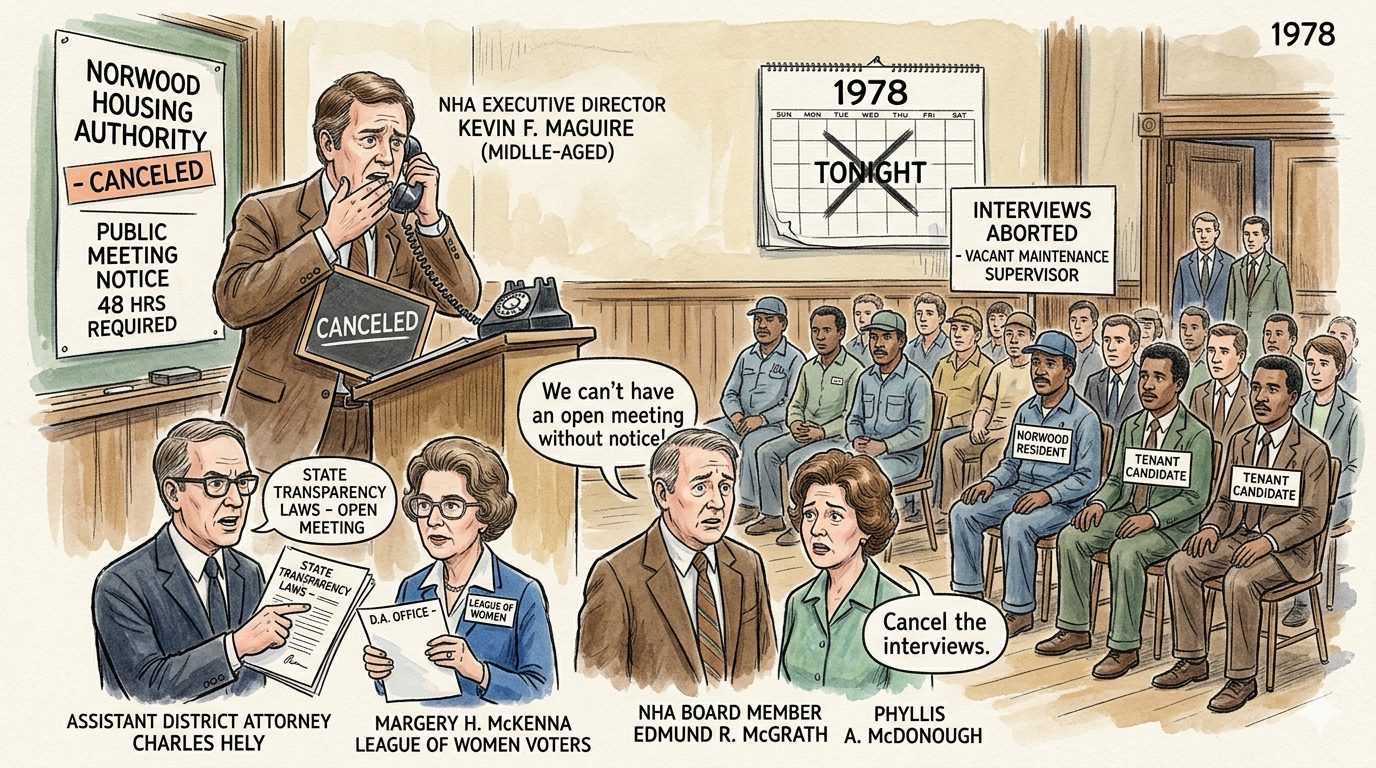
Housing Authority Candidate Screening Halted-June 16, 1978
League Watchdogs and District Attorney Block Closed Maintenance Interviews A sweeping attempt to accelerate administrative appointments inside the local municipal infrastructure collapsed under legal scrutiny last night. The Norwood Housing Authority was forced to completely abort a scheduled slate of 20 confidential candidate interviews for its vacant maintenance supervisor role after legal monitors formally warned…
-
Selectmen Outraged by FinCom Veto of Youth Summer Job Program Funding-June 26, 1974
Runaway teenage unemployment sparks a fierce municipal funding war as watchdogs lock horns over emergency summer public works spending.

-
Norwood FinCom’s Elias Refuses To Resign Amid Recall Threats-June 22, 1974
| A political standoff gridlocks the Finance Commission as a newly elected official breaks rank and drops out of municipal sessions
-
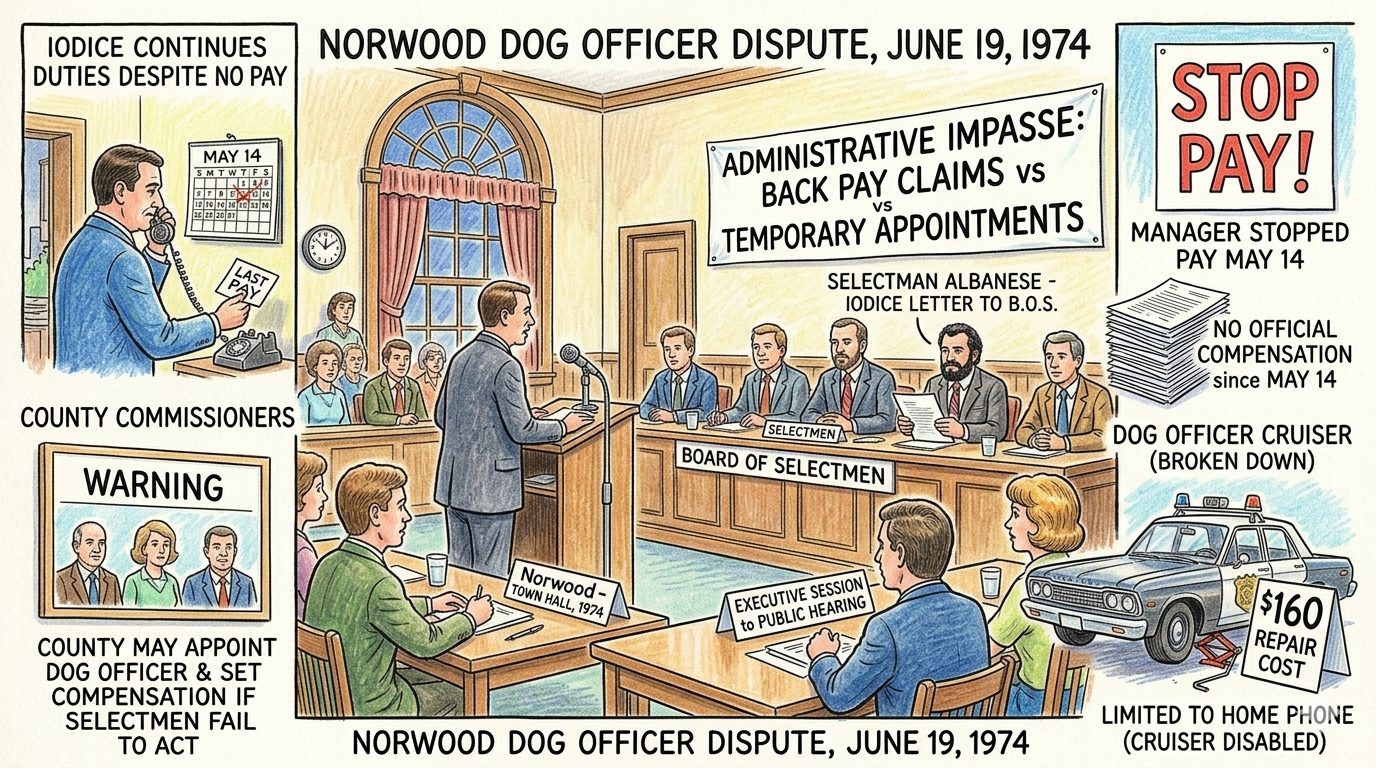
Dog Officer Row Unsettled-June 19, 1974
A breakdown in communication and transport leaves Norwood’s animal control duties in limbo during a fierce political standoff.
-
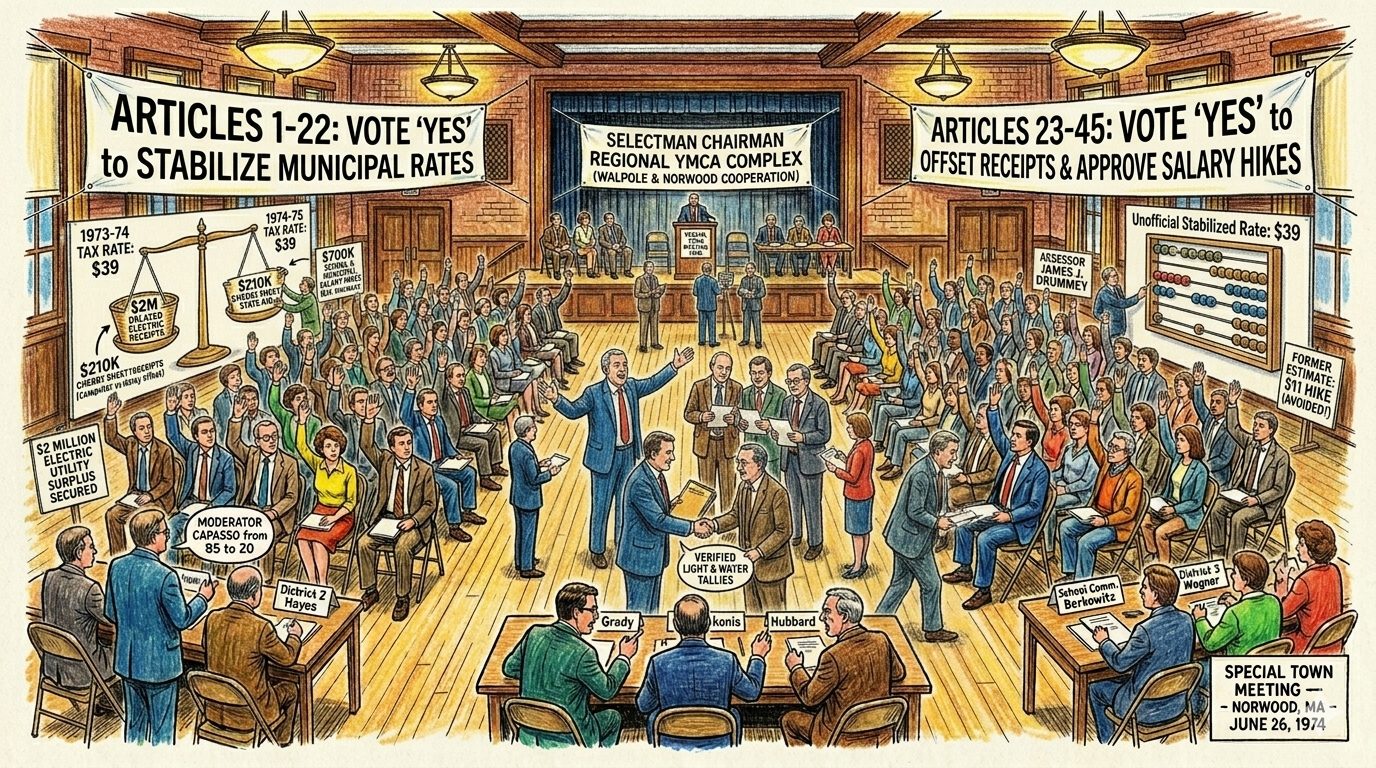
Delayed Computer Billing Receipts Spark Optimistic Tax Forecasts-June 18, 1974
Selectmen and assessors leverage delayed electric receipts and cherry sheet funds to keep tax rates at 39.
-
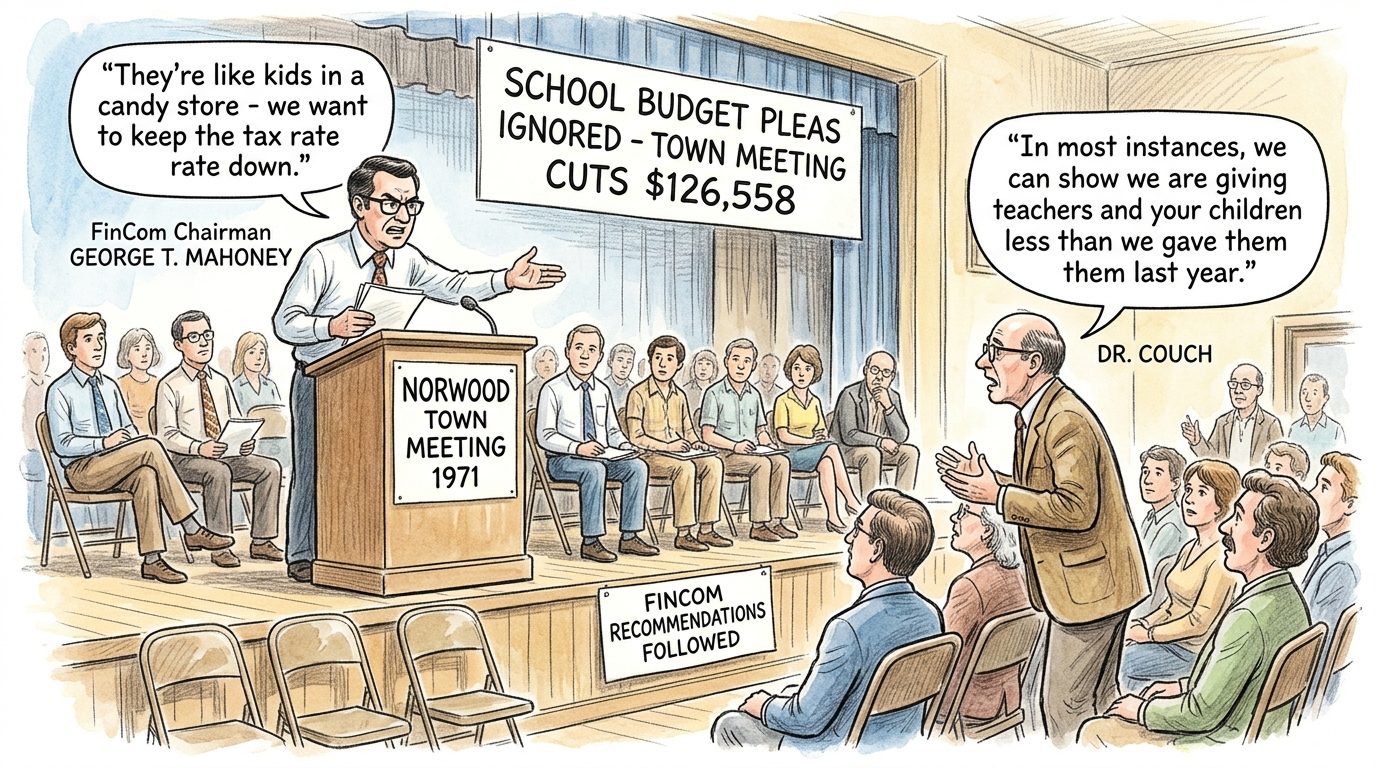
Meeting Ignores School Pleas, Cuts Budget By $126,558-June 15, 1971
A fierce debate over encumbered funds and municipal parity dominates a marathon Norwood Town Meeting session over the town budget.
Discover more from Norwood Historical Society
Subscribe to get the latest posts sent to your email.