
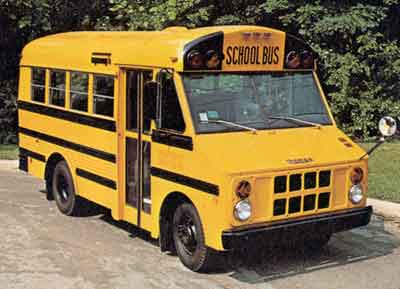
The dispute between the Norwood school committee and Security Transportation Inc., a transportation firm from Medford, Massachusetts, has reached a boiling point.
The company filed a lawsuit against the committee for allegedly improperly denying them the contract to transport special needs students. The controversy centers around the bid specifications, which require each bidder to submit three separate bonds, one for each part of the contract.
Security Transportation Inc., led by President Richard Zimmerman, claims that only one bond should have been required, citing a technicality in the bid process. According to Zimmerman, his firm’s bid was the lowest among all six bidders, with an estimated cost of $174,654 per year to $195,930, depending on the number of vehicles needed.
The school committee, however, awarded the three-year contract to Yellow Cab of Norwood, citing that Security Transportation Inc.’s bid did not meet the bid specifications. School business manager John F. Monahan rejected bids by Security Transportation and Cambridge Taxi due to their alleged failure to submit the required bonds.
Monahan stated that Town Counsel Justin C. Barton advised him that the bid could be rejected because three bonds should have been submitted. Kiessling School Transportation of WalpoleSecurity Transportation Inc. Lawsuit Challenges Norwood School Committee Bus Contract Award-July 31, 1981
⠀
A contentious public procurement dispute unfolded in Norwood as Security Transportation Inc. launched a legal challenge against the School Committee‘s decision regarding lucrative student transportation contracts. Another competing bidder alongside Yellow Cab had formally protested Security‘s initial bid, which might have led to its outright rejection even earlier if attention had not been called to specific administrative details.
The brewing controversy sparked a heated debate among local residents, with many publicly questioning the committee’s decision-making process and transparency. Zimmerman, representing the aggrieved firm, expressed deep frustration, stating that only a very small technicality was used to reject his company’s lower bid, resulting in an estimated loss of $127,000 in potential savings for the town of Norwood. The dispute highlighted the intricate complexities and financial stakes involved in municipal public procurement processes, especially as the school committee ultimately opted to award the contract to Yellow Cab despite Security Transportation Inc. submitting a lower financial bid.
Defending the committee’s broader strategy in an effort to reduce operational costs, School Superintendent Louis J. Taris suggested that consolidating all three parts of the transportation contract under a single firm could lead to more efficient operations and reduced administrative expenses. Meanwhile, Monahan strongly defended Yellow Cab‘s performance during the previous school year, noting that they maintained an excellent track record and did a fantastic job serving the district.
The formal lawsuit filed by Security Transportation Inc. sought to have the disputed contract completely rebid, with the firm additionally requesting that the committee be ordered to pay damages covering the profits they would have earned had they secured the contract. Legal experts noted that the outcome of the dispute would carry significant implications for the town of Norwood and its taxpayers. Observers also pointed to the broader historical context of public procurement in Massachusetts during the early 1980s, where tight municipal budgets and fiscal pressures—heavily influenced by tax limitation measures like Proposition 2 1/2—forced local governments to balance rigorous cost-efficiency with strict fairness, transparency, and adherence to bidding regulations.
Archival Note: This article has been dynamically reconstructed from the original public record print archives of the Patriot Ledger
-
Public Schools Face Delays and Possible State Action on Mandatory Hot Lunch Program-August 31, 1973
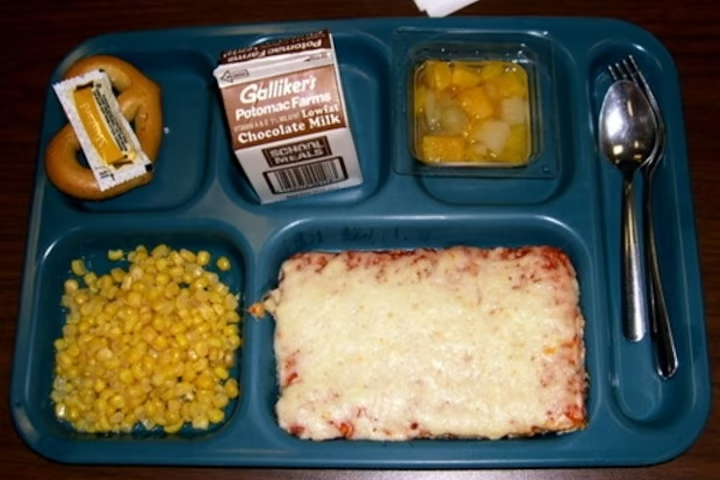
Parents of elementary school students in Norwood will need to continue packing brown-bag lunches for the start of the academic year. School Superintendent Philip O. Coakley announced that the town will fail to meet the state-mandated September deadline for implementing a universal public school hot lunch program, exposing the municipality to potential legal action by…
-
Norwood High School Refines Open Campus Program in Second Year of Operation-October 2, 1972

Entering its second year, Norwood High School’s open campus system sees tighter corridor rules, sophomore restrictions, and expanded academic seminars while undergoing state-mandated evaluation.
-
Andy Scafati Recalls 40 Seasons in Athletics Ahead of Norwood Retirement-September 7, 1972
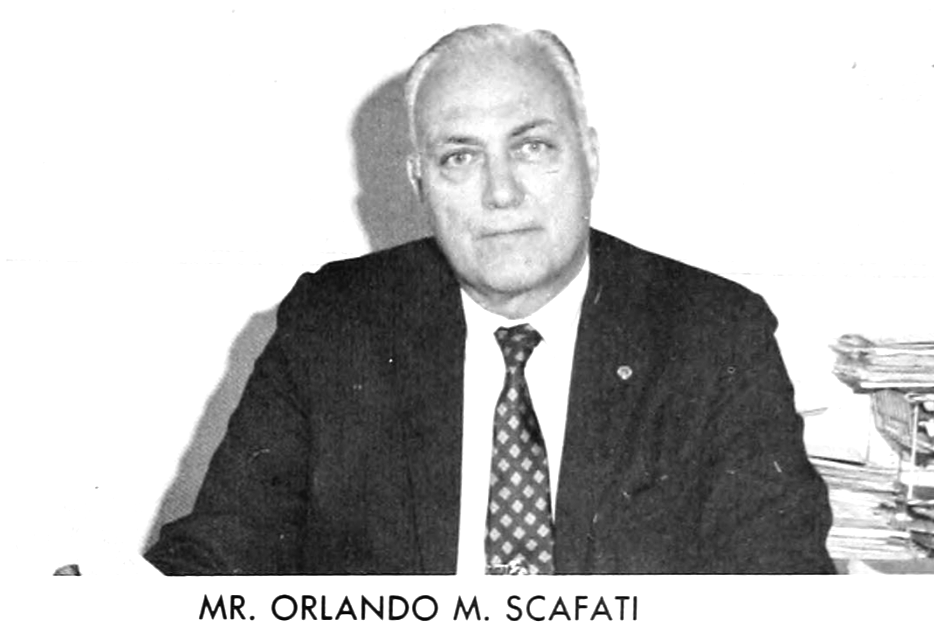
Longtime Norwood High School athletic director Andy Scafati reflects on 40 years in sports and the remarkable expansion of the town’s athletic programs as he prepares to step down.
-
School Board Reverses Vote, Keeps NorWest Woods Pupils at Oldham-August 29, 1972
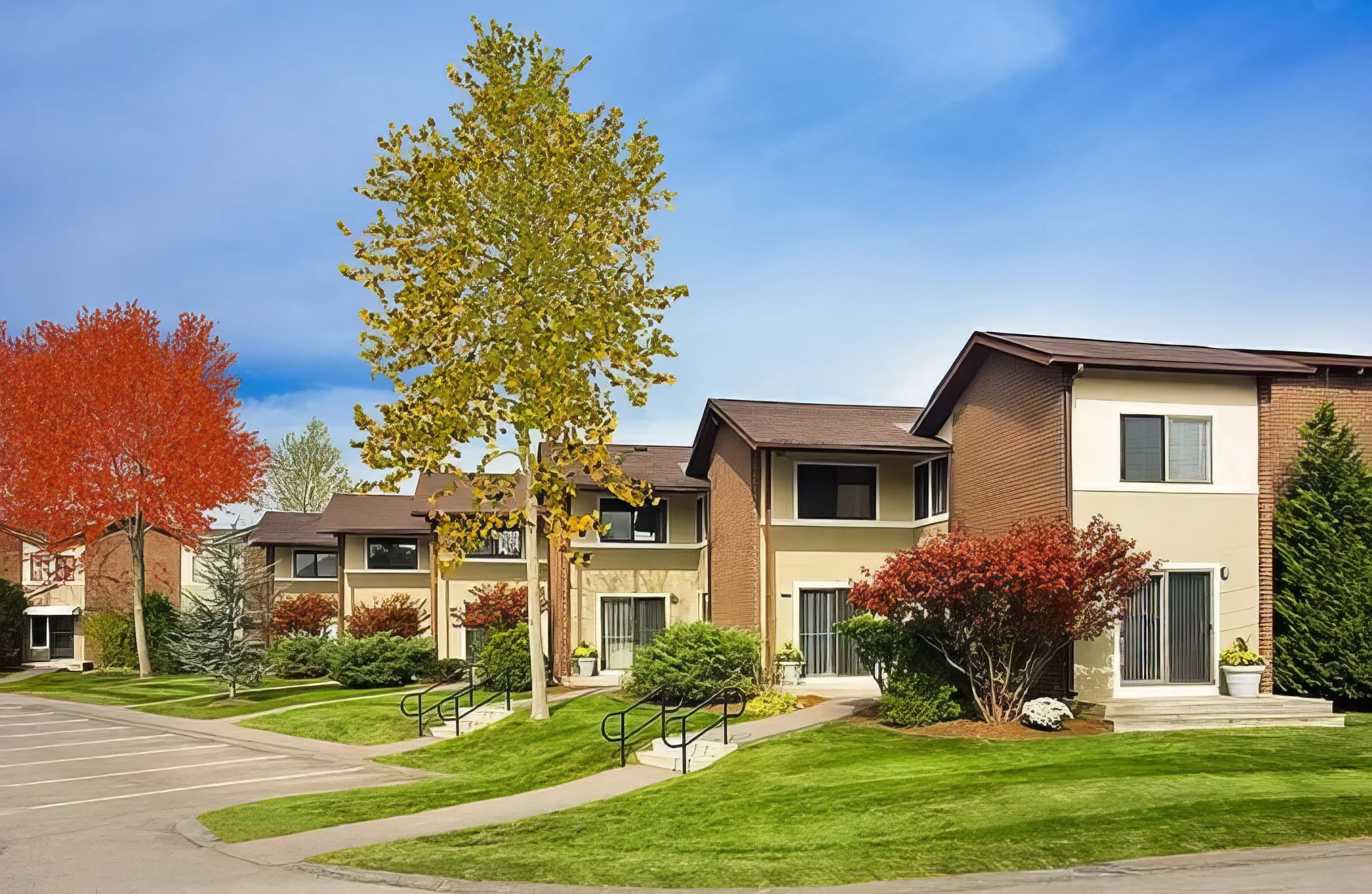
In a reversal of a previous decision, the School Committee has voted to keep 46 elementary school children from the Nor-West Woods apartment complex at the Oldham School, rescinding a July 5 vote that would have transferred them to the Shattuck School. Superintendent Dr. Philip O. Coakley explained that the committee revoted on the matter…
-
Norwood Sets $38 Tax Rate on Court-Ordered 100% Property Valuation for 1972-August 16, 1972

Announcing a 1972 tax rate of $38 per $1,000 under a court-ordered 100 percent property valuation, Assessor Chairman James J. Drummey concluded a major reassessment by Cole, Layer and Trumble.
-
Norwood Jr. High Offered Land At $9,500 An Acre-September 30, 1971
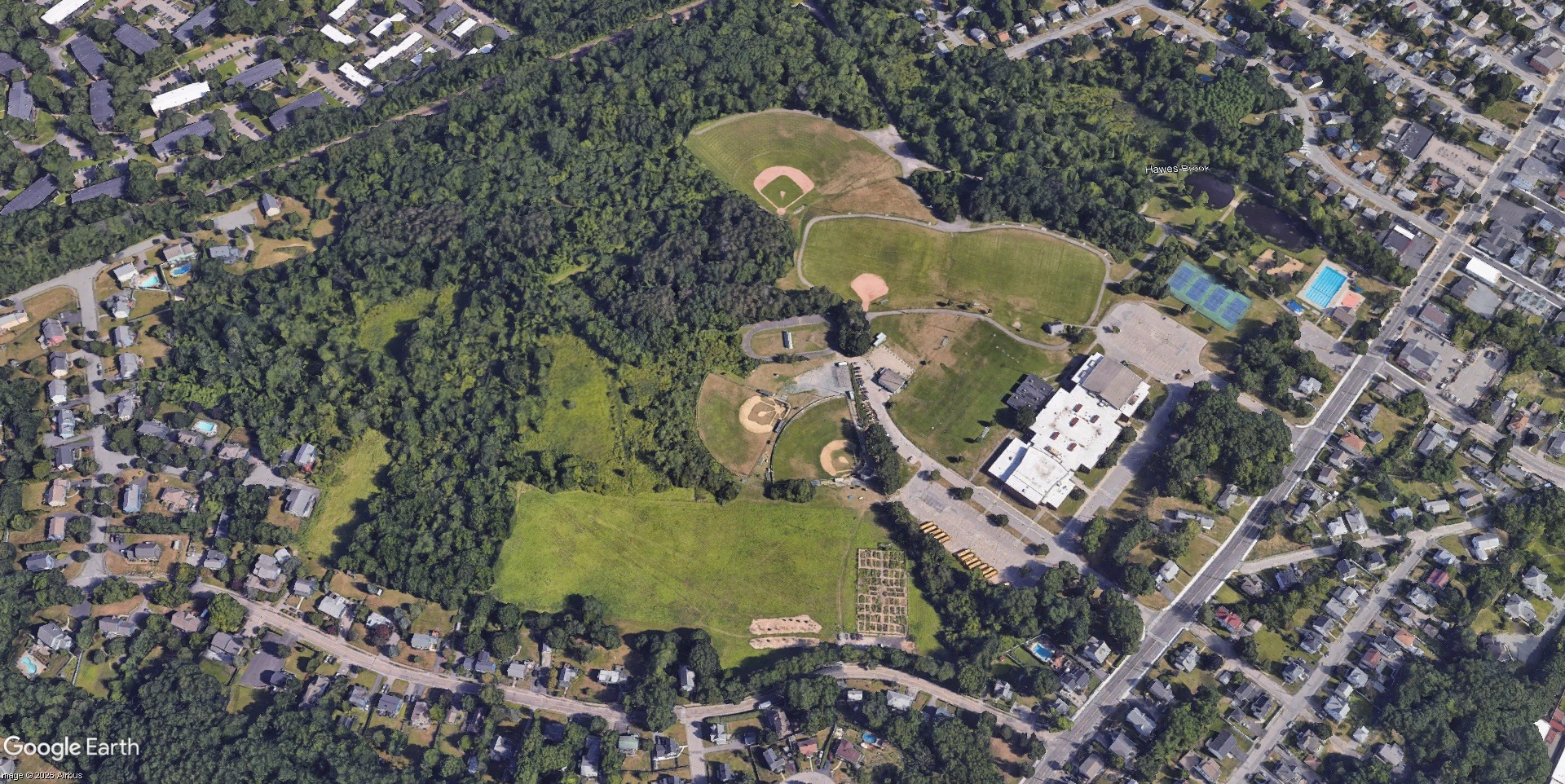
The Norwood School Committee recommends the Endean area in Walpole as the site for a new junior high school, facing sharp questioning from town meeting members over rising costs and site shifts.
-
Norwood High School Launches Innovative Open Campus Plan for Fall Term-September 8, 1971
Norwood High School opens the fall term by launching an innovative open campus and extended-day program designed by Principal John F. Monbouquette to foster student responsibility.
-
Junior High Alternate Estimates Sought-June 25, 1971

A sharp debate divides Town Manager Walter Blasenak and finance officials over mounting unappropriated architectural fees for Boston design firms.
-
Schools Face Heating Oil Shortage for Upcoming Winter, While Band Camp and Library Art Programs Make Headlines-August 6, 1970
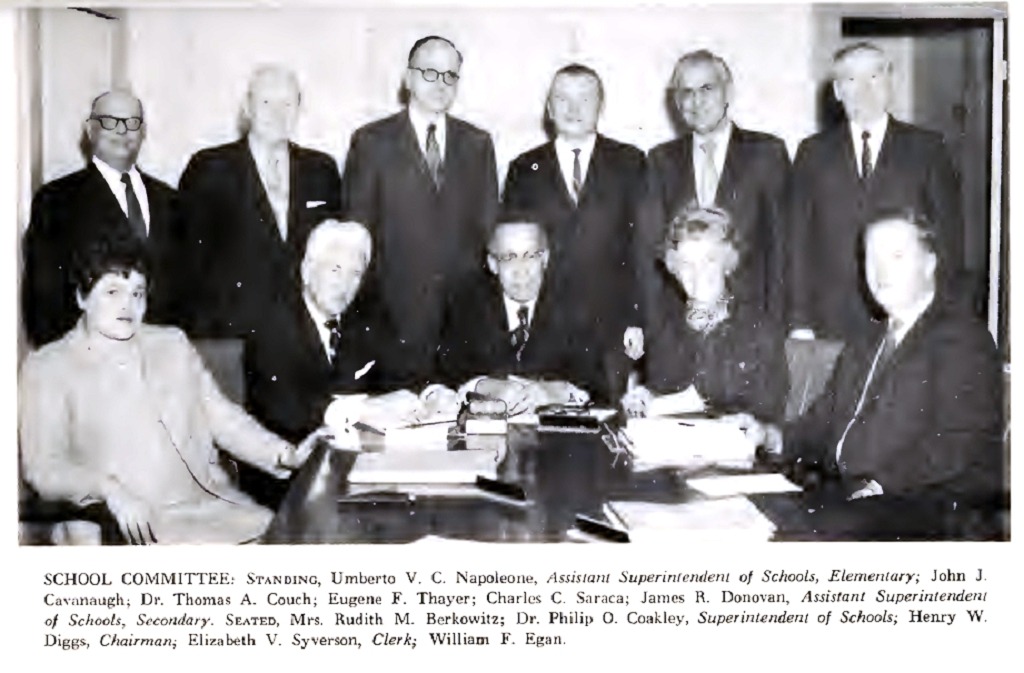
Superintendent Dr. Philip O. Coakley informed the Norwood School Committee that no companies submitted bids to supply 110,000 gallons of No. 5 heating oil for town schools due to quotas, shortages, and environmental regulations.
-
Bells Are Ringin’-July 3, 1970
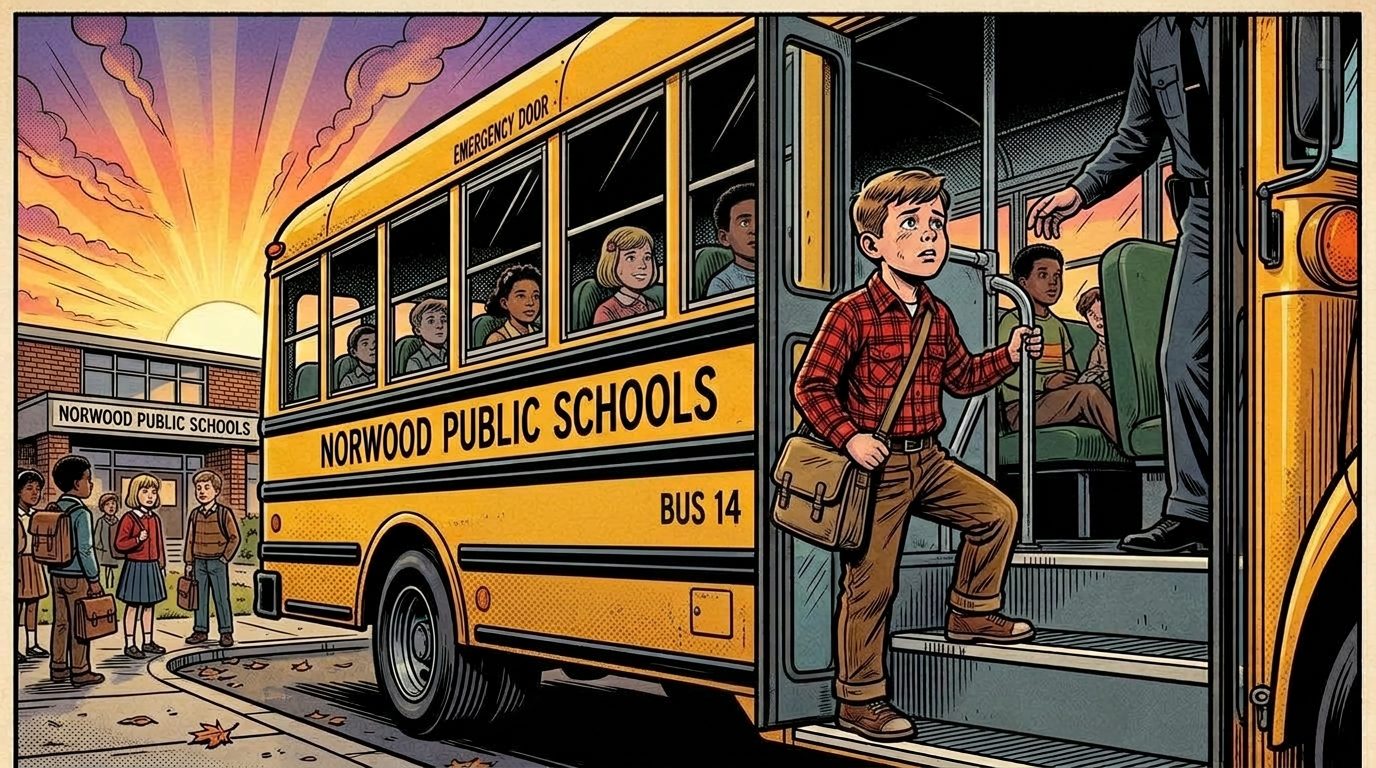
The Norwood School Committee overhauled its student transportation system and faced an $8,000 wave of structural school vandalism in July 1970
Discover more from Norwood Historical Society
Subscribe to get the latest posts sent to your email.