Committee Votes Down Suburban Student Expansion And Abolishes Outside Reading Approvals
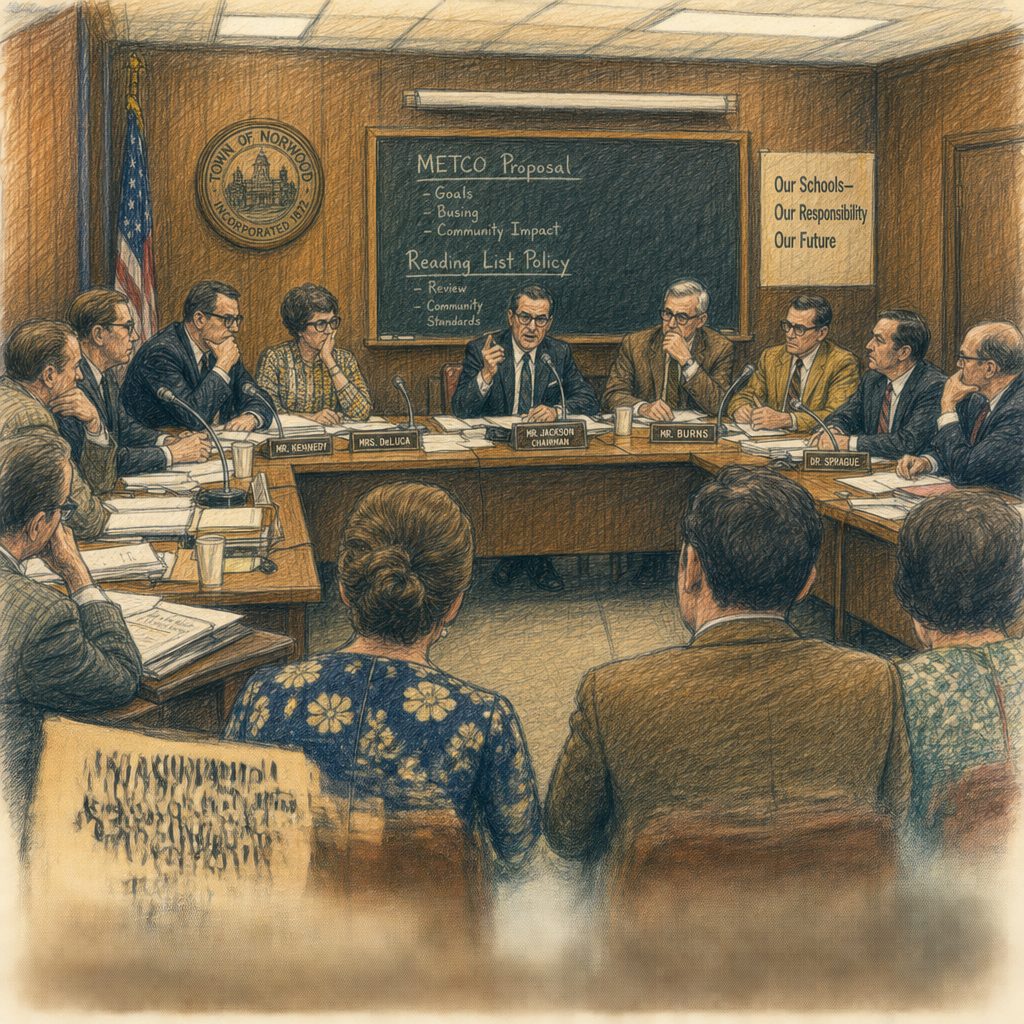
Though the committee agreed that “it was good to give a helping hand everywhere,” as Dr. Thomas A. Couch expressed it, members’ hesitation for varying reasons on reaffirming the Metco application occasioned the narrow defeat. Different reasons for voting against it were given. Mrs. Rudith M. Berkowitz, who voted for Metco two years ago when the request was for nine elementary students, said she believed in “doing what we can at the elementary level, but I am opposed to it at the secondary level for different reasons.” Mr. Saraca rejoined that he had talked to school superintendents of participating communities and Metco officials and “I can cite you eight kids that have been in the high school Metco program for four years who have been good students.” He noted that Metco officials’ response to the board’s vote to join the program two years ago was delayed because no funds were available to implement expansion of the number of participating schools in 1968-69 or 1969-70.
Metco officials told the committee in April that additional funds probably would be available in 1970-71 and that they were thinking mainly of placing 25 students in Norwood elementary grades, if the committee wished to participate in the plan. Chairman Henry W. Diggs reported he had explained to Metco executive director Robert R. Hayden that overcrowded Norwood elementary conditions “would not permit any extras next year” but that the committee was interested in having 15 students at the high school level. His, Mr. Hayden’s opinion, added Mr. Diggs, was that placement of students at the high school level could create a problem because of the lateness of the application and the need for adjustment to be programmed.
Mr. Saraca maintained, however, that the committee “morally” did its job two years ago and that it should do the same now. “They made a request to us for a yes or no. If we say yes, they will consider it ‘Norwood’s application’; if we say no, they won’t even get to consider it.” Dr. Couch said that the decision was “irrelevant” because of Metco officials’ comments on the committee’s proposal. “But they didn’t say no,” replied Mr. Saraca, introducing his motion for Norwood to accept 15 students at the high school level at an annual cost of $400 per student, “who would be allowed to attend the school until graduation.” The $400 cost per student, he explained, was half what he figured it cost to educate a Norwood child. “It’s not like you’re building a new class for them.” Dr. Couch remarked that he had originally voted for Metco, but at an equal cost, “I find it hard to conceive with the $15 tax increase we’ve had and the possibility of future increases to ask the people of Norwood to bear the additional cost,” he explained. “It’s mandatory,” commented Chairman Diggs, that cities receive help from the suburbs to allow persons who want to work in the city or other areas to prevent cities dying.
Mr. Saraca took weakness thought he had to think something more than Metco in ensuing years would be necessary to help ghetto children as long as city conditions were allowed to exist. “To point out weakness in Metco, whether it be elementary or secondary level, is the white teacher who cannot cope with the situation,” he commented, adding that he did not think the proposal was unfair to Norwood taxpayers. Dr. Couch argued that for Metco, “or any of these programs to work correctly, there would have to be not only money, but also community involvement.” Mr. Saraca answered that once the program got started persons would get involved and pressed for a vote on the issue. The result – Mr. Saraca, Mr. Diggs and William F. Egan voted for application and Mrs. Berkowitz, Dr. Couch and Eugene F. Thayer opposed it, a tie vote. “At last the Norwood School Committee has voted yes or no, now I can sleep better,” remarked Mr. Saraca.
Switching to the high school book list dispute, the committee found itself facing two issues – control over selection by a department head over his staff and censorship. The committee last month heard John J. Flaherty, English department head, and teacher groups who spoke on rules for outside reading lists for students. Mr. Flaherty said the problem concerned his authority to approve the general summer reading lists of teachers. He explained that he did not wish to be a censor, but had occasionally requested teachers to remove books he questioned from a moral and artistic standpoint. Mr. Peterson, who has been in Norwood 10 years, asked the committee for more authority than he had, saying he would like to appraise his students of the existence of certain books from the uncontroversial “Goodbye, Mr. Chips” to the admittedly controversial “The Confessions of Nat Turner.”
School Supt. Philip O. Coakley last night recommended the committee sustain Mr. Flaherty’s position of control over his department, but members felt the issue was more complex than that. Mr. Thayer said control was one issue and it would be “very difficult to give license to the teacher and not to another” since some teachers would not use the permission judiciously. “But in a sense, what we’re doing is ruling on obscenity which has officially to be decided elsewhere,” adding that the dispute had to be moved “out of the realm of obscenity into that of teacher judgment.” The committee members then remembered they had originally voted to abolish the reading list and wondered why the question had surfaced again. Dr. Coakley replied that the English department felt it would be more beneficial for students to have the reading list and consequently had brought the matter up again. Following a brief executive session on “personalities,” the committee unanimously voted that reading lists be abolished for students, but used by teachers as guidelines and that the department head continue to have full control over his staff.
Archival Note: This article has been dynamically reconstructed from the original public record print archives of the Patriot Ledger
More School Stories
-
New Coakley Middle School
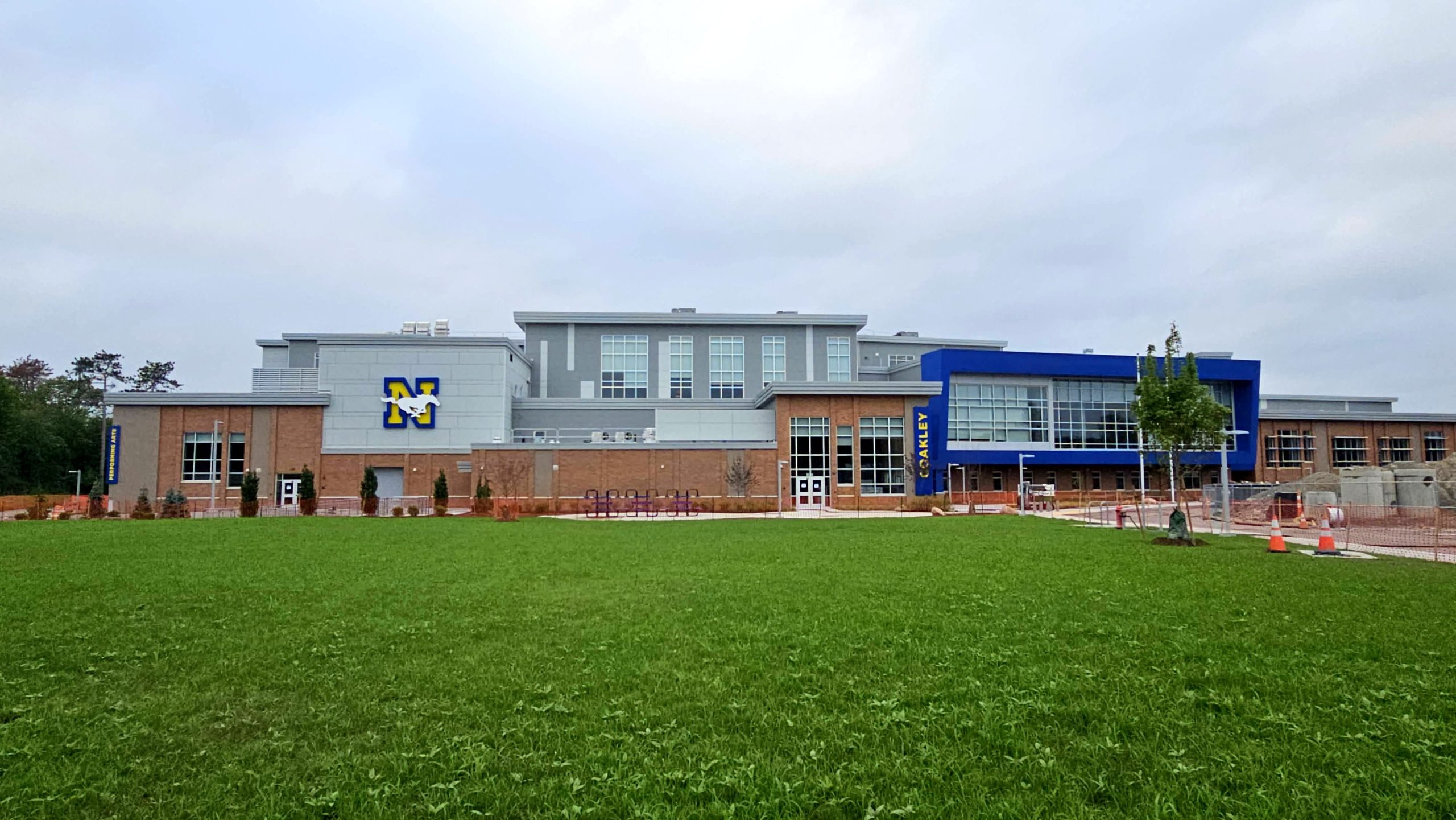
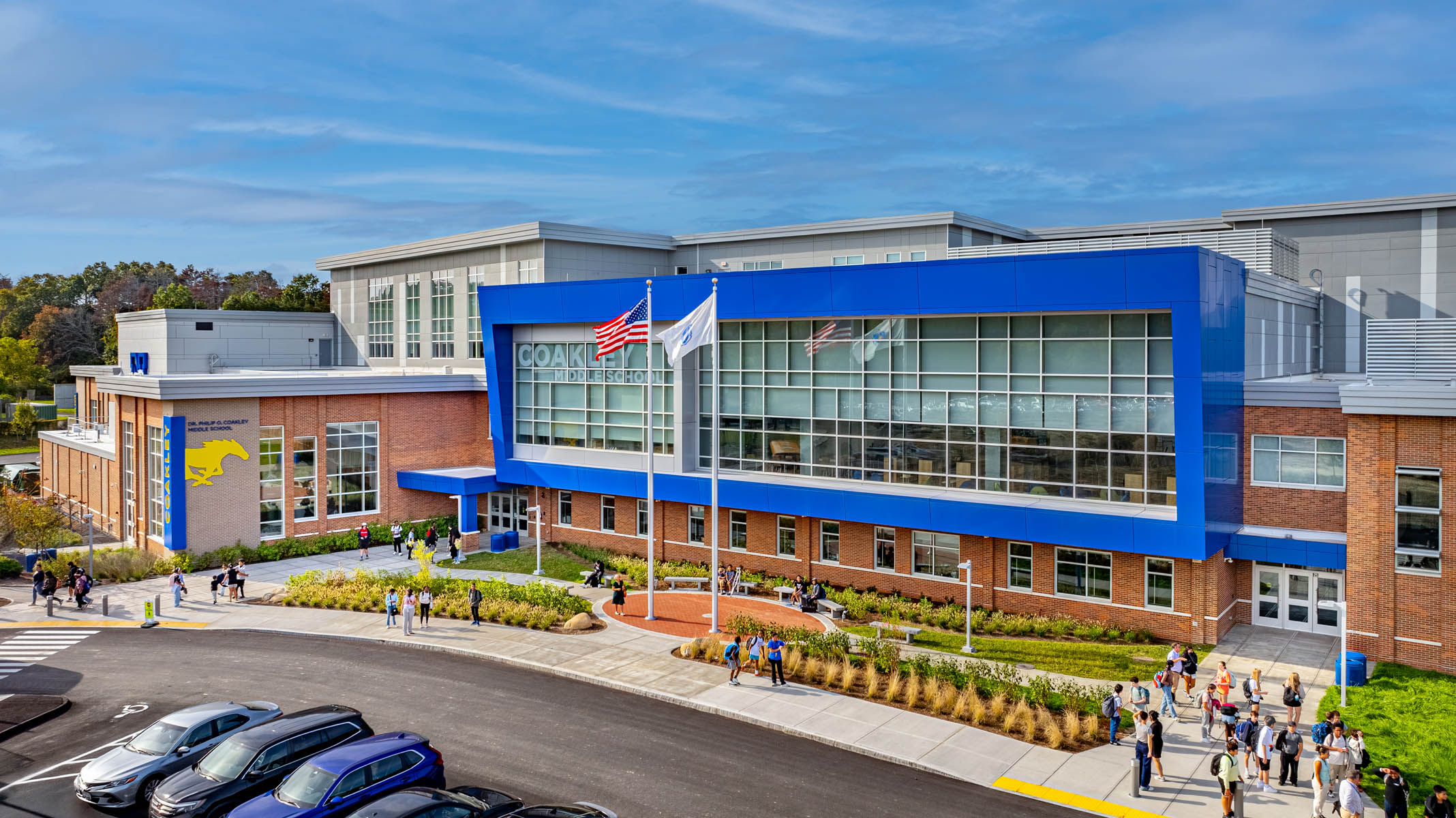
The new Dr. Philip O. Coakley Middle School is more than just a building project; it’s a community-driven transformation decades in the making. A new chapter in education is taking shape in Norwood as the town prepares to unveil its reimagined Dr. Philip O. Coakley Middle School—a $100 million, state-of-the-art facility designed to meet the…
-
Norwood’s First Foreign Exchange Student
“Mimi” Mirja Wahe, better known as “Mimi” came to us in September of 1955, as a Foreign Exchange Student from Finland. She was introduced to the student body by Mr. Hayden at an assembly in October. Mimi was called upon many times to speak before various audiences, and she lent a helping hand in many…

-
Top This Day In Norwood History Posts of 2024, Number 3
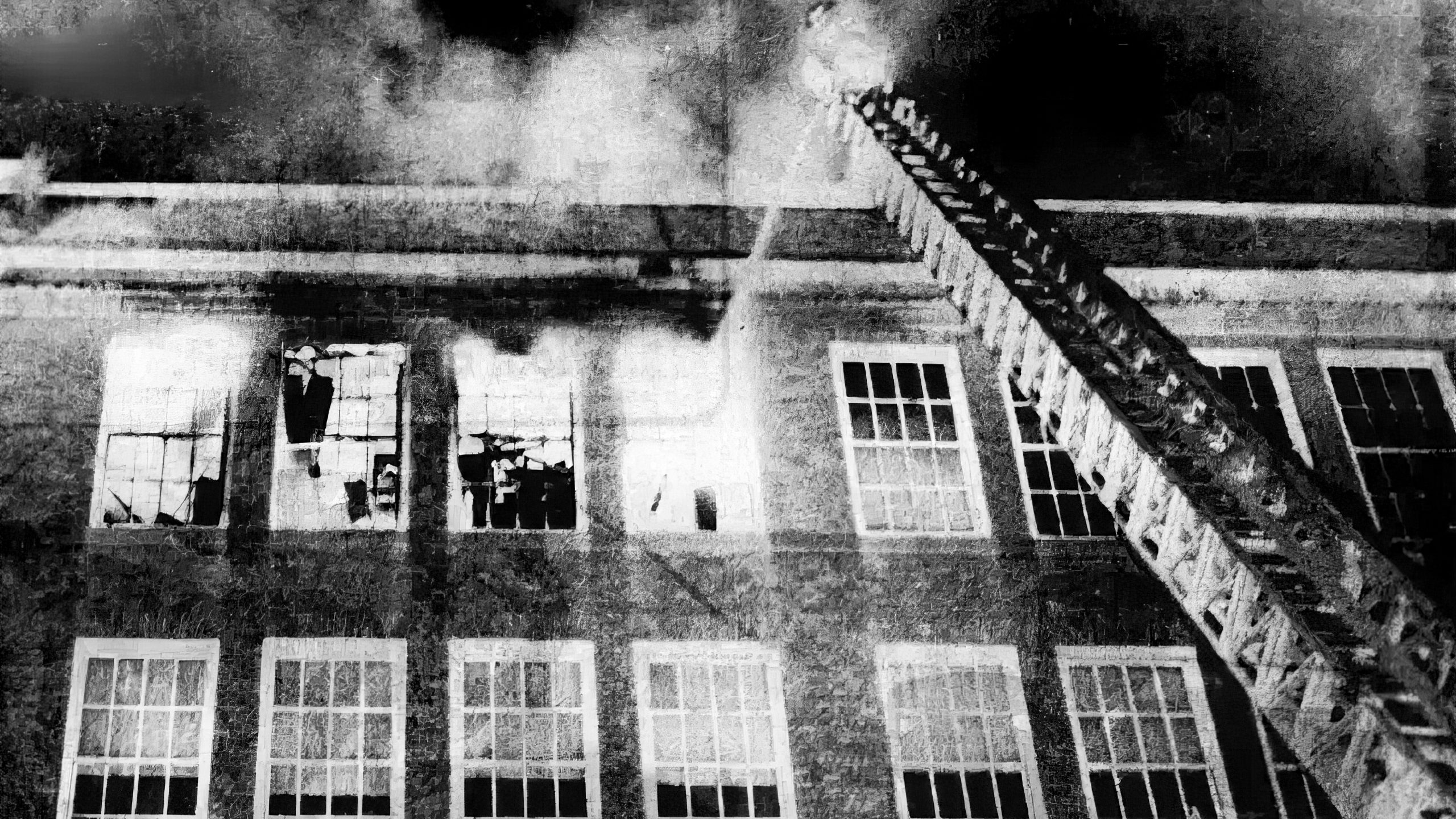
The January 1971 fire at Norwood’s Junior High School was a major attraction. Hundreds of people braved freezing cold temperatures to stand in ankle-deep snow to watch the blaze, so it’s no surprise that the article about the fire is one of the most popular on our list. it was the largest local fire seen…
-
Norwood Voters Approve Tax Increase To Build New Coakley Middle School-April 10, 2022
Norwood residents delivered a decisive vote, choosing to raise local taxes in order to fund a long‑awaited new middle school. The ballot question passed by a wide margin — 2,365 to 831 — clearing the final hurdle required under Proposition 2½ for the town to take on additional debt. The vote followed a Special Town…
-
1944 Norwood High School Cheerleaders
Back: Florence Billingham (Captain), Joan Bernier Front : Ann Coakley, Lillian Kozak, Jeannette Mike, Florence Murray, Audrey Woods Discover more from Norwood Historical Society Subscribe to get the latest posts sent to your email. Type your email… Subscribe
-
The Beacon School
The Beacon School, built in 1890, was located on the corner of Bullard St and Beacon St.

-
Norwood Public Access Dedicates Dick Kief TV Studio-January 3, 2013
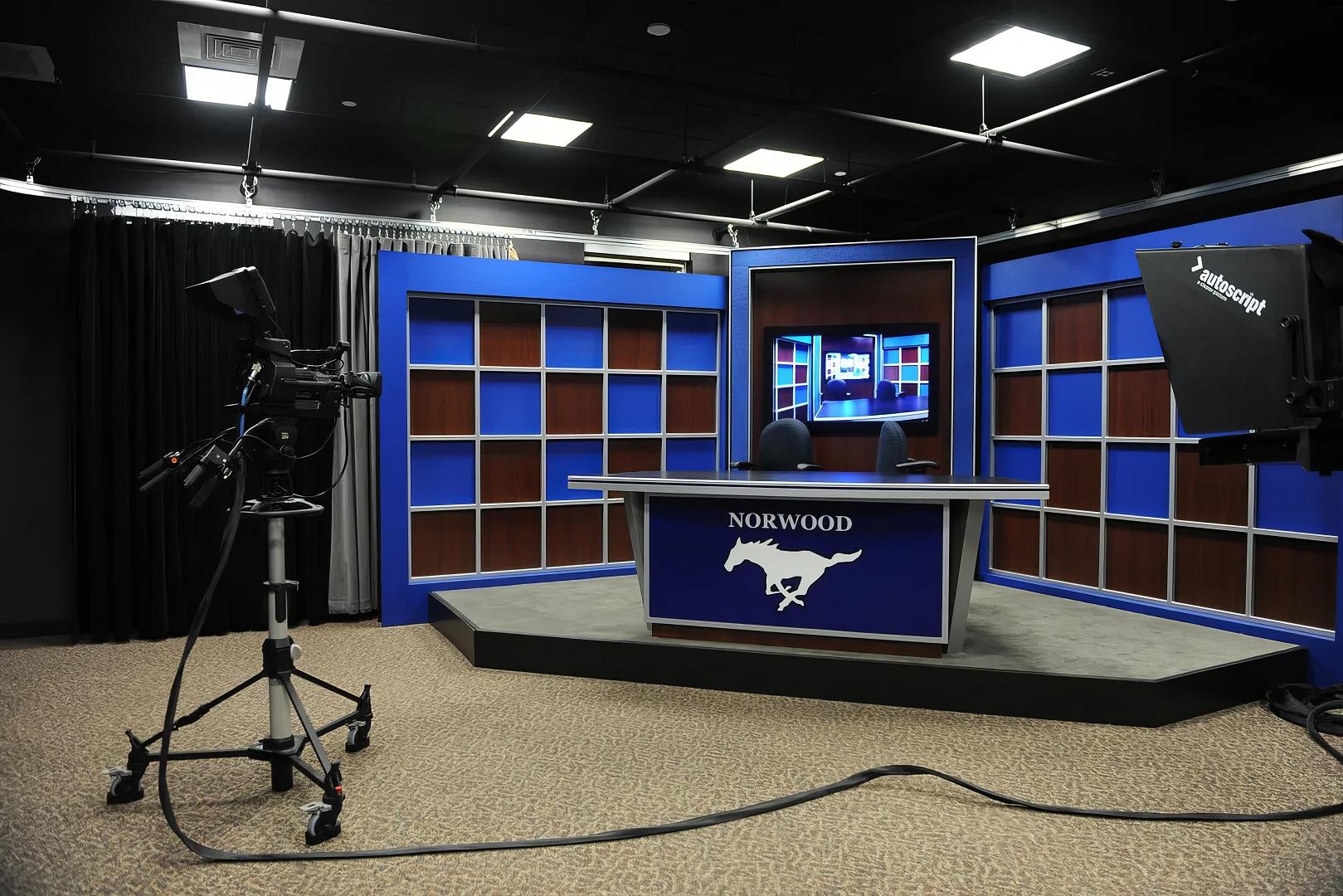
In a heartfelt dedication ceremony on Thursday, January 3, members of Dick Kief’s family celebrated the unveiling of the TV studio named in his honor at Norwood High School. Scott Murphy, President of the NPA-TV Board of Directors, emphasized Kief’s preference for being called “Dick” rather than Richard or Richard W. The plaque now proudly…
-
Norwood High School’s Last Hurrah-This Day in Norwood History-June 11, 2011
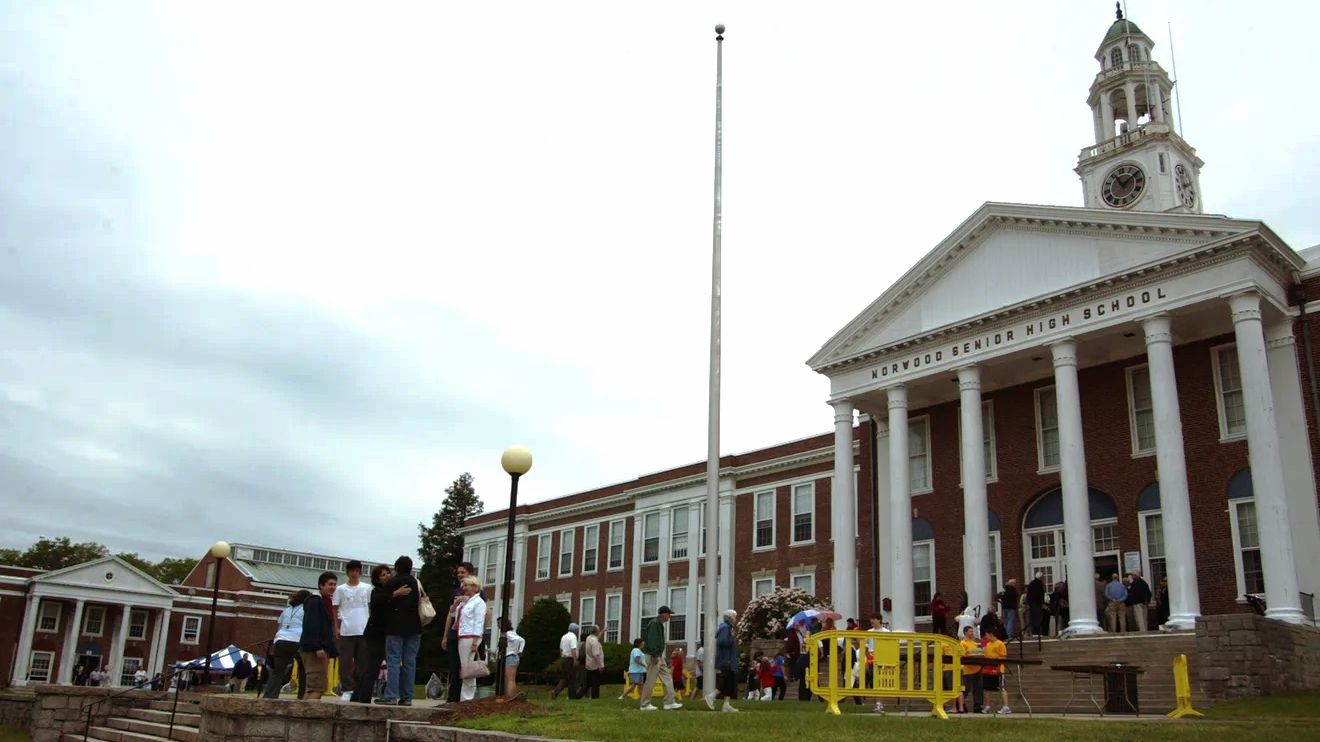
A final walk through Senior Hall. On June 11, 2011, more than 2,000 alumni from near and far packed the 85-year-old “School on the Hill” for the Norwood High School Alumni Association’s “Last Hurrah.” Generations of Mustangs reunited to share yearbooks, look at historic memorabilia, dance in the gym, and say a nostalgic goodbye to…
-
Voters Approve New Norwood High School-April 12, 2009
Norwood High School Project Faces Delay Despite Overwhelming Voter Support On April 12, 2009, Norwood found itself at a dramatic crossroads — one defined by overwhelming civic unity on the one hand, and a sudden, unexpected construction setback on the other. Just days earlier, Norwood residents had delivered one of the most decisive votes in…

-
Willett Early Childhood Center Expands To Free Full Day Kindergarten-This Day in Norwood History-September 5, 2004
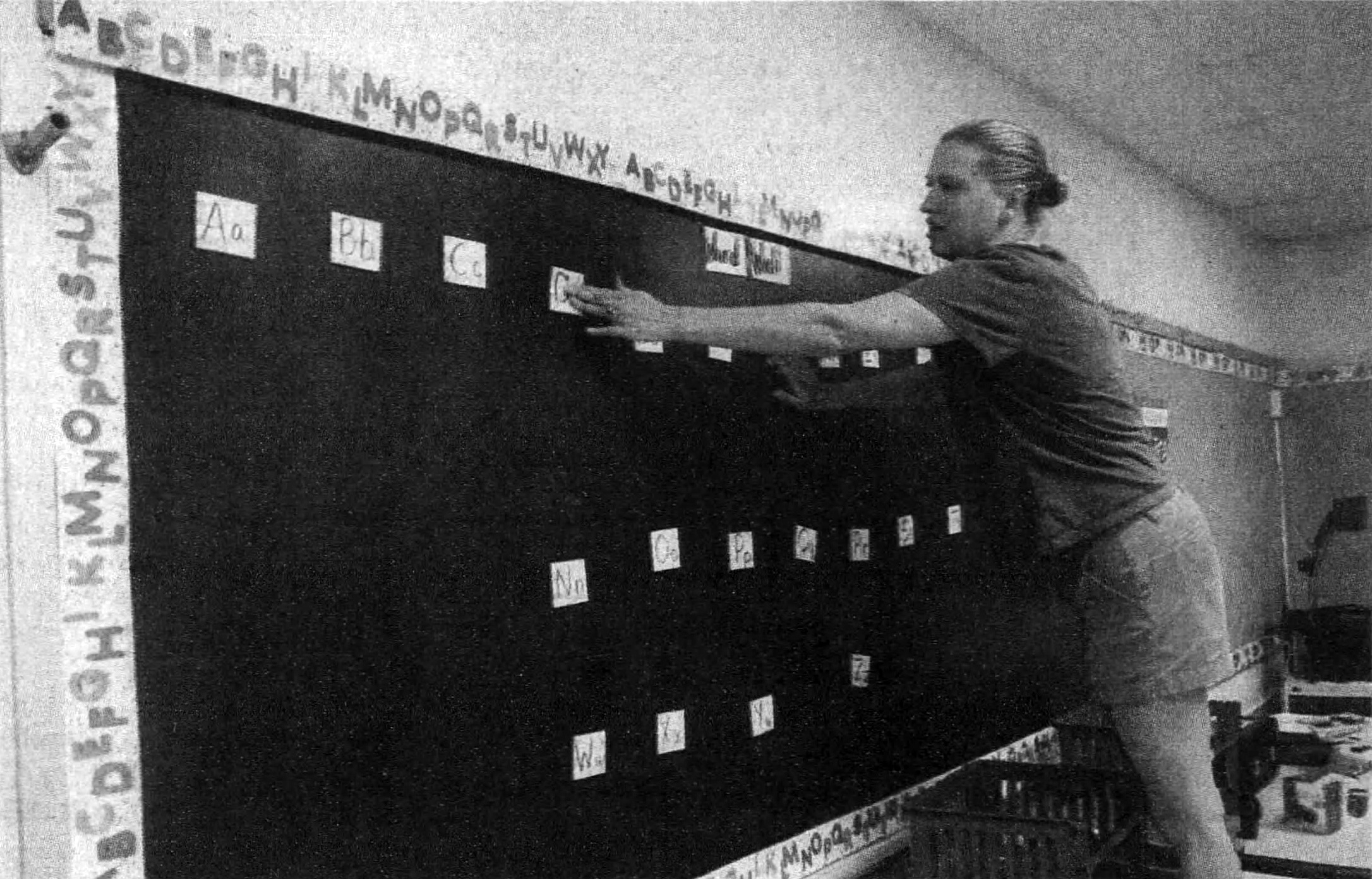
Now available: Free, full-day kindergarten Sun, Sep 5, 2004 – The Boston Globe (Boston, Massachusetts) By John Laidler GLOBE CORRESPONDENT -GLOBE STAFF PHOTO/ TOM LANDERS Kindergarten students in Norwood will have an extra three hours a day to learn and play this year. The town is introducing a free, full-day program for all its kindergartners,…
Discover more from Norwood Historical Society
Subscribe to get the latest posts sent to your email.