
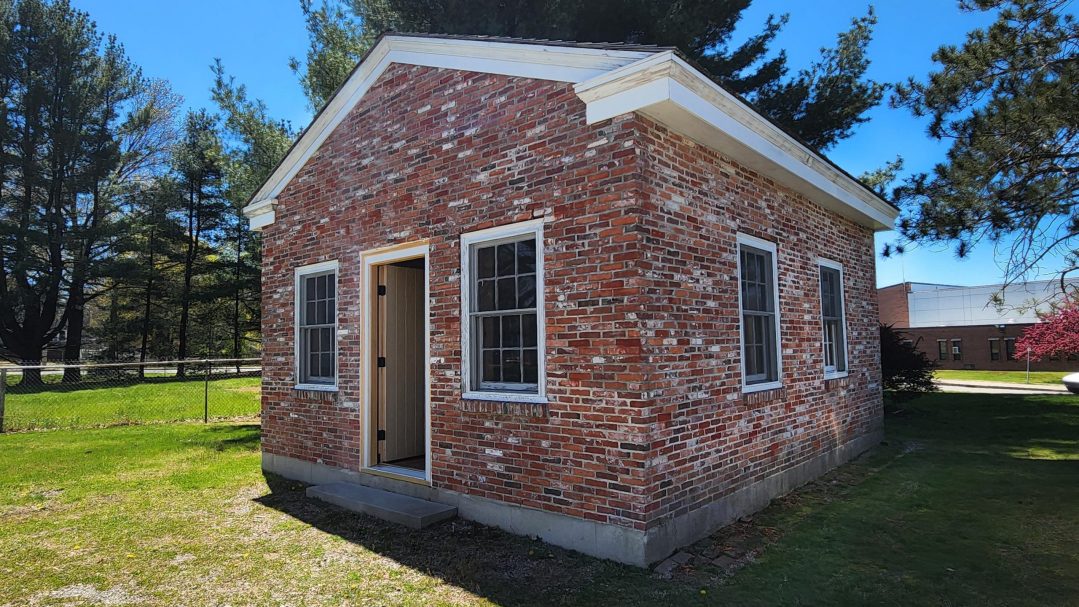
Three-Year Restoration and Replication Effort Culminates in Grand Opening
After more than three years of dedicated, tireless labor by the Norwood Historical Commission, the historic Little Red Brick School House has officially returned to its rightful home in Norwood. A formal open house held on Wednesday, October 16, marked the grand opening of the new replica, celebrating a monumental milestone for local historical preservation and community heritage.
“We’re so proud of it. It took us over three years. People said it couldn’t be done, but we did it,” said Historical Commission member Caroline Pannes, reflecting on the immense undertaking. “It was a lot of work, but a lot of fun. We learned a lot while doing it.” Fellow member Marion Gaw praised the achievement as a direct testament to the extraordinary perseverance of Judith Howard, who spearheaded the multi-year effort against considerable odds. “Some people might have said it was a lost cause and we’d never get it, but here it is. All her efforts in this paid off.”
History of the Original 1788 Structure and Demolition Hurdle

Built circa 1788 in the Hawes neighborhood at 2 Sumner St. (situated at the corner of Sumner and Pleasant streets), the original structure predated the official incorporation of Norwood as an independent town by nearly a century, dating back to the era when the community was known as South Dedham. Historical Commission member Judith Howard noted that during this period, surrounding towns were constructing one-room schoolhouses, with the Little Red Brick School standing as the final one erected in the district. It served local students until it was sold in 1868.
At that juncture, the Bird & Son Plant purchased the building to serve as housing for its factory workers, constructing a second floor and a mansard roof. “It changed the usage from school to house, making the Little Red Brick School the Little Red Brick School House,” Howard explained. The building changed hands again during the 1940s, transitioning into purely residential apartments. When European Cabinets Design announced plans in 2008 to demolish the historic structure to expand their cabinet showroom, the Historical Commission intervened immediately. While initial preservation efforts aimed to relocate the physical structure, logistical nightmares made moving it impossible.
“We wanted to move it, but we couldn’t get it under the bridge, and Norwood has a lot of bridges,” Howard recounted. “We couldn’t save the original, but we could replicate it.”
The New Replica at the George H. Morse House
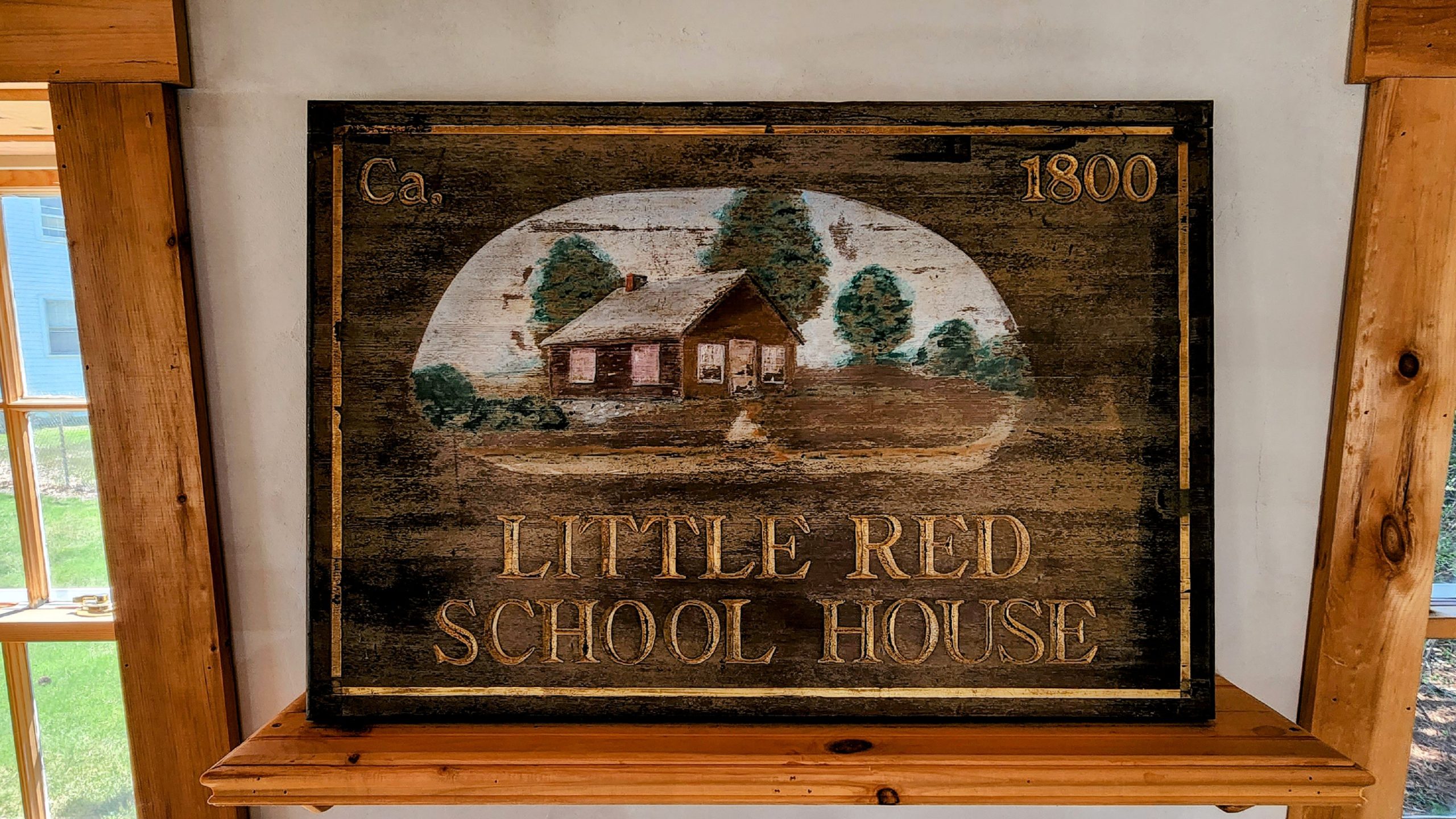
Although the original 24-by-27-foot building was demolished in May 2009, prior owners generously donated several original bricks to the commission. These authentic bricks were successfully incorporated into the new 18-by-21-foot replica erected on the grounds of the George H. Morse House at 1285 Washington St.
Historical Commission member Dale Day observed that the Morse House—recognized as Norwood’s oldest homestead, constructed in 1868 on the historic site of the 1678 Ezra Morse House—provided an ideal location to establish a cohesive historic enclave near the Coakley Middle School. Day expressed great optimism that local students, particularly those attending the neighboring Balch Elementary School, would take advantage of field trips to experience an authentic 18th-century classroom environment firsthand. “It will be a nice thing to take the kids to on a field trip, and they can see what a school was like all those years ago,” Day said. “It carries on the history. Whatever they learn in school, they can come up here and see it.”
Inside the newly opened museum, the interior is faithfully furnished with authentic antique school desks and chairs. Caroline Pannes noted that these period pieces were successfully discovered and acquired from the Winsmith Mill Market located on Endicott Street. Citing the community-wide celebration, the grand opening event was further highlighted by festive musical performances delivered by the Norwood Colonial Boys.
Source: TRANSCRIPT BULLETIN Brad Cole. Photos: George Curtis
More…
-
Norwood’s History-1930’s-The Norwood Theater
The Norwood Theater was designed by famed local architect William G. Upham and originally opened on August 31, 1927. Designed for motion pictures, it features a stage for live music and theatrical performances. Upham designed several other buildings in Norwood, including the 1926 Norwood High School building, Odd Fellows Hall, The Norwood Post Office, and…
-
Replica of Little Red Brick School House Opens-October 22, 2013
Following a three-year replication project led by the Norwood Historical Commission, a replica of the 1788 Little Red Brick School House opened with an open house at the George H. Morse House.

-
Steps Begun to Save Historic Lithuanian-American Club House from Demolition-November 1, 1977
Hiring a structural engineer and soliciting repair bids from local contractors, the Lithuanian-American Citizens Association has temporarily halted demolition proceedings on its 1913 clubhouse.
-
Landmark Torn Down-August 13, 1975
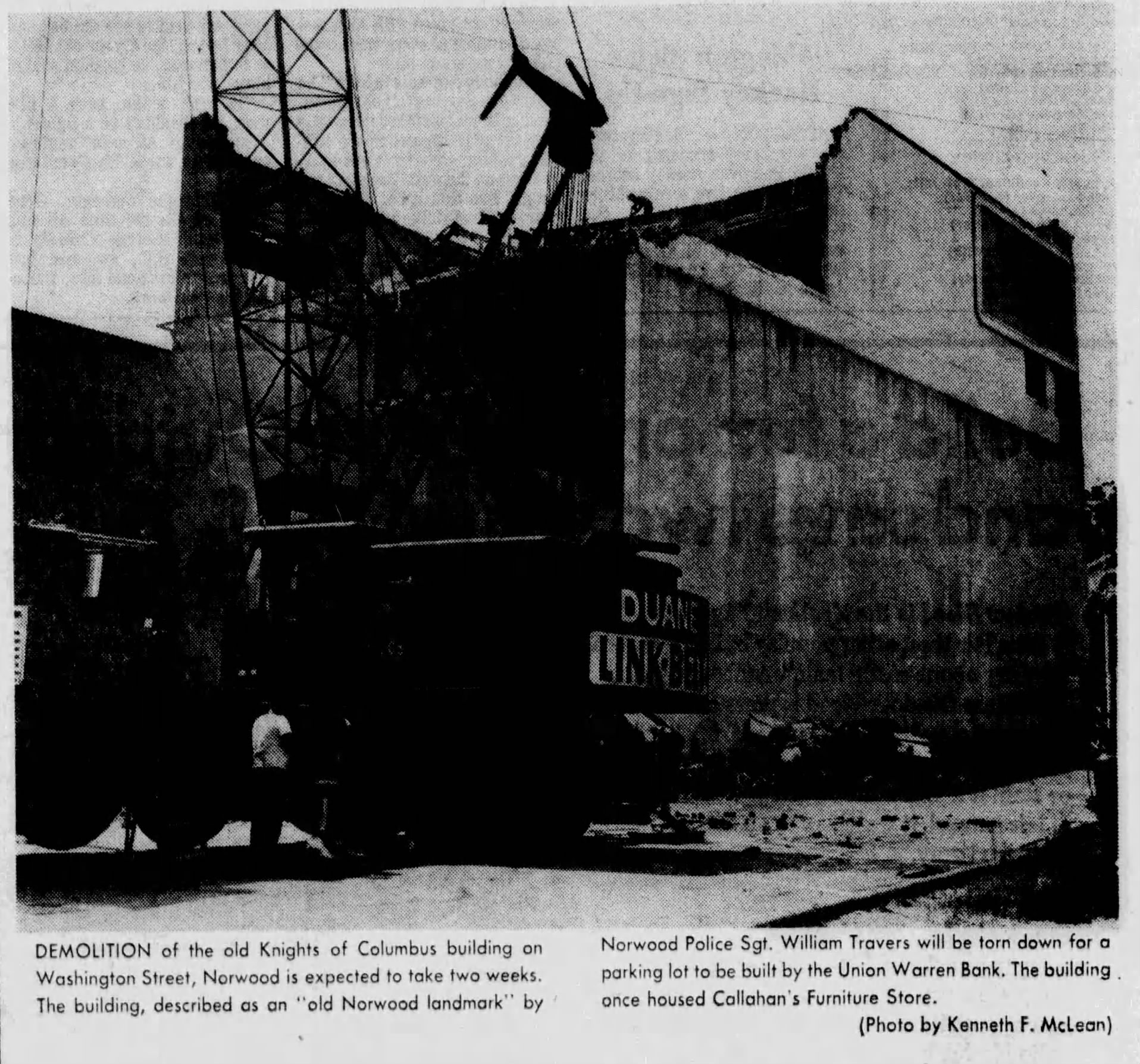
DEMOLITION of the old Knights of Columbus building on Washington Street is expected to take two weeks. The building, described as an “old Norwood landmark” by Norwood Police Sgt. William Travers will be torn down for a parking lot to be built by the Union Warren Bank. The building once housed Callahan’s Furniture Store. (Photo…
-
100th Birthday Unlikely for Norwood’s Historic Village Hall-July 23, 1963
Norwood’s historic former village hall on Broad Street is slated for demolition after being condemned by the Board of Selectmen.
Discover more from Norwood Historical Society
Subscribe to get the latest posts sent to your email.
One thought on “Replica of Little Red Brick School House Opens-October 22, 2013”