
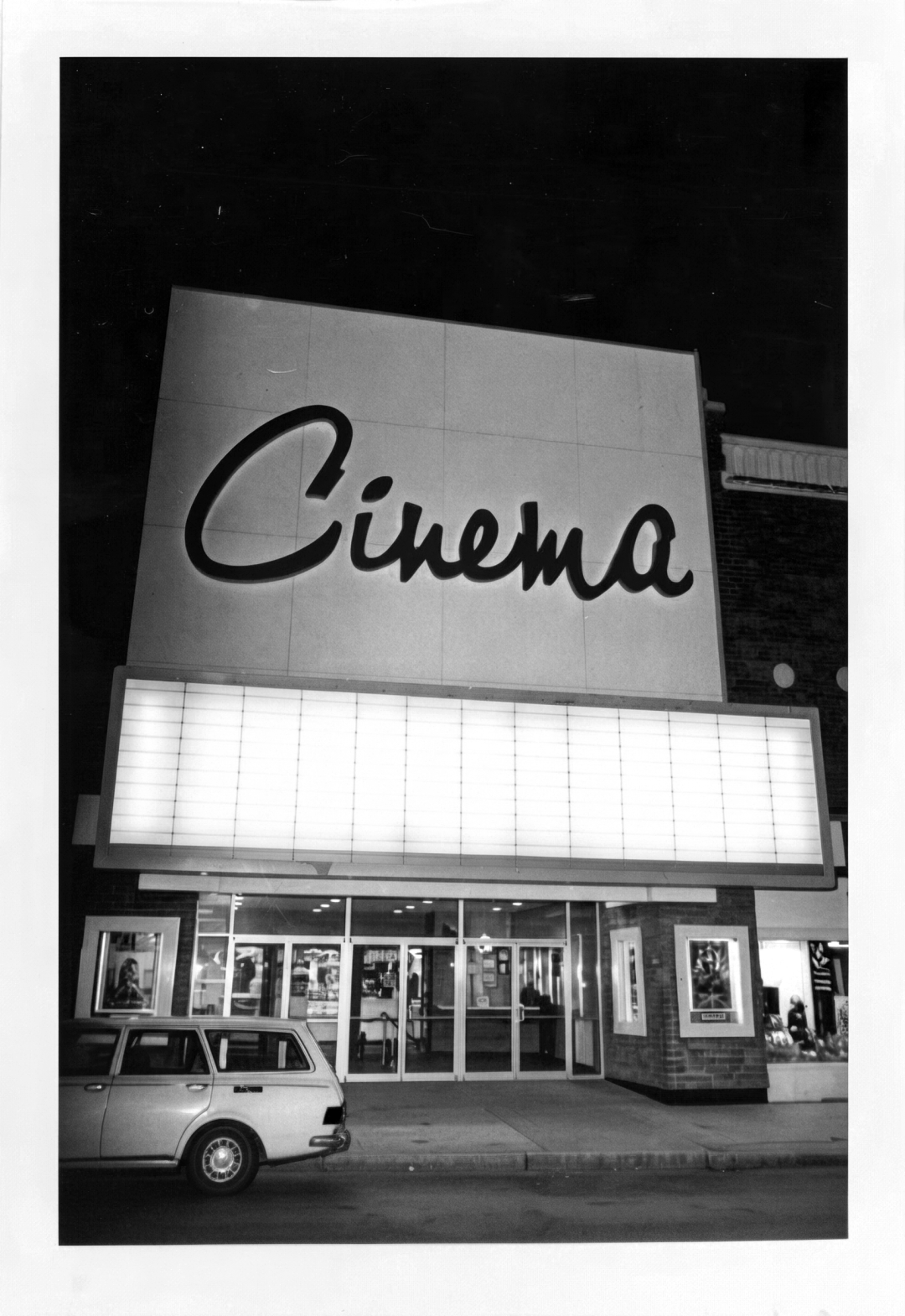
After Norfolk Superior Court Denies Preliminary Injunction, Board Sends Town Counsel Justin C. Barton and Town Manager John P. Mogan to Study Norwell State Police Raids Amid First Amendment and Lawsuit Warnings
NORWOOD – Thwarted in their initial court bid to halt local screenings of the X-rated motion picture “Last Tango in Paris” at the Norwood Cinema, the Norwood Board of Selectmen voted on Tuesday night, November 27, 1973, to consult town officials and police in Norwell on how that South Shore community had confronted similar film controversies. Reported in The Patriot Ledger on Wednesday, November 28, 1973, by staff reporter Douglas Curran, the board’s move came as town leaders weighed constitutional limits, licensing authority, and the threat of personal damage lawsuits from the theater’s owner.
On a proposal by Selectman Walter J. Dempsey, the board voted to dispatch Town Counsel Justin C. Barton and Town Manager John P. Mogan to confer with Norwell police and municipal officials and report back on their findings. Dempsey reasoned that Norwell had gained greater experience and legal traction in handling two X-rated films shown at the Norwell Cinema—“1,001 Danish Delights” and “The All-American Girl.”
Norwood officials had hit a legal roadblock the previous Friday when Norfolk Superior Court rejected their application for a preliminary injunction banning “Last Tango in Paris,” which had been playing at the Norwood Cinema since November 21, 1973. At Tuesday’s session, selectmen learned that pursuing a criminal complaint against the theater owner in district court would likely move too slowly to stop the current engagement: Mogan informed the board that an assistant court clerk had advised Norwood police that a hearing on a criminal complaint might not be scheduled for two to three weeks—well after the film’s run in town had ended.
By contrast, Norwell officials—after being prevented by court order from shutting down their local theater directly—had referred their case to the Plymouth County District Attorney’s office, resulting in Massachusetts State Police raids that confiscated the two X-rated reels, with hearings subsequently underway in Hingham District Court to determine whether criminal complaints should issue.
Town Counsel Barton characterized Norwell’s approach as more “hard-nosed,” while cautioning selectmen about significant legal exposure in Norwood. Exploring whether the board could confront the issue directly by refusing to issue the Norwood Cinema its weekly Sunday operating license, Barton noted that Norwell selectmen had already been enjoined in court from taking that exact step. Moreover, Barton warned that an attorney representing Norwood Cinema owner Irwin A. Cohen had indicated he would sue both the Town of Norwood for damages and each selectman individually if the board revoked the theater’s license over the X-rated screening.
Barton further explained to the board that a “very liberal Supreme Court” had extended First Amendment protection to many works “offensive to me and you,” adding that while the Court had recently ruled that local “community standards” should govern obscenity determinations, the law remained tangled because judges had not yet clearly defined what constituted community standards. When Selectman John H. Lydon (printed as “John Fl. Lydon” in OCR) asked whether the board could automatically deny a license whenever an X-rated movie was booked, Barton pointed out that films sometimes received an X rating for graphic violence rather than obscenity, placing them outside obscenity statutes. When Selectman Joseph W. Walsh (printed as “Joseph W Wal” in OCR) asked if Norwood could establish its own formal community film standards, Barton cautioned that the board “must be careful not to act illegally as censors.”
To forestall future disputes without overstepping legal bounds, selectmen voted to ask the Norwood Cinema how far in advance it knew its booking schedule—aiming toward a potential future requirement that the theater owner notify the board 30 days prior to screening an X-rated film so town officials would have adequate time to review the picture and pursue a criminal complaint if warranted.
Archival Note: This article has been dynamically reconstructed from the original public record print archives of the Patriot Ledger
-
Hidden Spanish Romanesque Facade Revealed as Norwood Theatre Sheds Its “Tired-Looking” Exterior-September 19, 1994
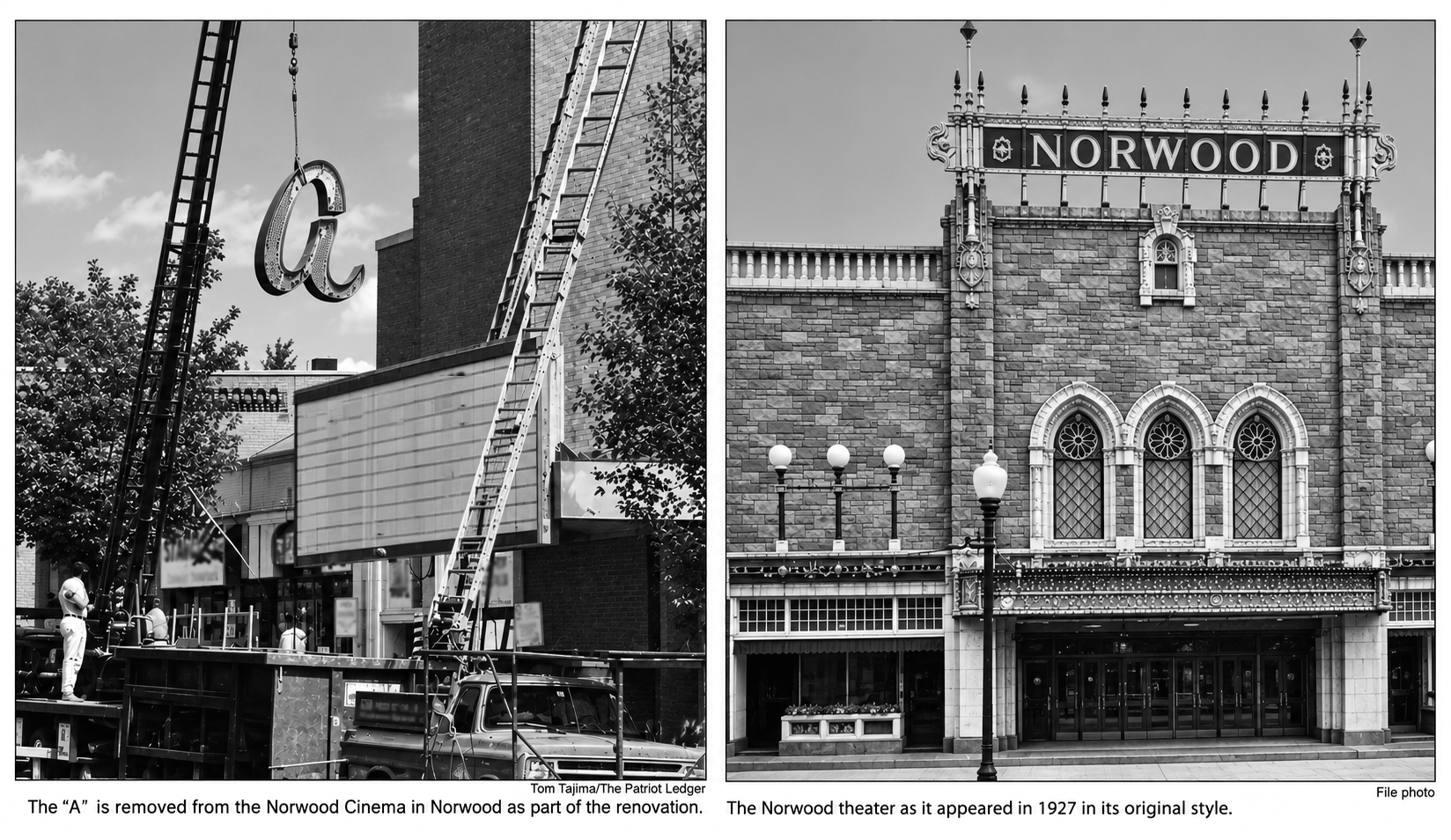
Stripping away a 33-year-old exterior reveals the original 1927 Spanish Romanesque facade of the Norwood Theatre in an exciting downtown revitalization project.
-
Garen Daly Breathes New Life Into Norwood Cinema-October 18, 1993
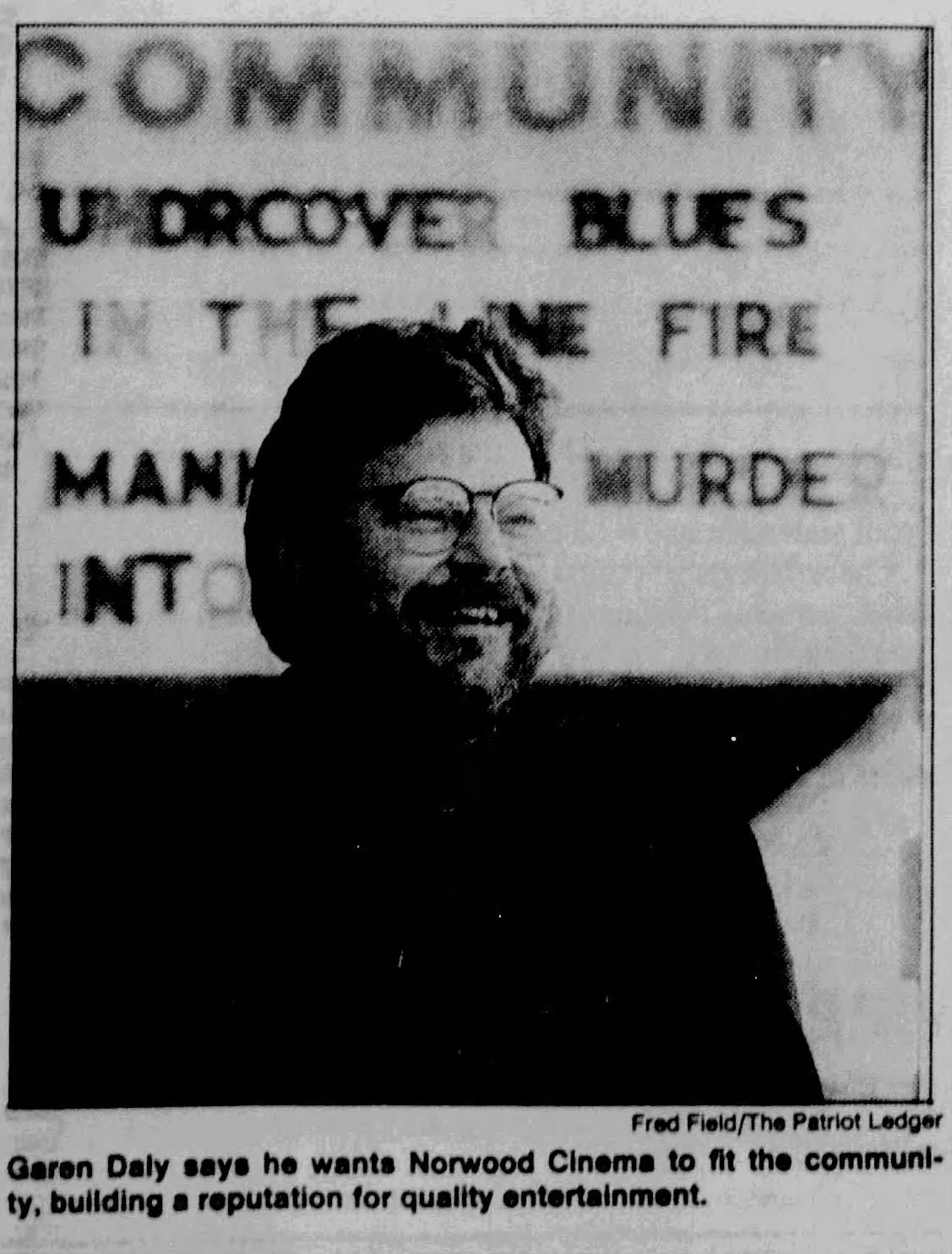
Reviving a Community Landmark-October 18, 1993 Garen Daly knows full well that the Norwood Cinema is no Wang Center. The 43-year-old theater director has no grand illusions of turning the local movie house into a glittering Boston landmark, but he is fiercely determined to build its reputation for quality entertainment through a carefully curated mix…
-
Norwood Cinema Granted One-Year License Amid Board Division Over X-Rated Film Restrictions-October 2, 1974

Norwood selectmen vote 3-2 to grant a one-year operating license to new cinema owner Roger A. Lockwood, with strict prohibitions against screening X-rated films.
-
An Auction on Central Street-June 14, 1974

Norwood Cinema Sold for $35,000 at Public Auction to Foreclosing New York Firm The Norwood Cinema on Central Street was sold at public auction this morning at the site for a bid of $35,000 plus takeover of the first mortgage which is approximately $97,000. The successful bidder was the Seneca Leasing Corp. of Rochester, N.Y.,…
-
The Norwood Cinema To Be Sold-June 11, 1974
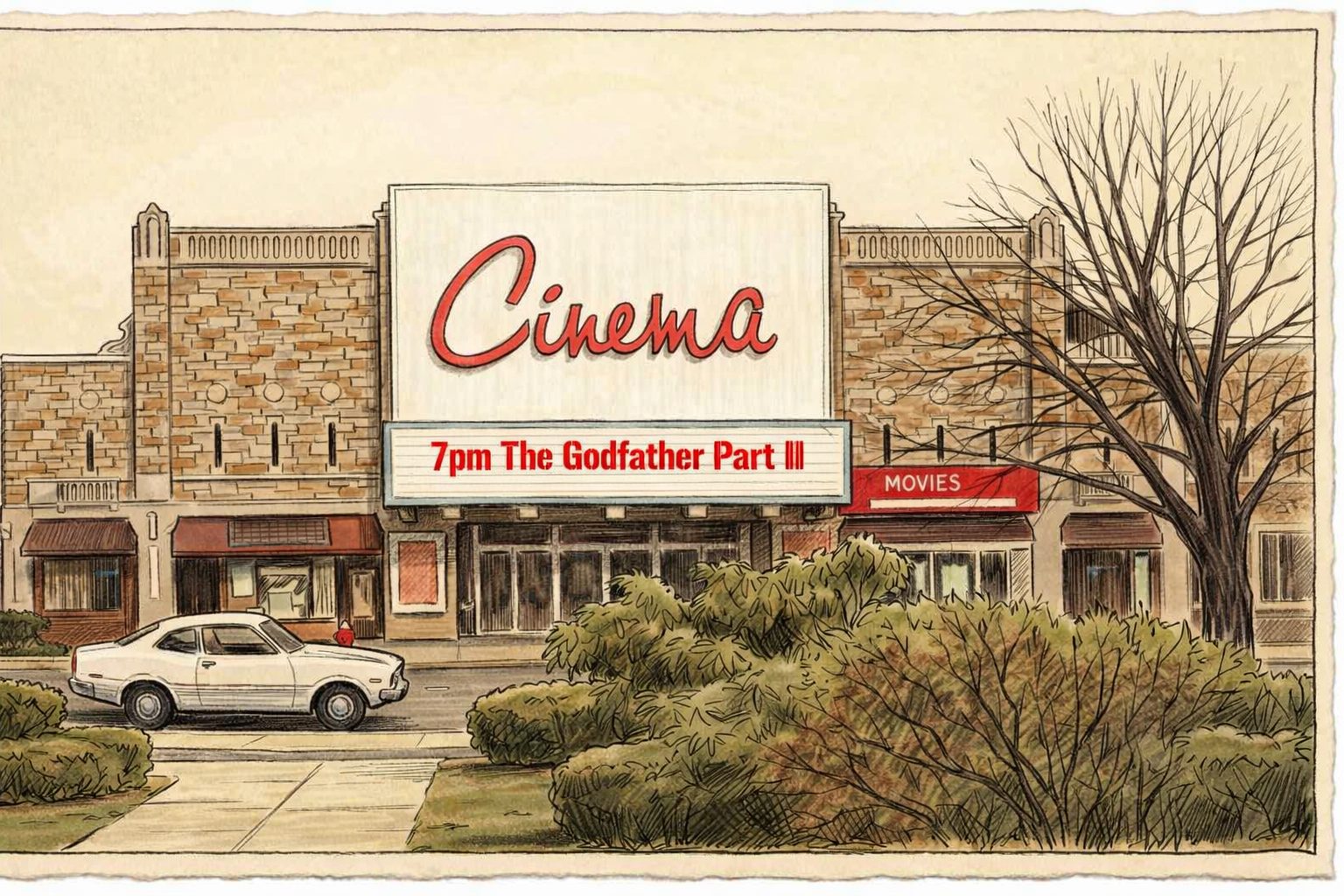
Shuttered since December after local licensing fights and bankruptcy, Norwood’s only movie theater is heading to the auction block this Friday.
-
Norwood Board Restricts Cinema Sunday License and Confronts Rapid Growth at Municipal Airport-November 15, 1972
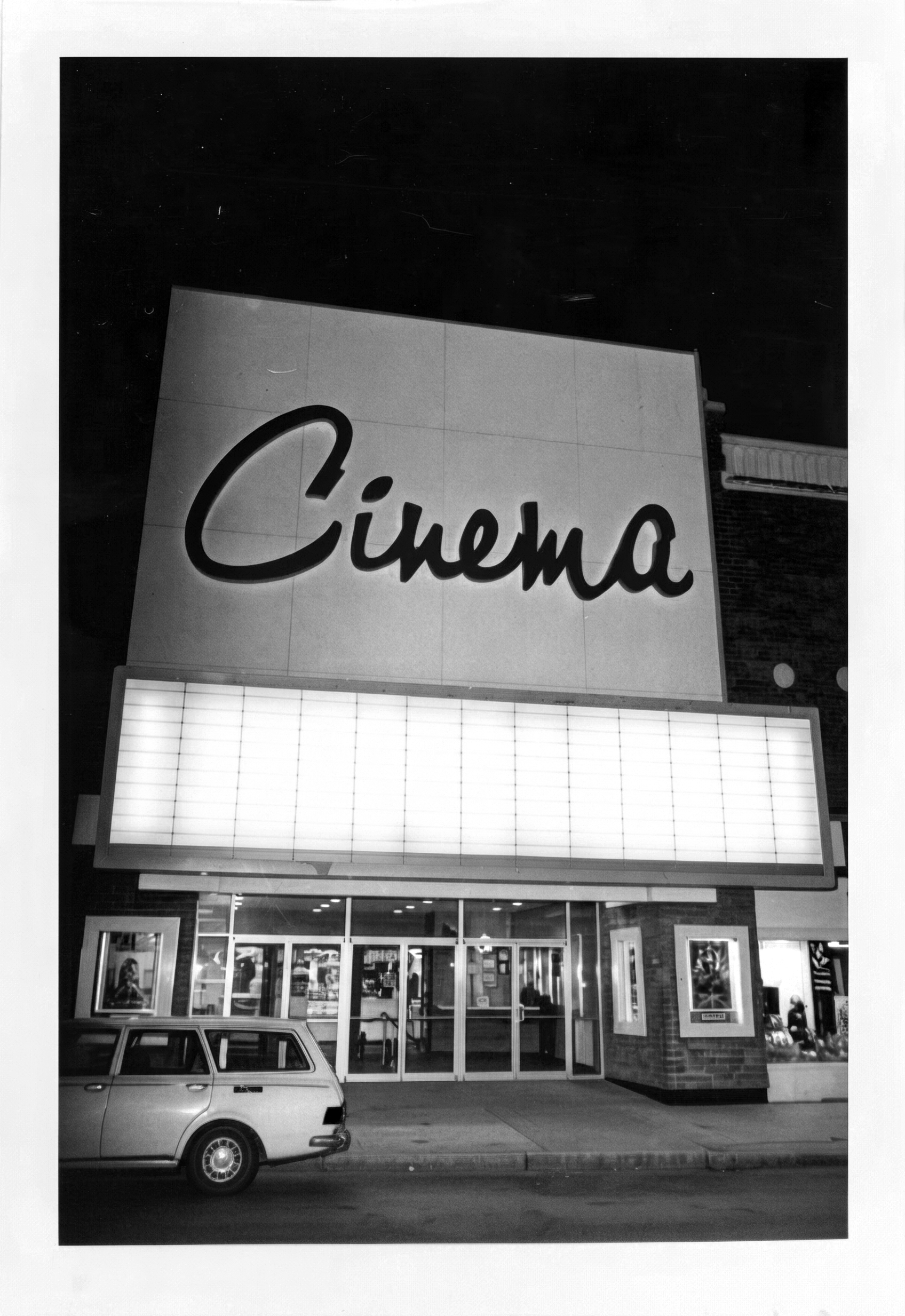
Selectmen Vote Unanimously to Force Weekly License Renewals for Norwood Cinema Amid Heated Debate Over X-Rated Films NORWOOD – Confronting intense community pressure over motion picture content, the Board of Selectmen voted unanimously on Monday night, November 13, 1972, to deny a standard one-year renewal of the Norwood Cinema‘s Sunday operating license. Instead, the board…
Discover more from Norwood Historical Society
Subscribe to get the latest posts sent to your email.