
School Committee Rejects Pressure from Civic Recreation Needs, Stating Educational Quality Remains the Sole Priority Amid Declining Enrollments
NORWOOD — School officials announced last night that closing an elementary school prior to September 1979 is practically impossible, even as ongoing demographic studies evaluate the impact of dropping student enrollment. Taking the first step in a formal feasibility study, the School Committee reviewed current statistics and 1978–79 enrollment projections before an overflow crowd of 75 residents gathered in the Winslow School meeting room.
The committee drew loud applause from parents when members firmly rejected external pressure to shutter a school to provide a replacement site for the Civic Recreation Center, which faces displacement due to the planned expansion of Norwood Hospital. “The education of Norwood children is our only concern. We are not responsible for recreational or civic activities,” declared School Committee Chairman Richard W. Kief.
Enrollment Trends, NESDEC Study, and PTA Petitions
The committee received a “petition of support” signed by more than 700 members representing the seven elementary school PTAs, urging the complete retention of all neighborhood schools. Assistant Superintendent Umberto V. Napoleone presented figures showing a steady decline in elementary enrollment—dropping from a peak of 3,700 students in 1969 to 2,512 pupils, representing a loss of 1,188 children. Overall district population has fallen by 926 pupils over the past four years, dropping from 6,698 in 1974 to 5,772.
Key findings and actions from the session included:
- Projected Drops: Napoleone noted a decline of 183 elementary pupils over the past year, with an estimated drop of another 135 students expected for 1978–79.
- Class Sizes: Current averages sit at 22 students per classroom in Grades 1 through 6 and 20 in kindergarten, utilizing all 121 elementary classrooms (including five dedicated to special needs education).
- Expert Consultation: On the recommendation of Superintendent Dr. Philip O. Coakley, the committee agreed to engage the state Department of Education and the New England School Development Council (NESDEC) for approximately $600 to provide rigorous enrollment projection data.
- Timeline: Both Chairman Kief and Supt. Coakley agreed that collecting data, gathering public input, and deliberating thoroughly would make any school closure before September 1979 unrealistic.
Friction Over Recreation Needs and Community Assurance
The meeting also addressed friction with the recreation study committee. Walter J. Grady, chairman of that committee, had previously suggested closing an elementary school to accommodate the displaced Civic Recreation Center. Committee member Rudith Berkowitz fired back during the meeting, instructing Kief (who also served on Grady’s committee) to relay a message: “Take the message back to your chairman that we do not need any of his astute comments as to how many schools we should close.”
Parents in attendance—many representing the Willett and Guild schools, frequently rumored as potential closure targets—were reassured by Chairman Kief that all future committee deliberations would be conducted in open public sessions with full transparency. Superintendent Coakley offered comforting perspective to anxious parents: “We are not going to destroy what this community has built up to provide the children of the town with a good education.”
School Committee Feasibility Review Overview
Enrollment Metrics
- Current Elementary: 2,512 pupils (down from 3,700 peak in 1969)
- Overall District: 5,772 students (down 926 over 4 years)
- Class Sizes: 22 per room (Grades 1-6), 20 (Kindergarten)
- Classrooms: 121 active rooms (5 used for special needs)
Key Officials & Decisions
- School Chair: Richard W. Kief
- Superintendent: Dr. Philip O. Coakley
- Asst. Superintendent: Umberto V. Napoleone
- Study Partner: NESDEC ($600 demographic data contract)
Archival Note: This article has been dynamically reconstructed from the original public record print archives of the Patriot Ledger
-
School Closing Key Concern of Taxpayers-July 7, 1978

Thirty-six Norwood taxpayers file a Norfolk Superior Court lawsuit to restore $618,795 cut from the school budget, challenging forced school closures and teacher layoffs.
-
Norwood School Closing Impossible Before 1979, Committee Declares-November 10, 1977

Facing declining enrollments and public pressure, Norwood school officials at Winslow School confirmed that any elementary school closure is impossible before September 1979, prioritizing education over civic recreation needs.
-
School Committee Tables Citizen Advisory Board Proposal To Close Schools-November 3, 1977

Rejecting an immediate vote on forming a citizen advisory committee for school closures, the Norwood School Committee opted to wait for next week’s administration enrollment report.
-
School Committee Split Over Closing the Shattuck and Winslow Buildings-June 19, 1974

Debate intensifies at a Norwood School Committee meeting over redistricting, school closures, and federal grants.
-
Shattuck PTA Petitions Norwood School Committee to Support Portable Gym Request-November 4, 1971
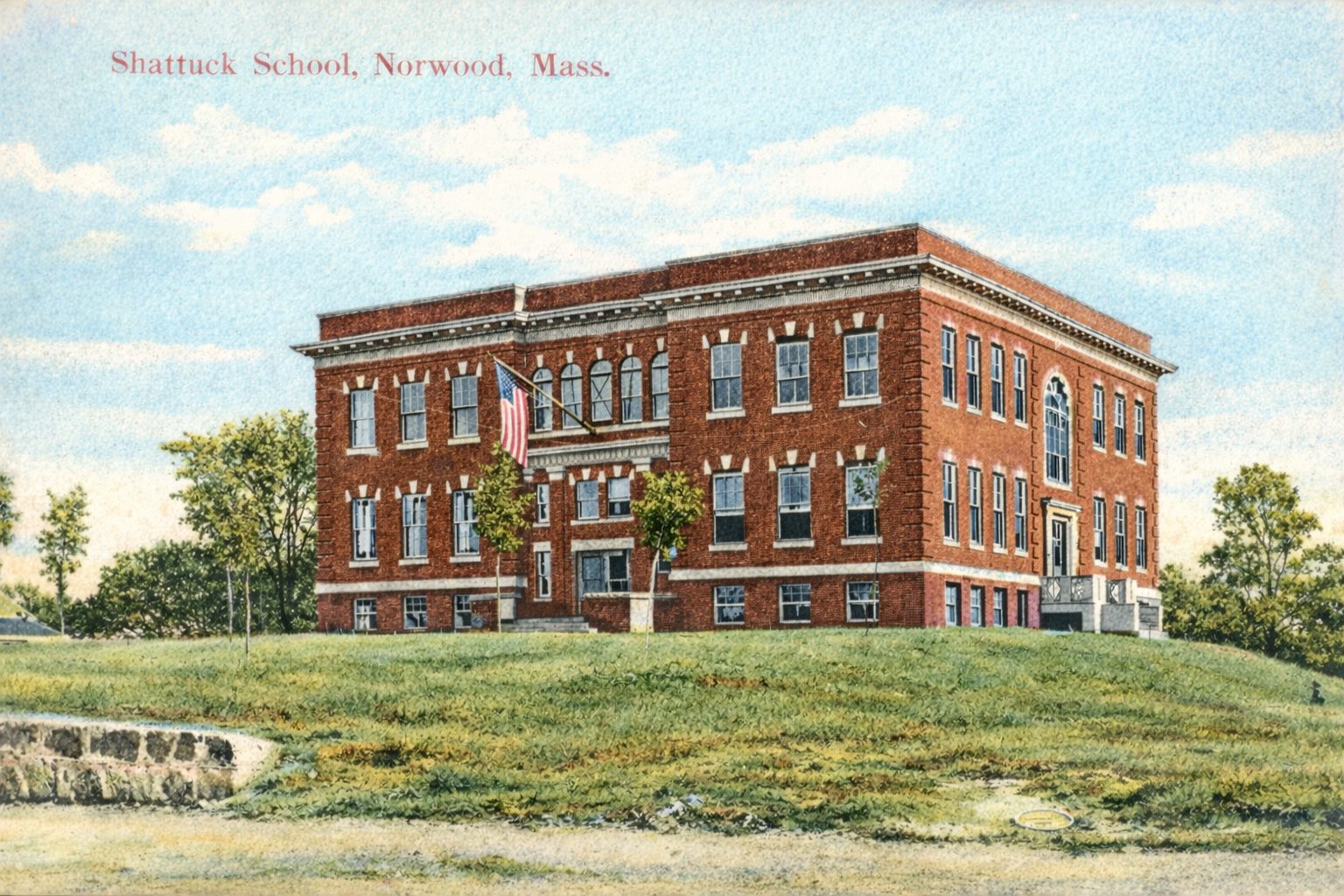
Backed by 160 parent signatures presented by Joseph M. Pentowski, the Norwood School Committee unanimously voted to add a portable gymnasium for Shattuck School to the 1972 budget.
-
Closing of the Everett School Causes Overcrowding Emergency-November 3, 1923

Closing of the Everett School Causes Overcrowding Emergency-This Day In Norwood History-November 3, 1923
Discover more from Norwood Historical Society
Subscribe to get the latest posts sent to your email.