⠀
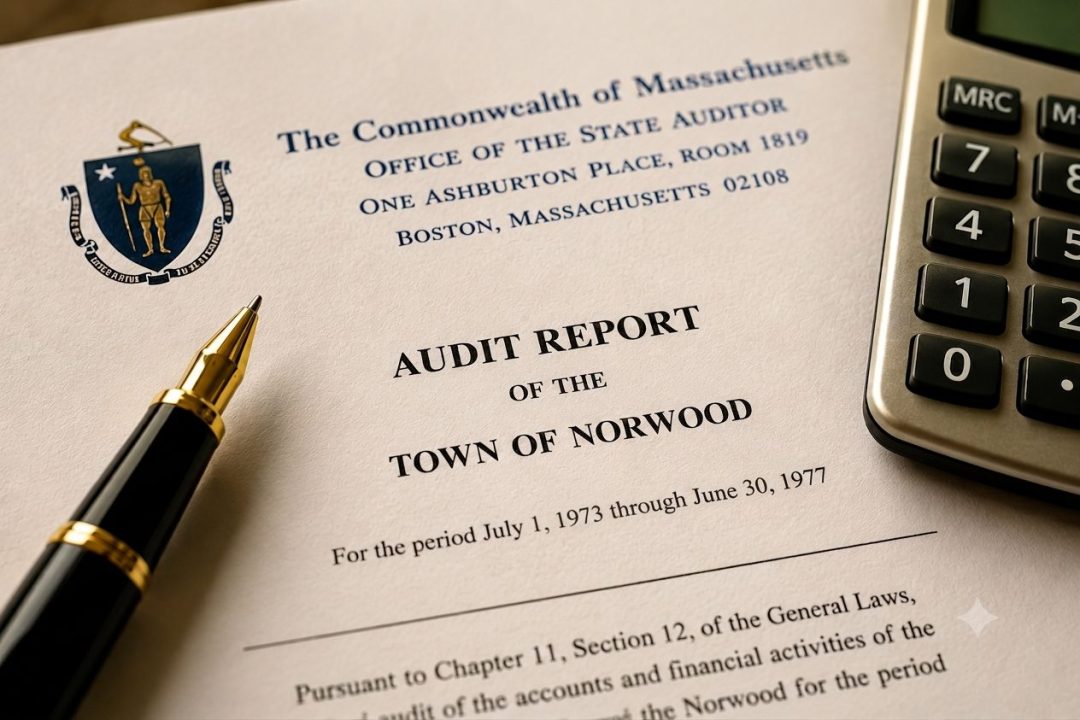
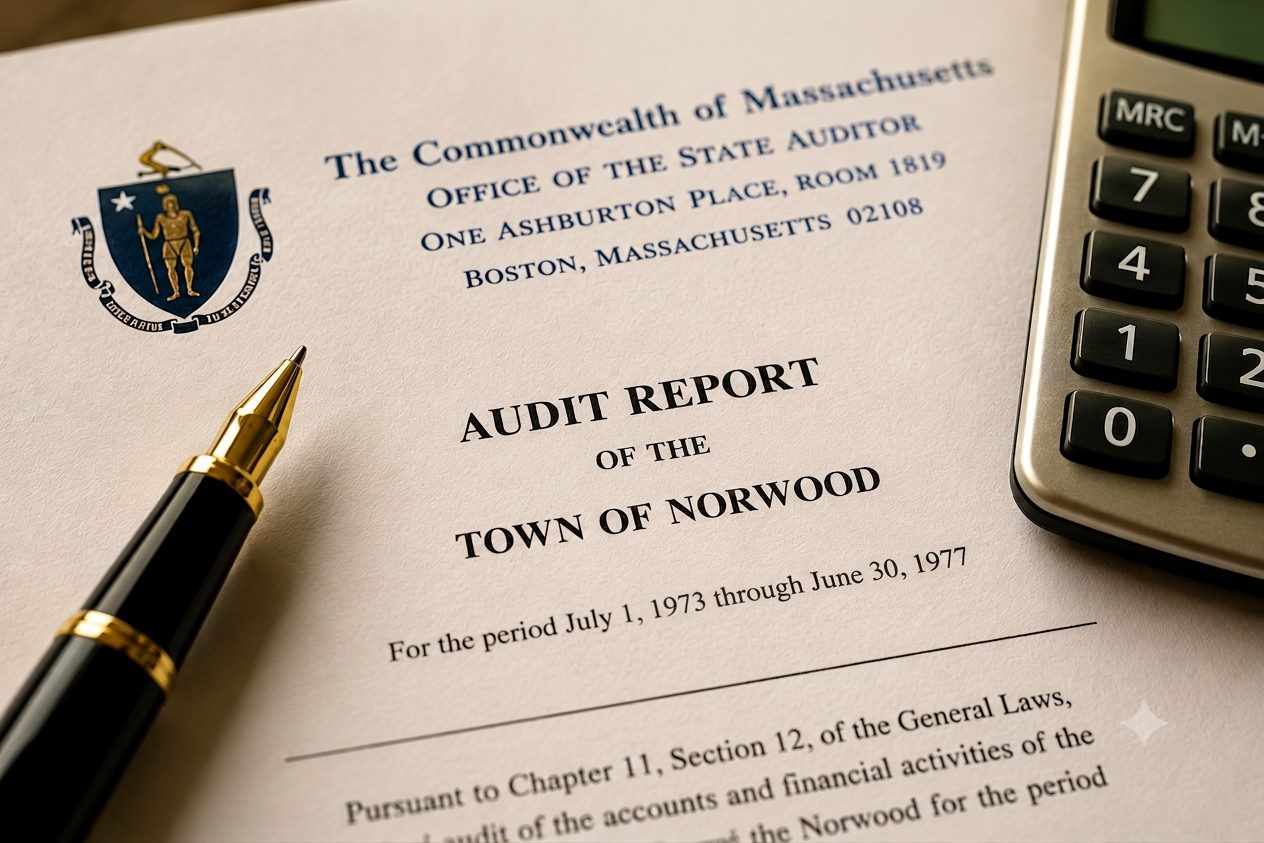
Norwood Housing Authority officials must now decide how they will respond to a state demand for full restitution of approximately $18,000 in unauthorized or questionable expenditures a state audit charged had been made during a forty-two-month period. During an impromptu news conference yesterday, Robert H. Bateman, assistant secretary of communities and development, said the initiative now was in NHA hands. He made the assessment of how the state investigation now stood following a general discussion with NHA lawyer John J. Mulvehill on the twenty-five-page audit report prepared by the state Department of Community Affairs.
Robert H. Bateman, who announced the critical audit findings during a press conference on June 21, said he told John J. Mulvehill that full restitution is his mandate to discuss with his clients, the NHA board and its Executive Director Lawrence J. O’Brien. The Department of Community Affairs auditors did not itemize by individual that major share of the approximate $18,000 in unauthorized or questionable expenditures which was listed for NHA food and liquor bills and automobile expenses. The report, which was published and is available at DCA headquarters in the Saltonstall State Office Building, listed $10,003 for food and liquor, and $2,190 for gasoline for cars of NHA board and staff members. In addition to the total sum, the auditors found $3,482 unaccounted for in gasoline, oil, and auto repairs costs.
The report lists businesses which regularly are used by the authority, often with little regard for conventional bidding practices. Mentioned specifically under the $18,000 was approximately $1,000 for materials to build structures at the homes of Executive Director Lawrence J. O’Brien and NHA Chairman James T. O’Sullivan. Following the meeting, which included Benjamin Jones, one of the governor’s staff lawyers, John J. Mulvehill would only say the session was inconclusive and that another meeting with the state officials was needed. He thinks the matter can be resolved soon, perhaps within a few weeks, the NHA lawyer added.
Robert H. Bateman also met briefly with Michael K. Statkiewicz, a board member, and J. Curran, whom the governor appointed to the housing authority a year ago. As the state appointee, J. Curran is cast in an overseer role, Robert H. Bateman explained, and he met with him to discuss this responsibility in the current matter. Under a section discussing NHA bidding practices, the report found that the housing authority does business with five vendors which consistently averaged over $2,000 annually. Rather than buy on different occasions as the need arises, the NHA auditors stated, should anticipate needs and advertise for bids.
The auditors listed these five businesses doing NHA business worth which annually exceeds the $2,000 no-bidding allowance used as a state standard: Babel Paint & Wallpaper Co., $13,368 in payments for the audit period including the three fiscal years from 1973 through 1976 and October 1, 1976 through April 15, 1977; contractor David Burke, $6,374 for the same period; General Electric Co., $12,666. Also, Home Heating Service, $18,635; and Nugent’s Central Service, $8,108. The auditors cast no aspersions on these businesses, but detailed the payment records to emphasize, mainly, how bidding practices should be observed.
Under NHA purchasing section, the DCA auditors found most NHA purchasing was conducted in an open-ended manner. Merchandise and service were purchased without any budgetary consideration or controls and were justified only by need, the report stated. Listed as vendors in this category of purchasing were Commercial Control Service, $3,040 in NHA payments for the forty-two-month audit period; electrician Frank Sullivan, $6,019; General Builders Supply, $2,849; Monarch Institutional Foods, $4,594; and Westwood Hardware, $6,084. Again, the auditors cited these expense records as a commentary on purchasing and bidding practices which they felt needed some tightening and revision.
It was under this section that the auditors discussed the approximately $1,000 in materials purchased with NHA funds for a tool shed of the executive director and a pool cabana for the present board chairman. The materials involved were purchased from General Builders Supply, the report noted and, according to records, the NHA was not reimbursed for these materials. The report stated that Lawrence J. O’Brien indicated he had forgotten to make the reimbursement and that he had never asked Chairman James T. O’Sullivan for the reimbursement. James T. O’Sullivan, in turn, the report continued, was unaware the materials used to build his cabana were charged to the NHA.
The auditors also found $4,000 worth of appliances for private use had been purchased through the NHA as a means to avoid the state sales tax. State officials, noting that the purchases with public funds had generally been reimbursed, have not made much of this point. Of the fourteen appliances bought for which funds were to be reimbursed, the audit notes, the cost of three of them was not reimbursed. Robert H. Bateman said he has mentioned but not formally referred this question of buying procedure to the state Department of Corporations and Taxation but, he noted, only about $200 in sales tax was involved in the issue.
The DCA audit report itemizes or outlines names of full or part-time employees which relate to DCA charges of nepotism in the employment practices of the Norwood Housing Authority. Also, temporary or part-time workers have included the sons of a part-time clerical worker until April of this year. The auditors noted that two members of Executive Director Lawrence J. O’Brien‘s family, along with the sons of three present or past NHA board members, have been employees during the audit period. The report noted Lawrence J. O’Brien Jr. was on the full-time maintenance staff during 1976 while Elinor F. O’Brien, the director’s wife, was employed as board and staff members.
Also hired on this basis at some time during the audit period were the sons of full-time personnel John L. Griffin and the late Henry Hard Work. In this section of the report, the auditors criticized the wrongful practice of hiring young adults to handle on-going maintenance and repair work, at NHA sites rather than just specific projects. The subject of resignations also came up during the discussion, he added. The assistant secretary’s remarks indicated that the discussion, which ran well under an hour, involved the broad issues and did not touch specifics, such as itemized restitution or shares by individuals involved.
We’re prepared to discuss that further with John J. Mulvehill, Robert H. Bateman remarked. The burden is really on John J. Mulvehill and the Norwood Housing Authority right now. The NHA board members John C. Adelmann and Chairman James T. O’Sullivan and August Petrovek Jr., the state appointee whose term expired last year, were noted in connection with board oversight. The unfolding investigation continues to draw immense interest from residents throughout the town of Norwood as state and local leaders attempt to resolve the financial discrepancies outlined by the auditors in the state capital and at municipal offices.
Archival Note: This article has been dynamically reconstructed from the original public record print archives of the Patriot Ledger
More Town Government Stories
-
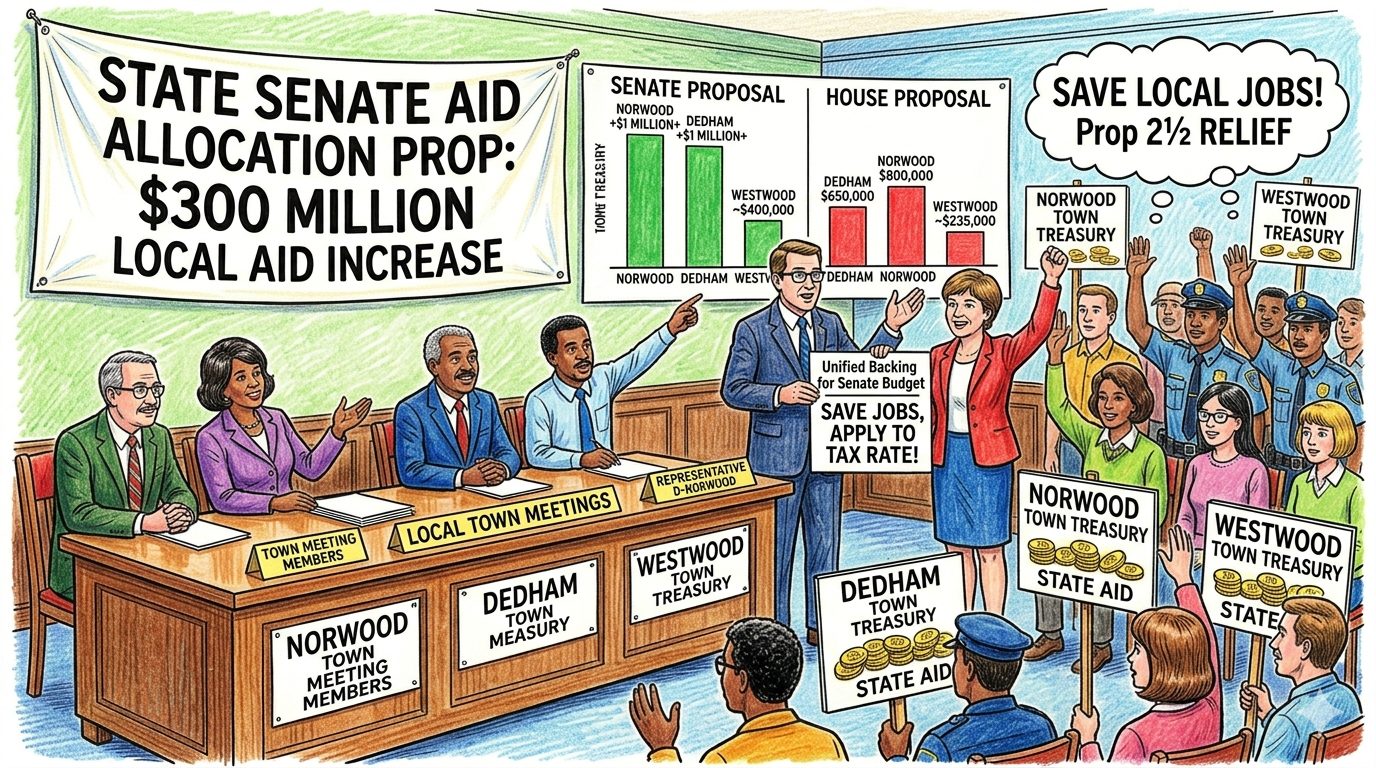
Senate budget gives towns $2.4M in aid-June 23, 1981
A bipartisan legislative front forms to secure critical financial relief for regional town treasuries facing immediate cutbacks.
-
Referendum Drive Seen Well Underway-June 23, 1981
A rapid grassroots signature campaign aims to stall a major town development project through a public ballot referendum.

-
Police Overtime Pay Causes Flap-June 17, 1981
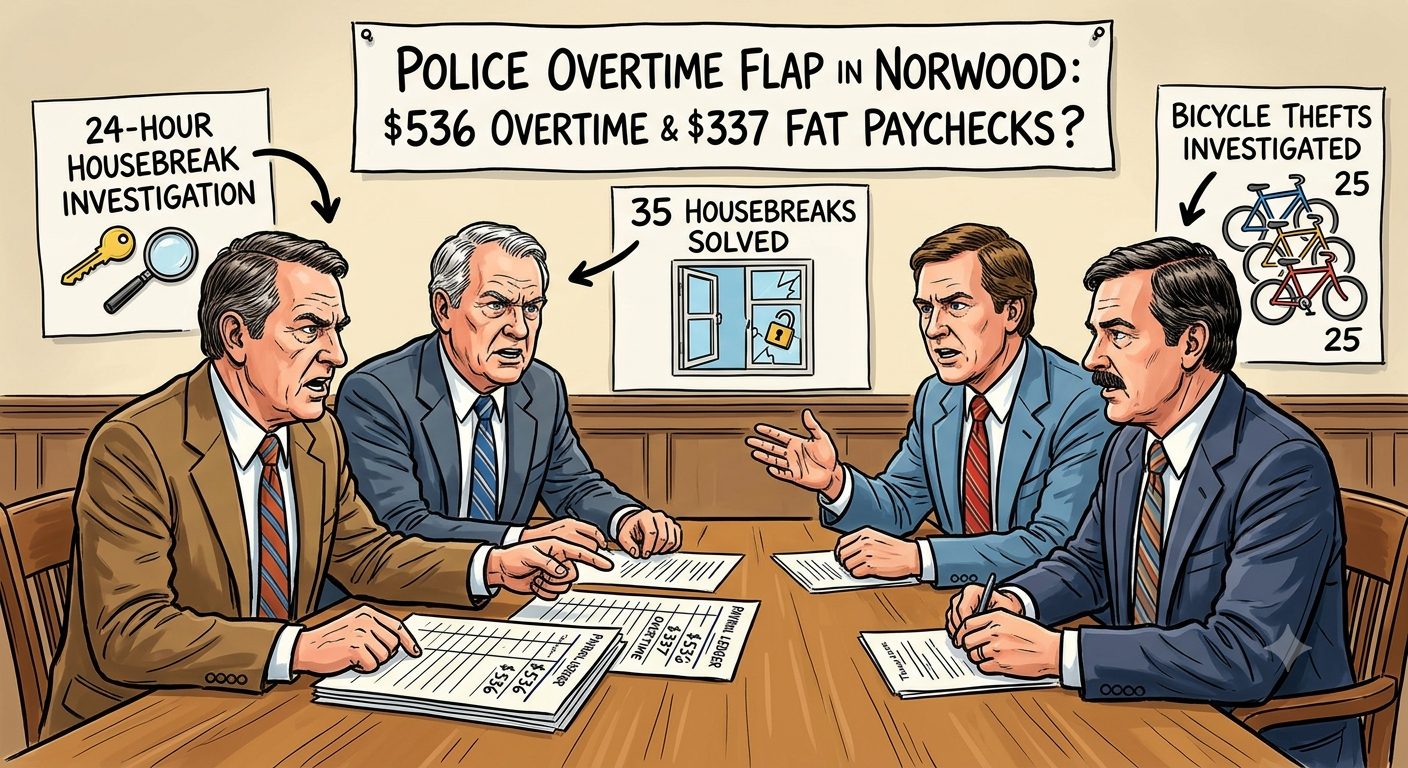
Selectmen Spar Over Fat Paychecks Following Around-The-Clock Housebreak Investigation One policeman got $536 in overtime pay last week. Another got $337. And two selectmen say that’s too much. “It’s not right for one man to work 35 hours overtime,” Selectman Walter J Dempsey said last night, adding, “536 bucks for my money is too much…
-
Civic Center Future Up For Vote-June 15, 1981
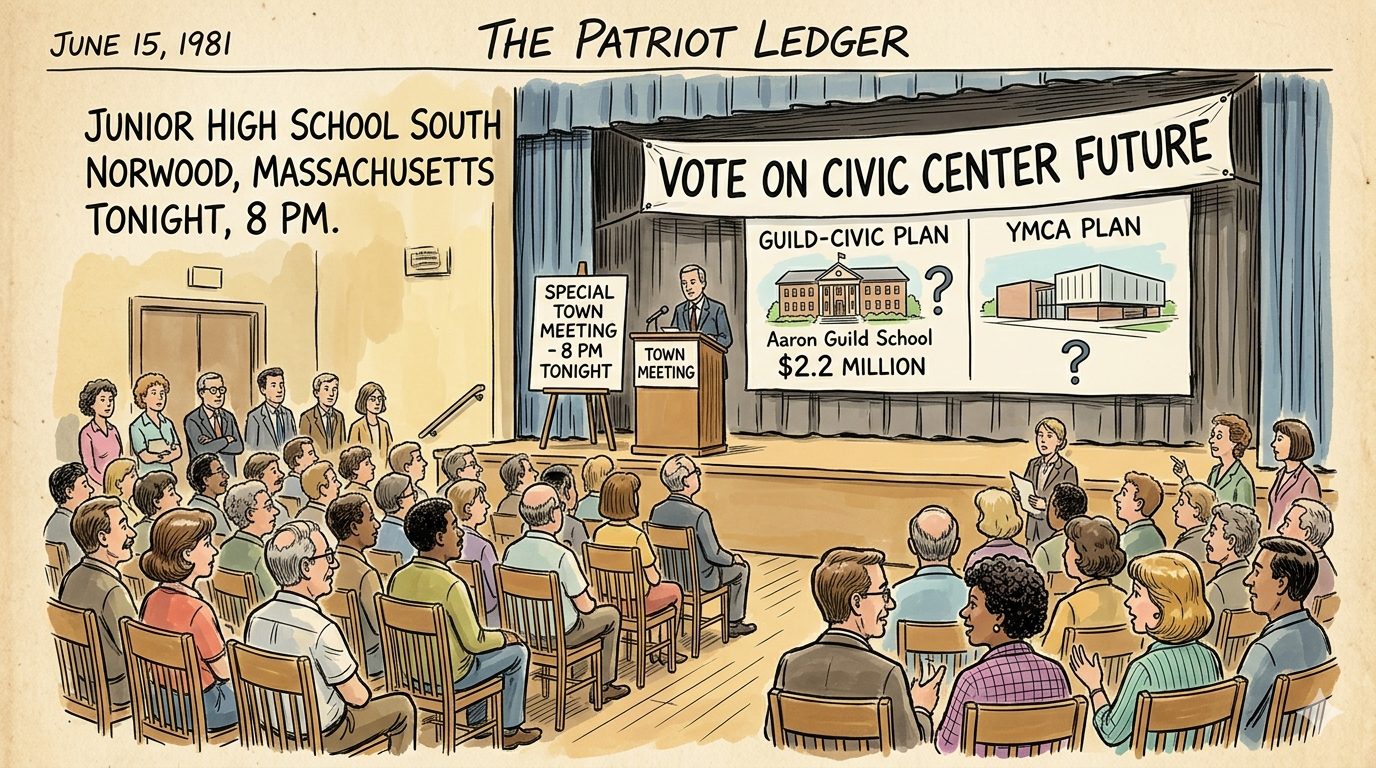
A high-stakes special town meeting agenda features a multi-million dollar Civic Center relocation choice and the $325,250 sale of Winslow School.
-
Housing Authority Candidate Screening Halted-June 16, 1978
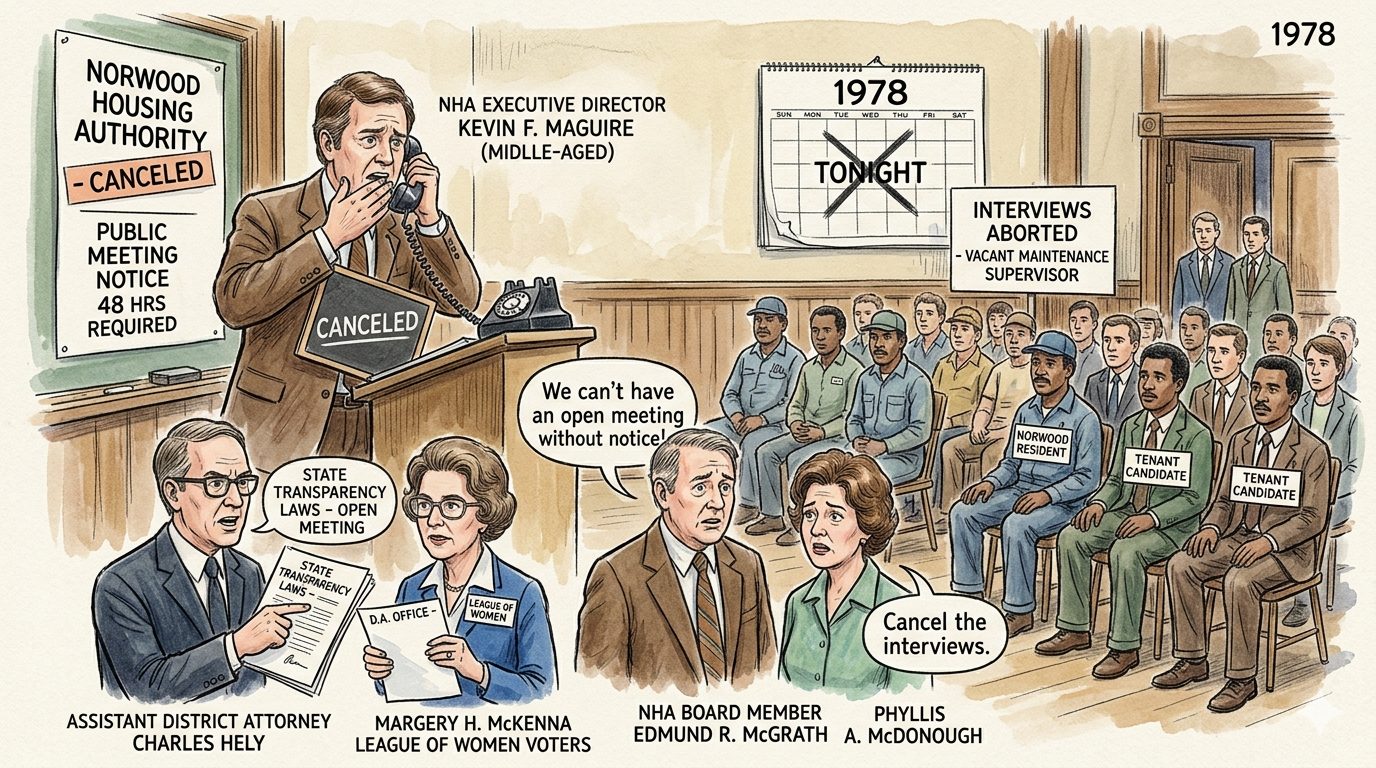
League Watchdogs and District Attorney Block Closed Maintenance Interviews A sweeping attempt to accelerate administrative appointments inside the local municipal infrastructure collapsed under legal scrutiny last night. The Norwood Housing Authority was forced to completely abort a scheduled slate of 20 confidential candidate interviews for its vacant maintenance supervisor role after legal monitors formally warned…
-
Selectmen Outraged by FinCom Veto of Youth Summer Job Program Funding-June 26, 1974
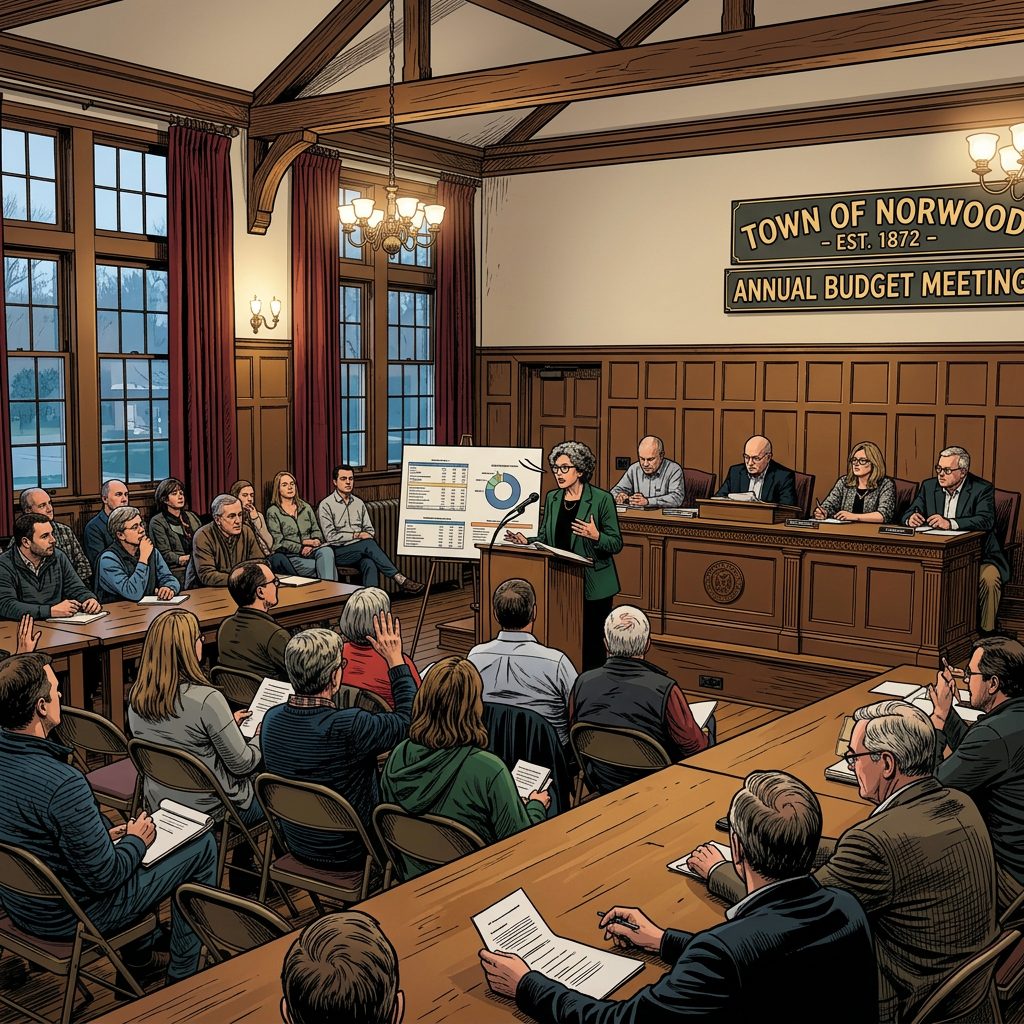
Runaway teenage unemployment sparks a fierce municipal funding war as watchdogs lock horns over emergency summer public works spending.
-
Norwood FinCom’s Elias Refuses To Resign Amid Recall Threats-June 22, 1974
| A political standoff gridlocks the Finance Commission as a newly elected official breaks rank and drops out of municipal sessions
-
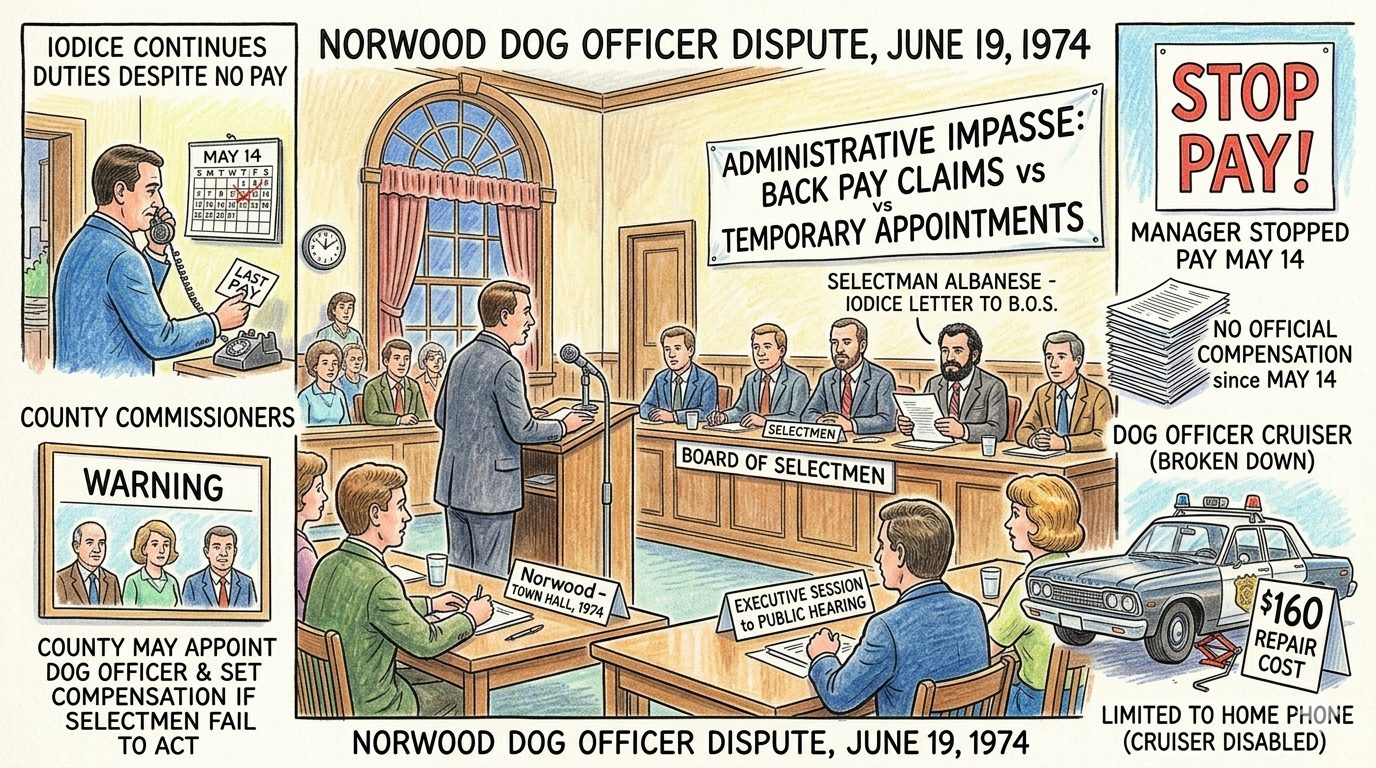
Dog Officer Row Unsettled-June 19, 1974
A breakdown in communication and transport leaves Norwood’s animal control duties in limbo during a fierce political standoff.
-
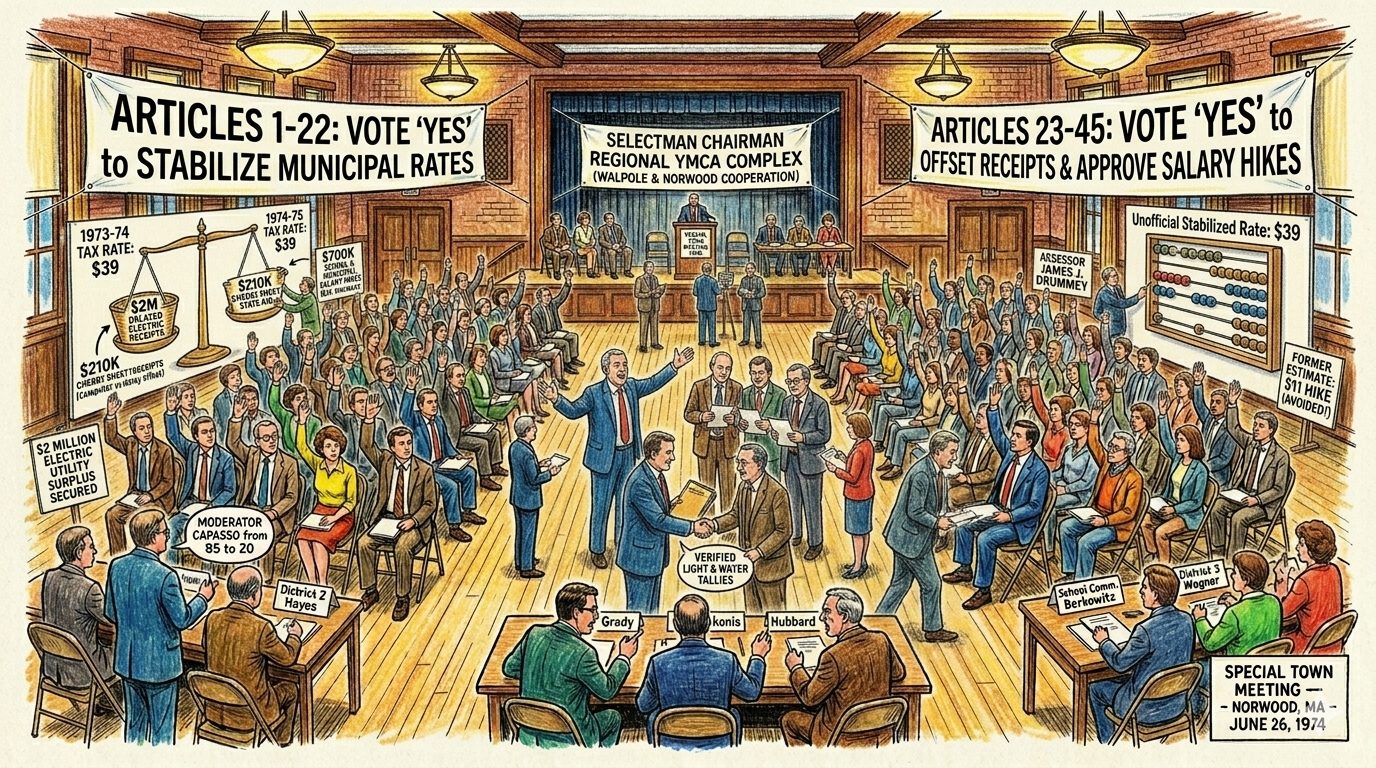
Delayed Computer Billing Receipts Spark Optimistic Tax Forecasts-June 18, 1974
Selectmen and assessors leverage delayed electric receipts and cherry sheet funds to keep tax rates at 39.
-
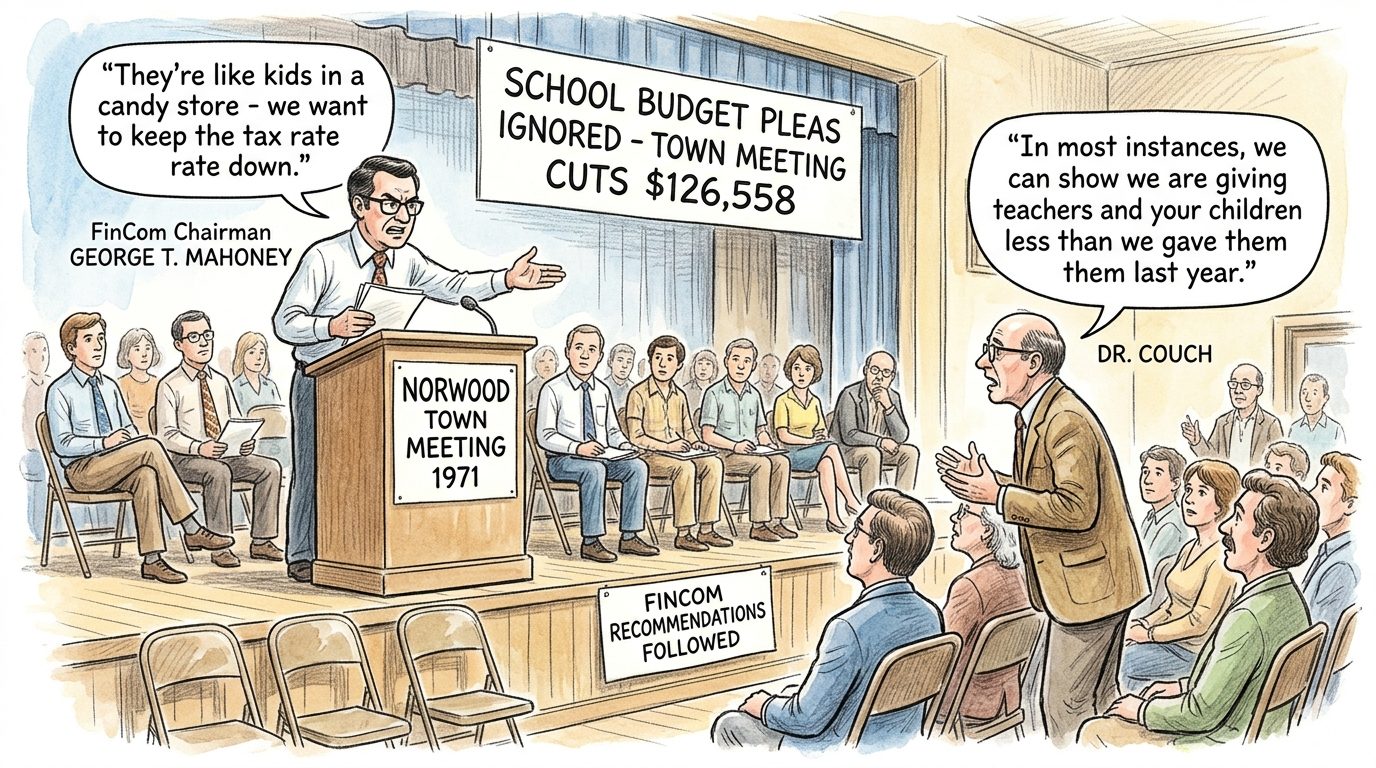
Meeting Ignores School Pleas, Cuts Budget By $126,558-June 15, 1971
A fierce debate over encumbered funds and municipal parity dominates a marathon Norwood Town Meeting session over the town budget.
Discover more from Norwood Historical Society
Subscribe to get the latest posts sent to your email.