
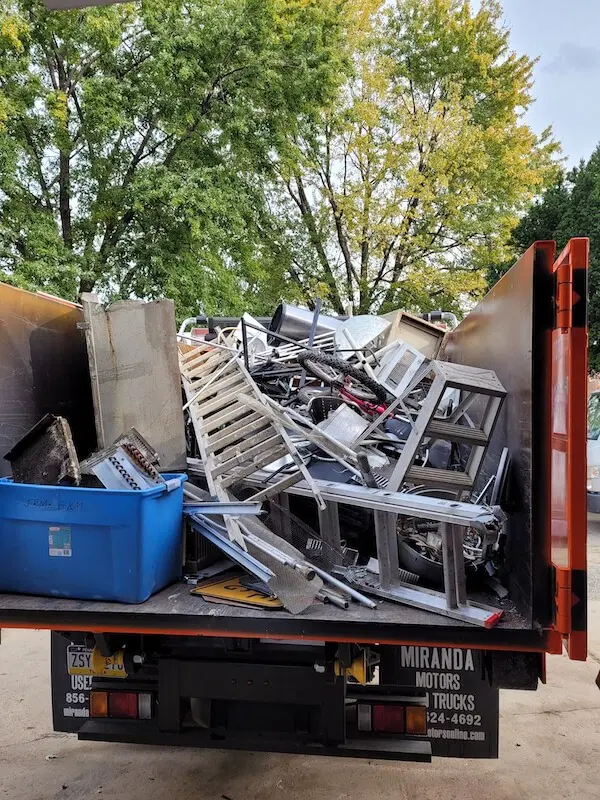
As the selectmen’s dump committee grapples with drafting a new long-term operational contract, members are actively exploring structural changes at the municipal dump, including the potential establishment of user fees for industrial and commercial rubbish collectors.
Commercial Fee Scale and Space Conservation
In July, the Board of Selectmen declared a municipal emergency to authorize a 90-day extension of the existing town dump contract with a private contractor, pushing the expiration deadline to November 1. The emergency extension was required because the facility’s historical operation failed to satisfy stringent new regulations mandated by the state Department of Public Health, which require sanitary facilities, an operational communications system, an equipment storage building, and a detailed engineering site plan.
Committee member Miss Olga A. Abdallah explained that introducing commercial fees aims to offset surging operating expenses and preserve rapidly dwindling landfill capacity. “After all, we are the only town in this area, including all of the towns surrounding us, that doesn’t charge for the use of the dump by those whose business it is collecting rubbish,” Abdallah noted. “It is an expensive operation, and it doesn’t have much more room. We think that if we set a fee, we can curb some of our costs.”
Under proposals reviewed by the committee, fees would be assessed on a sliding scale determined by vehicle hauling capacity—charging varying rates for giant packer trucks, large dump trucks, and other commercial vehicles based on the cubic yardage of trash deposited. Additionally, the committee is examining future site improvements, recycling initiatives, and stricter public conservation rules. “That means we’ll be asking people to cover everything they’re taking to the dump, and try to compress as much rubbish as they can from now on to help conserve the space we have left,” Abdallah said. Committee members recently toured Wellesley to inspect municipal recycling collection facilities, while the Women’s Community Committee in Norwood has spearheaded local advocacy efforts, leading to the designation of specific drop-off areas for large old appliances at the landfill.
Pleasant Street Bridge State Reimbursement Funds Released
In separate municipal developments, approximately $130,000 in state reimbursement funds for the Pleasant Street bridge have officially been released under legislation signed by Governor Francis W. Sargent, as announced by Senator John M. Quinlan (R-Norwood).
The funding measure amends a 1968 statute that established the state Flood Relief Board to address infrastructure damage from severe flooding that year, which included the destruction of the Pleasant Street structure. Town Manager Walter A. Blasenak confirmed that construction on the replacement bridge—which commenced in June 1970—is nearing completion. Workers are currently finishing bridge foundations, installing railings, and placing granite curbing, with final paving scheduled to begin during the week.
Senator Quinlan explained that the Flood Relief Board oversees roughly $5 million allocated upon its creation, noting that the legislative delay in releasing community reimbursement funds stemmed from lawmakers’ caution to prevent any financial mismanagement resembling scandals following the 1938 hurricane disaster.
Archival Note: This article has been dynamically reconstructed from the original public record print archives of the Patriot Ledger
Discover more from Norwood Historical Society
Subscribe to get the latest posts sent to your email.