
Norwood Airport Association Cites Rev. John T. Lawler’s Crash While Commission Member Pauline M. Grasso Holds Firm Against ILS Expansion; Both Sides Back $1.7 Million Runway Repair
NORWOOD – Following an October 15, 1981 twin-engine plane crash in dense fog that nearly claimed the life of pilot Rev. John T. Lawler of Billerica, members of the 100-member Norwood Airport Association intensified their long-running campaign urging the Norwood Airport Commission to approve complete Instrument Landing System (ILS) equipment at the 39-year-old municipal airfield. Reported in The Patriot Ledger on Monday, November 23, 1981—part of a local news roundup listing Norwood correspondent Rick Moriarty—local pilots contended that installing a Federal Aviation Administration-funded glide slope indicator, which alerts approaching pilots when their aircraft is flying too high or too low, was a vital safety measure rather than a backdoor bid for airport expansion.
Rev. Lawler, who walked away from the flaming wreckage just short of the main runway with minor burns, stated that the accident would have been prevented had Norwood Airport been equipped with a full ILS. At the time, the main runway at Norwood Airport operated with only the first half of an ILS—a localizer guiding pilots horizontally onto the runway centerline, which the Airport Commission had previously agreed to install only after the pilots’ association threatened a federal court lawsuit eight years earlier—while lacking the vertical glide slope guidance. “It’s more reality now, after the accident,” declared Westwood pilot Anthony Prevett, who had been flying since 1968. “We’ve been saying this for years. It’s strictly safety and they’re calling it expansion. You can’t absolutely say he (Lawler) wouldn’t have crashed, but the indicator would have told him he was way low.”
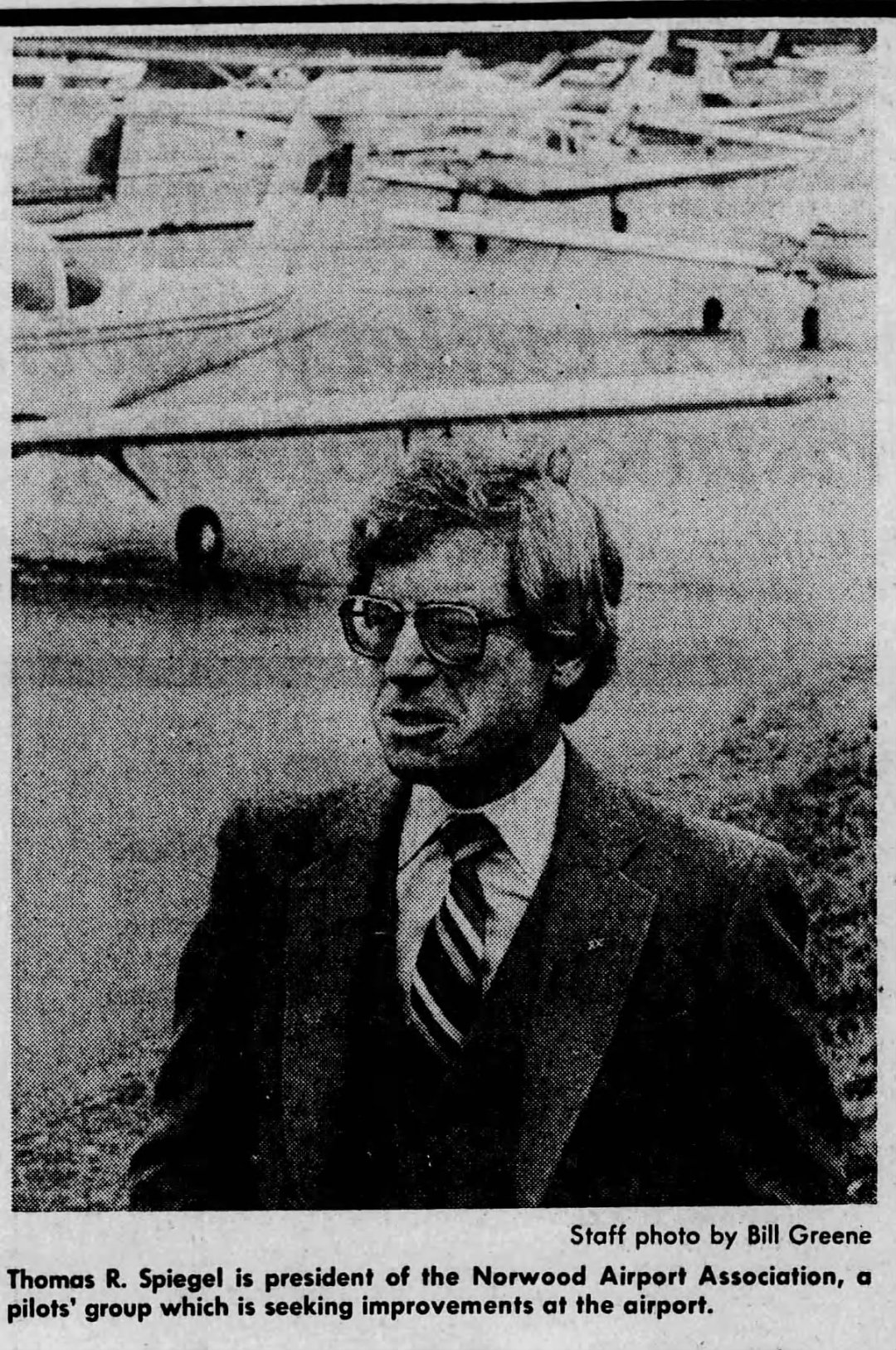
However, the pilots’ renewed plea failed to sway Airport Commission member Pauline M. Grasso, a steadfast opponent of adding a glide slope because of ongoing neighborhood fears of heavier air traffic and aircraft noise over residential areas. Grasso stated that the October accident would not change her mind, pointing out that it was not unusual for regional airports to operate without a complete ILS and arguing that no electronic landing aid could serve as an absolute guarantee of safety. Even so, despite their sharp disagreement over the glide slope, pilots and airport growth opponents appeared close to peaceful coexistence on an issue both sides ranked as top priority: repairing the airport’s badly cracked main runway. After years of delays tied to noise complaints and expansion disputes, a $1.7 million runway repair project was poised to get underway in 1982 if federal funds were secured. Association President Thomas Spiegel of Dedham, a three-year pilot, praised Commission Chairman Wilfred C. Chesebrough for advancing the runway reconstruction: “He’s doing a good job as chairman. He’s moving it (the project) in a business-like manner.” Pilots reiterated they had never sought runway extensions and noted annual flight operations at Norwood had actually fallen from roughly 220,000 in 1976 to 202,000 in 1980 and a projected 184,000 in 1981.
1981 Norwood Airport Runway Project & Today’s Context (1981 vs. 2026)
| 1981 Norwood Airport Capital Project | 1981 Cost | 2026 Equivalent |
|---|---|---|
| Proposed Federal Main Runway Repair Project | $1,700,000 | ~$6,086,000 |
Archival Note: This article has been dynamically reconstructed from the original public record print archives of the Patriot Ledger
More…
-
Turn The First Sod For Norwood Airport-This Day In Norwood History-February 3, 1931
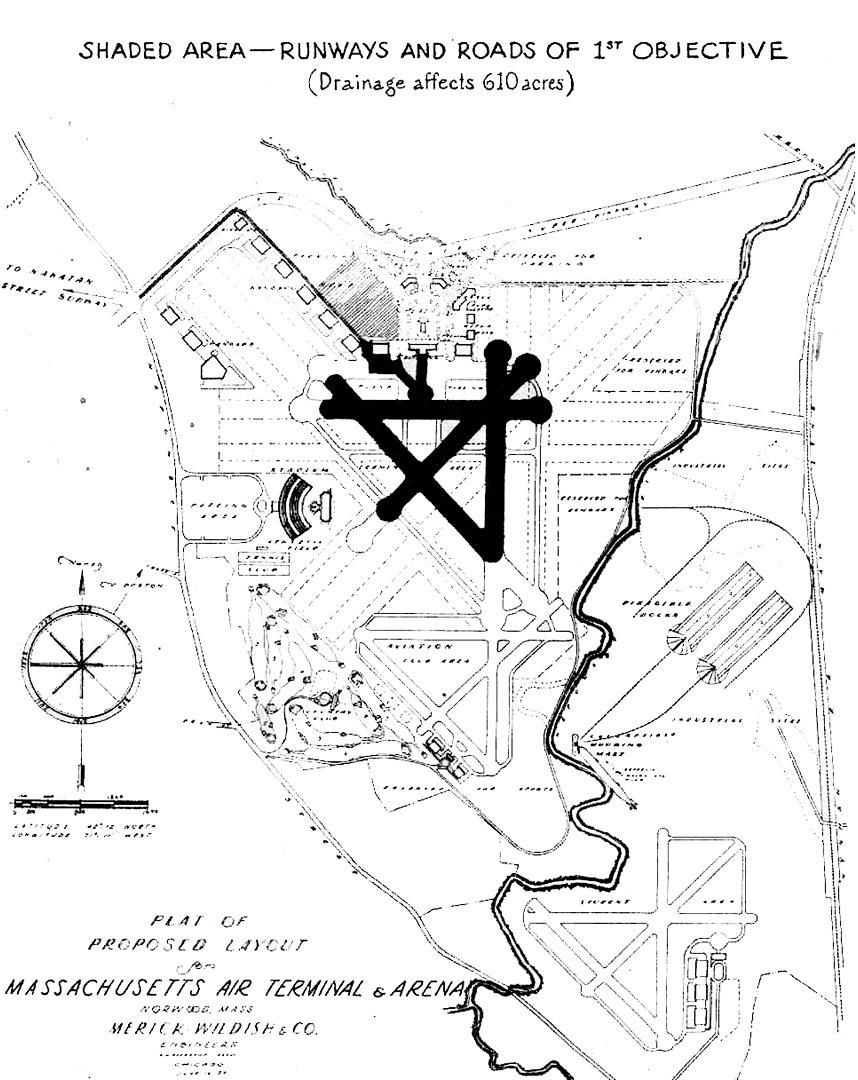
Work on the new Norwood Airport started with much activity yesterday morning, when two steam shovels began operations and a fleet of trucks were filling the large stretch of meadow land, off Neponset St. Many citizens, engineers and aviators were present when the ground was broken. After the proposed layout was shown by Robert S.…
Discover more from Norwood Historical Society
Subscribe to get the latest posts sent to your email.