
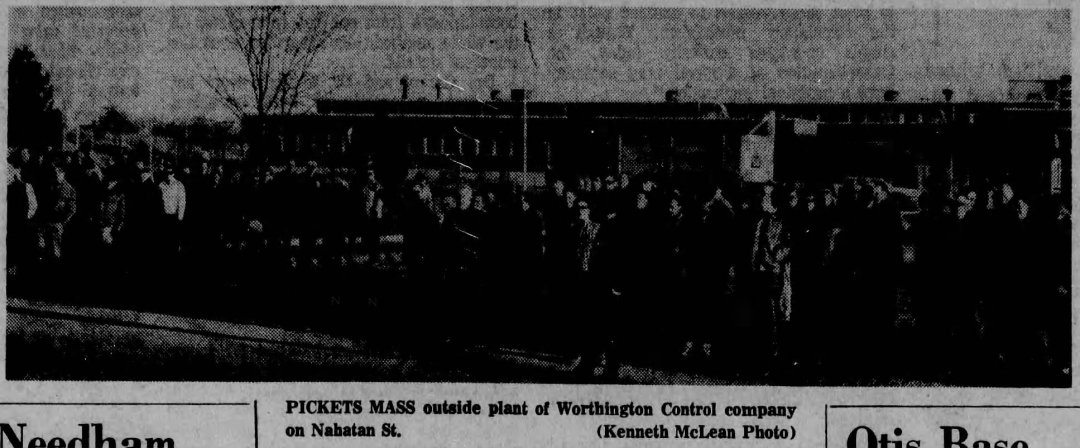
Machinists, Technicians, and Assemblers Vote 5-to-1 to Walk Out Over Wages and Cost-of-Living Clause as Parent Firm Studebaker-Worthington Transitions Plant to Masoneilan International
NORWOOD – Production came to a halt at the Worthington Control Co. facility on Nahatan Street on Tuesday, November 26, 1968, as nearly 400 production employees—members of United Auto Workers (UAW) Local 470—walked off the job in a labor strike. Reported in The Patriot Ledger on November 26, 1968, accompanied by a photograph by Kenneth McLean showing pickets massing outside the Nahatan Street plant, the walkout marked the first strike in the company’s 85-year history, according to company officials.
Alexander Berzins of Hyde Park, acting president of UAW Local 470, stated that machinists, technicians, and assemblers belonging to the bargaining unit met the previous day and voted by a 5-to-1 margin in favor of striking after their three-year collective bargaining agreement expired at midnight. At the center of the dispute were a cost-of-living adjustment clause and general wage increases. Berzins dismissed a management proposal presented at 2:00 p.m. the day before as “ridiculously low in wages and fringe benefits,” adding that the union sought “substantial increases in both wages and fringe benefits,” though he declined to disclose the local’s exact figures.
Shortly after 7:00 a.m., roughly 300 office employees and supervisory personnel were allowed to cross the picket line peacefully into the fenced-in manufacturing complex. “We are not using force to prevent anyone from entering the plant, but are requesting union truck drivers to honor our picket lines,” Berzins explained. Following roughly two hours of mass picketing during the morning shift change, the union transitioned to token pickets stationed at the facility’s sole entrance.
C. John McCreery, Worthington’s manager of employee relations, noted that rank-and-file union members had rejected their own leadership’s recommendation to extend the expired contract through Sunday. According to McCreery, negotiations broke down while the two sides remained 21.2 cents per hour apart on wage increases, dashing management’s hopes of reaching a settlement by Sunday. Over the preceding 60 days, union and company negotiators had convened for approximately 16 bargaining sessions.
Federal Mediator Daniel Hurley, who had entered the deadlocked talks two days earlier, announced on Tuesday that he would work to schedule a resumption of collective bargaining for the following week. Plant Manager Warren Reynolds confirmed that management remained willing to reopen negotiations. The UAW had first won recognition as collective bargaining representative at the Norwood plant in 1963—and the walkout unfolded just five days after parent corporation Studebaker-Worthington, Inc. announced on Thursday, November 21, that the Nahatan Street operation was being reorganized and renamed as the headquarters of Masoneilan International, a newly formed subsidiary.
Source: The Patriot Ledger • Tuesday, November 26, 1968 • Photo: Kenneth McLean
“We are not using force to prevent anyone from entering the plant, but are requesting union truck drivers to honor our picket lines.”
| 1968 Contract Bargaining Gap | 1968 Rate | 2026 Equivalent |
|---|---|---|
| Hourly Wage Increase Gap Between Union & Management | $0.212 / hr (21.2¢) | ~$1.94 / hr |
Archival Note: This article has been dynamically reconstructed from the original public record print archives of the Patriot Ledger
More Norwood Business History
-
Slump in Chip Industry Hits Norwood Maker-This Day In Norwood History – July 21, 1998
Analog Devices Inc. struggled with falling revenues in 1998 as global demand for semiconductors and testing equipment plummeted. Despite the fiscal pressure, the Norwood company avoided layoffs, maintaining its workforce through the market downturn.

-
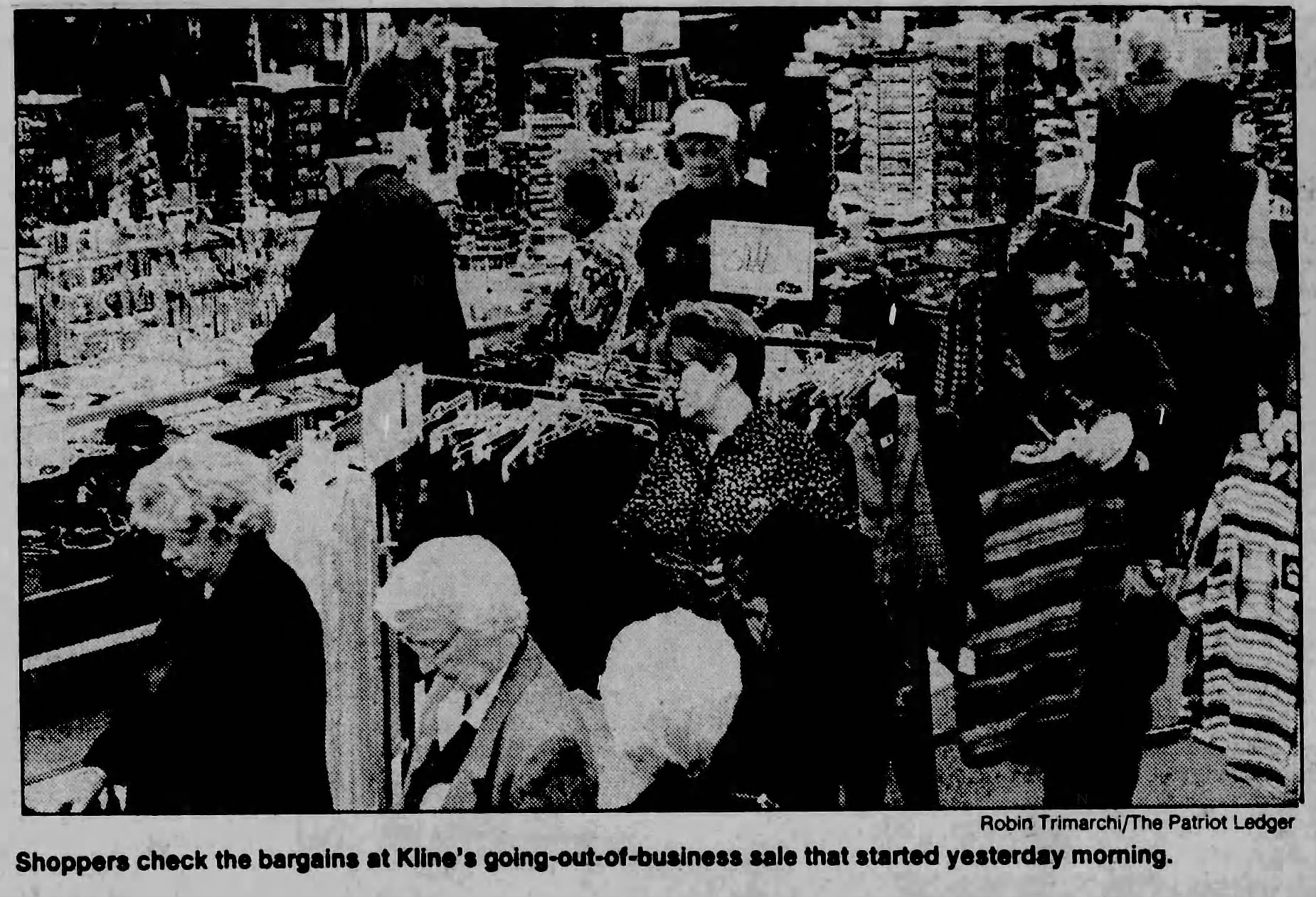
Kline’s Department Store Shutting Its Doors in Downtown Norwood-November 6, 1994
Downtown Norwood loses its primary Washington Street retail anchor as Kline’s Department Store begins liquidation, leaving 30 employees displaced and local officials working to preserve commercial vitality.
-
Washington Street Partnership Discusses Future of Downtown Anchor Kline’s Department Store-October 27, 1994
Facing the potential year-end closure of longtime anchor Kline’s department store, the Norwood Washington Street Partnership and landlord Donald Malkin discussed downtown revitalization strategies.

-
Downtown Norwood Anchor Kline’s Department Store Faces Imminent Closure by Year’s End Without a Buyer-October 26, 1994
Kline’s Department Store, a 20-year downtown Norwood anchor employing 30 workers, faces closure by the end of 1994 unless a buyer emerges for the 26-store chain.

-
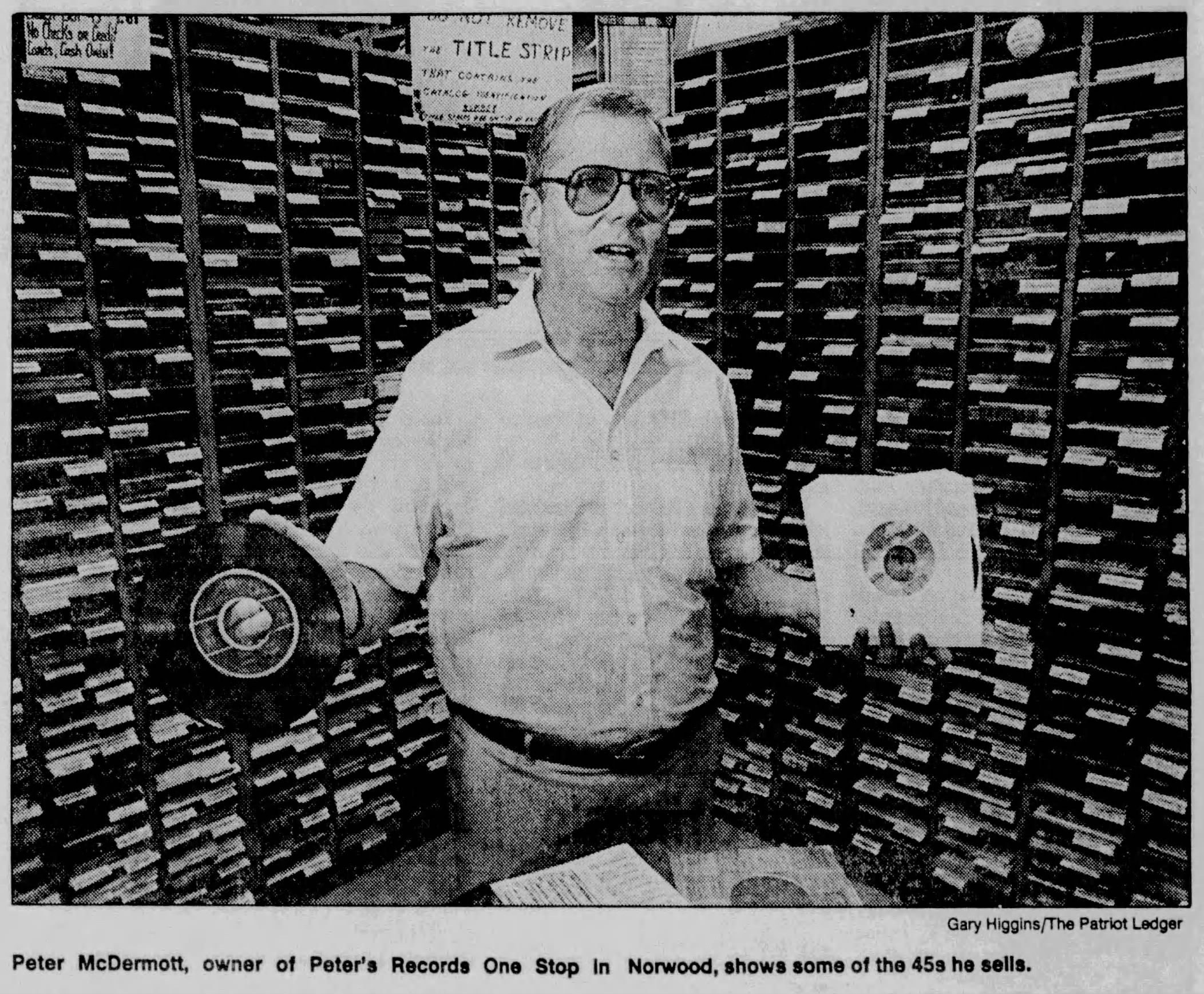
Norwood Store Still Spins Sales with 45s-October 5, 1992
Peter’s Records One Stop on Route 1 in Norwood continues to thrive as a half-million-dollar wholesale business specializing in vinyl 45s, oldies, and jukebox supplies.
-
Ice-Cream Vendor Disputes Fees Demanded by Norwood Arts Council-July 18, 1991
The dispute involved allegations of intimidation, Open Meeting Law concerns, and tensions over who is permitted to sell goods on the Norwood Common.

-
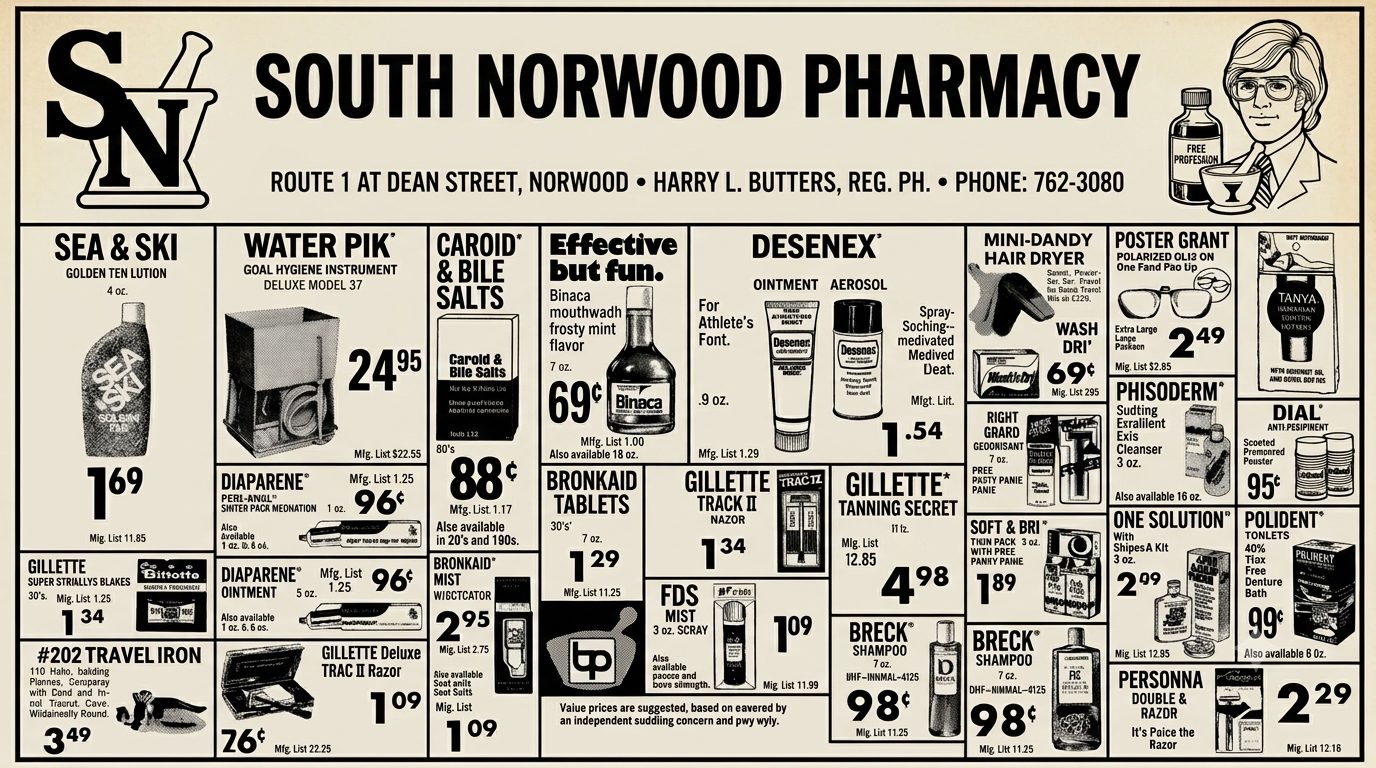
Butters Family Sells Pharmacy-July 20, 1990
A significant chapter in the history of South Norwood business and family legacy came to an end on July 20, 1990. The Butters family pharmacy, a staple in the community for over four decades, ceased operations after Helen Butters, the selectman’s mother and president of the family business, decided to sell the pharmaceutical stock and…
-
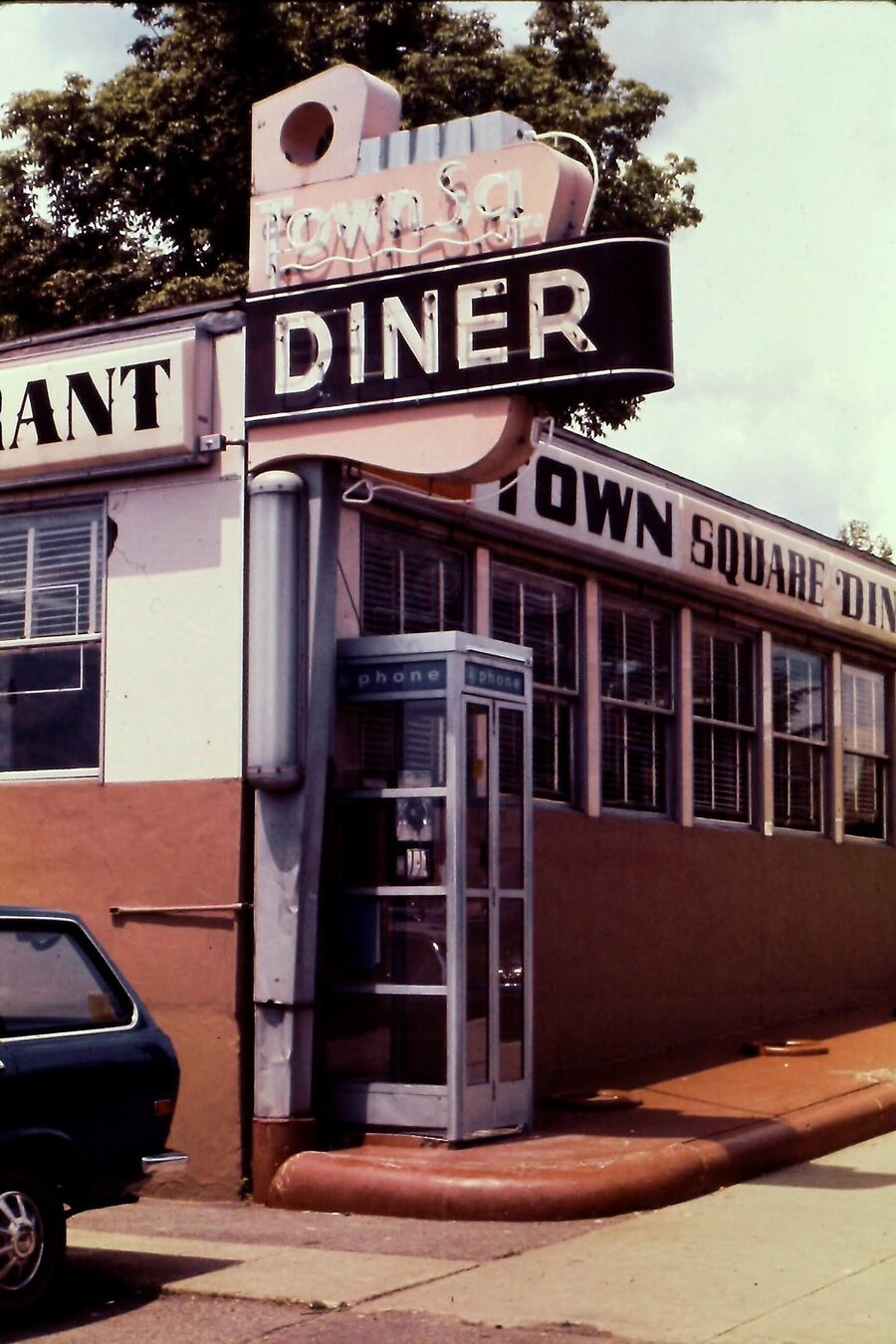
Landmark Town Square Diner Heavily Damaged in Early Morning Kitchen Fire-October 25, 1989
A kitchen fire sparked by a faulty refrigerator motor heavily damaged the Town Square Diner on Nahatan Street, a downtown Norwood landmark owned by George Karafotias for 35 years.
-
Business Leaders Question “Anti-Commerce” Town Direction-August 15, 1989
Following a 2-2 selectmen vote denying a food license for a $1 million Taco Bell on Route 1, the Neponset Valley Chamber of Commerce warned of an anti-business trend.
-
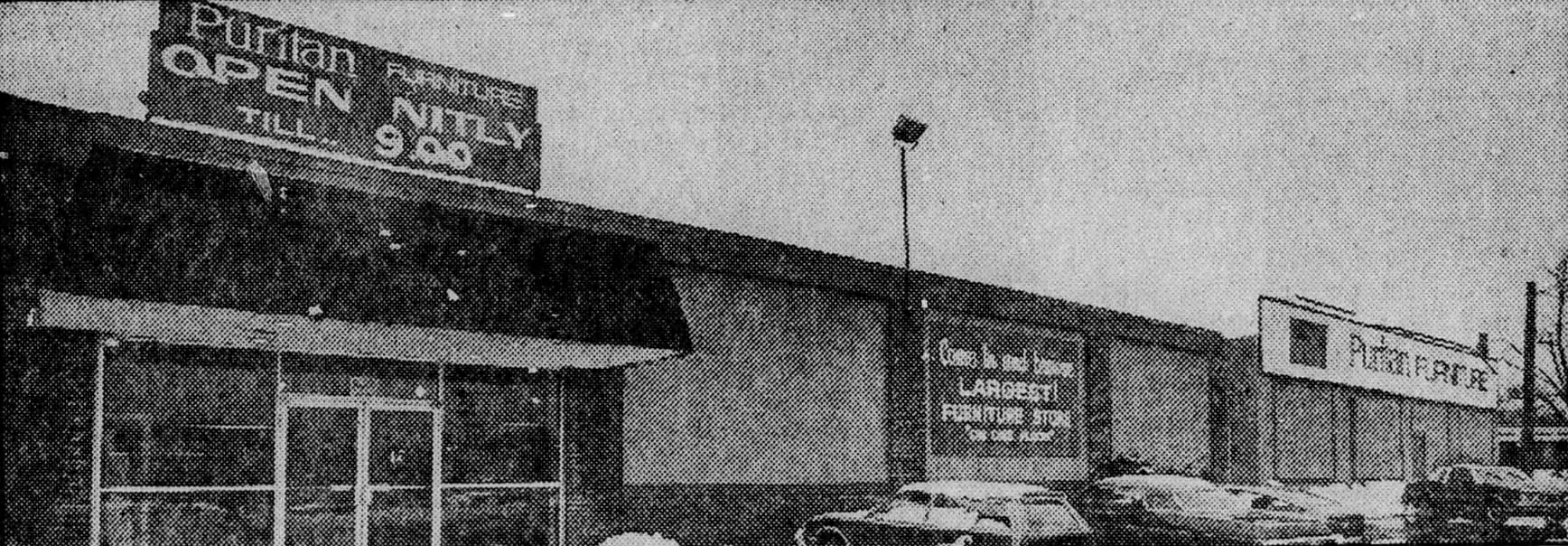
Puritan Furniture Draws Smaller Crowd and Steady Bargain Hunters-September 8, 1988
The second day of the federal bankruptcy court-ordered liquidation auction at Puritan Furniture on Lenox Street brings smaller crowds, heavy bargain hunting, and minor shopper disputes.
Discover more from Norwood Historical Society
Subscribe to get the latest posts sent to your email.