
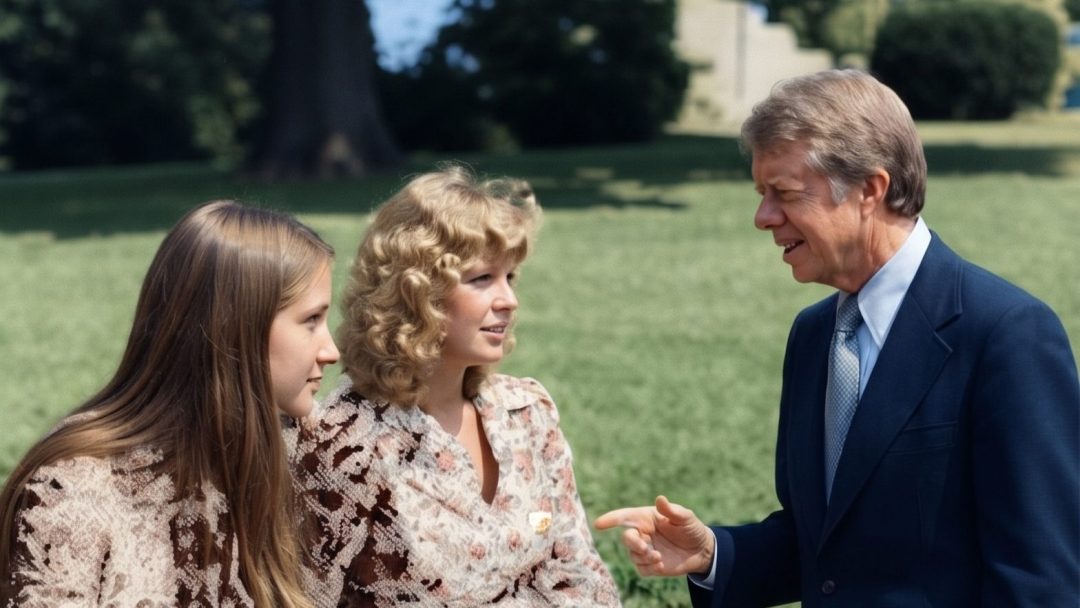
As the summer of 1976 arrived, the national political landscape was dominated by the rising profile of Jimmy Carter, the former Georgia governor who had emerged as the likely nominee of the Democratic Party.
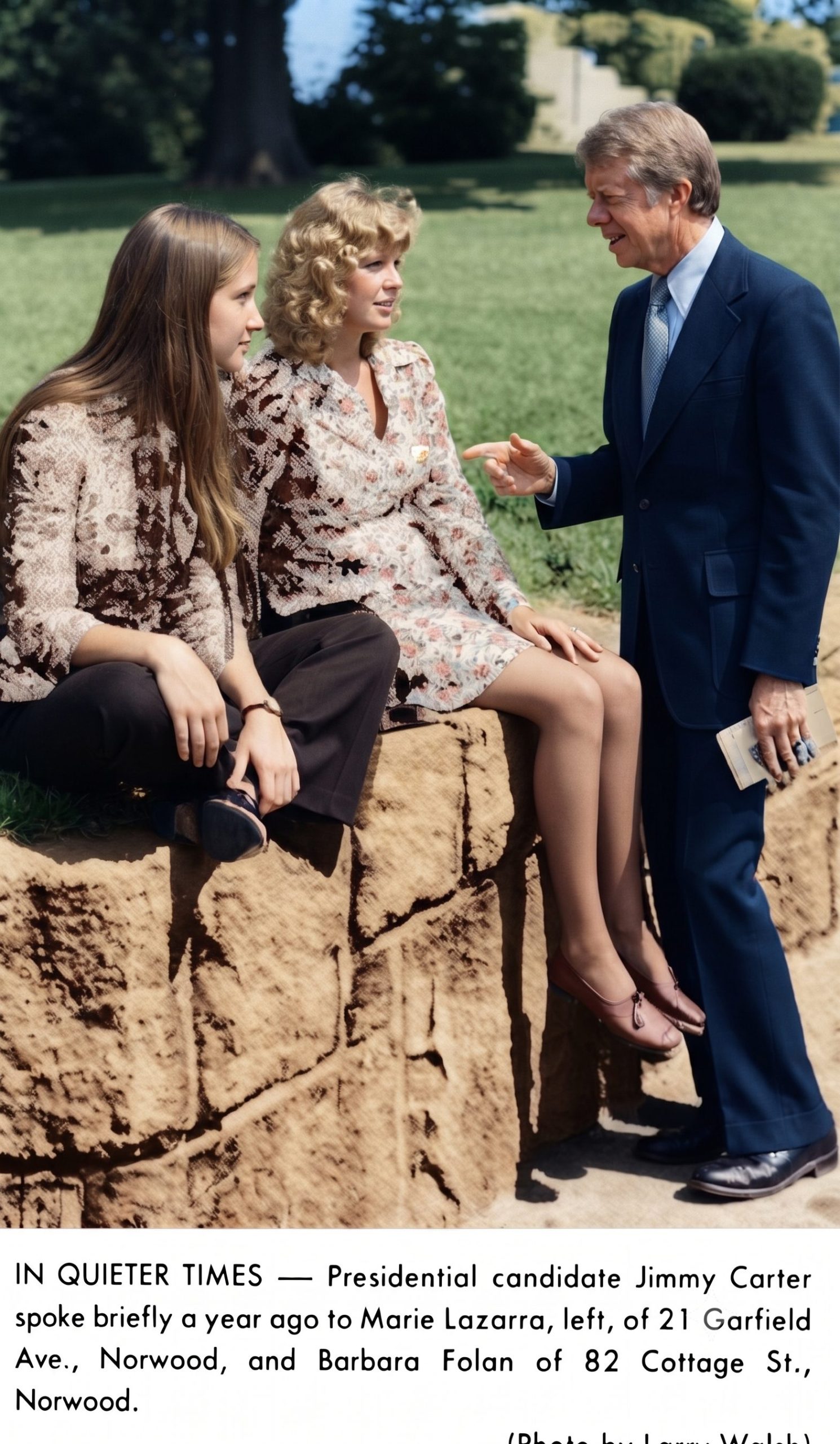
With the national convention only ten days away, Carter’s supporters expressed characteristic optimism regarding his chances in the upcoming November election. Yet, exactly one year earlier, on the morning of July 2, 1975, the future President was a figure of relative obscurity, visiting Norwood with little fanfare and even less recognition from the local citizenry.
On that morning in 1975, the headlines in The Patriot Ledger were dominated by state budget discussions, with Carter’s appearance relegated to two small paragraphs on page 20. The article noted, “Former Georgia Gov Jimmy Carter, an announced candidate for the Democratic Presidential nomination met a small reception in a campaign appearance in Norwood this morning.” His itinerary included a breakfast appearance in Canton, followed by a tour of the Norwood town offices and a series of handshakes with residents along Washington Street.
The following day, a more detailed report on page 33 revealed that the candidate had utilized his visit to express opposition to forced busing, advocating instead for a voluntary plan. He also proposed a long-range energy policy and urged the equal allocation of fuel imports among the states based on historical usage. During this visit, Carter displayed a confident, if ambitious, political foresight; he told two reporters nine months before the contest that he would defeat fellow Southerner George Wallace in the Florida primary. “and I will emerge as the winner,” Carter had stated.
At the time, Carter traveled in a lone station wagon, accompanied only by his press agent and campaign assistant, Jody Powell. At the Norwood Town Hall, he was met by local Democrats David Ahearn and Frank Morrill. Both men recalled the candidate as being personable, though his level of recognition was strikingly low. In one instance, Carter shook hands with a man at the Town Hall and announced he was running for president, only to have the man reply, “President of what?“
Frank Morrill, the Democratic state committeeman from the district, had initially been hesitant to accompany the candidate. “But my wife remarked that it wouldn’t be very nice, so I called the advance man and told them I would be happy to do it,” Morrill recalled. The tour proved to be a fast-paced affair as Powell navigated the governor through local stores and shops. “It was a whirlwind tour. Just the town hall and shops uptown,” Morrill noted. “At that time it appeared that the campaign was not well organized, and somebody later told me that they weren’t well organized in the state.“
Despite the lack of infrastructure, David Ahearn noted the candidate’s relentless work ethic. “He (Gov. Carter) did the best he could. He said hello to the local people and he talked briefly to the press,” Ahearn remembered. “He seemed to have an instinct that he had little time and went about doing the practical thing. If he had to shake 50 hands, he shook 50 hands. It was kind of pragmatic in that sense.” Ahearn reflected on the nature of the event, adding, “It also shows something about democracy. For a nominee to proceed, he has to get out and talk to the people.” When asked if the struggle for recognition ever frustrated the campaign, Jody Powell replied with characteristic confidence, “Never.“
Archival Note: This article has been dynamically reconstructed from the original public record print archives of the Patriot Ledger
More…
-
Civic Recreation Center Plans Survive Referendum Challenge, Water and Sewer Rate Hikes Debated, and Murray Field Lights Set for Removal-September 16, 1981
Plans for a $2.2 million civic recreation center at the former Aaron Guild School survive a referendum test, while selectmen debate utility rate hikes and Murray Field lights.

-
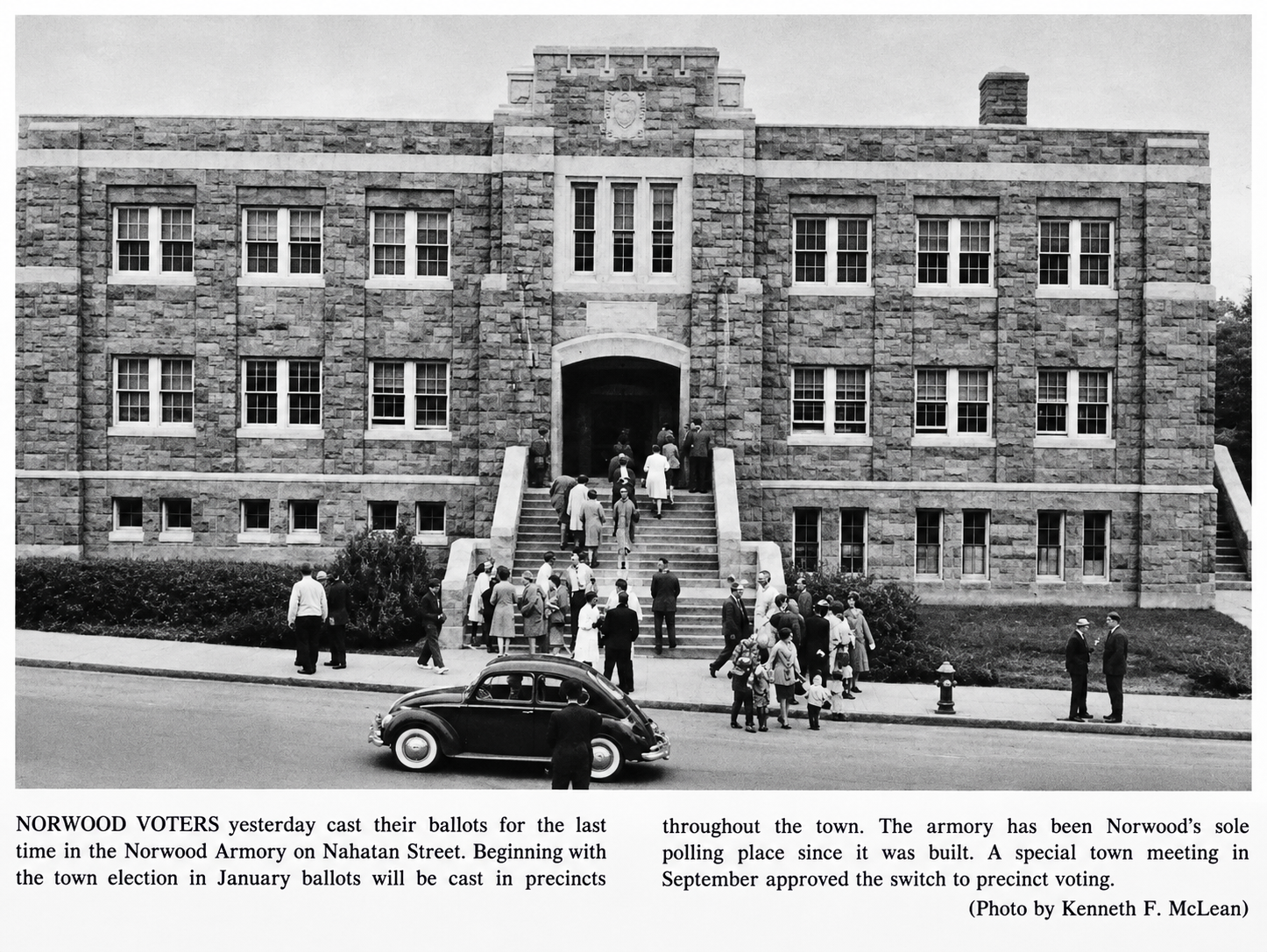
Norwood Voters Visit Armory for Last Time-November 6, 1968
Marking the final election held at the historic Nahatan Street Armory, 90 percent of Norwood voters cast ballots to re-elect state representatives, back national tickets, and approve precinct-based voting.
-
Proposition 2 1/2 Debate at Town Hall Sparks Heated Clash Over Tax Reform-October 2, 1980
Francis “Chip” Faulkner and State Rep. Gerald Cohen clash in a heated debate at Norwood Town Hall over the tax-cutting ballot initiative Proposition 2 1/2.
-
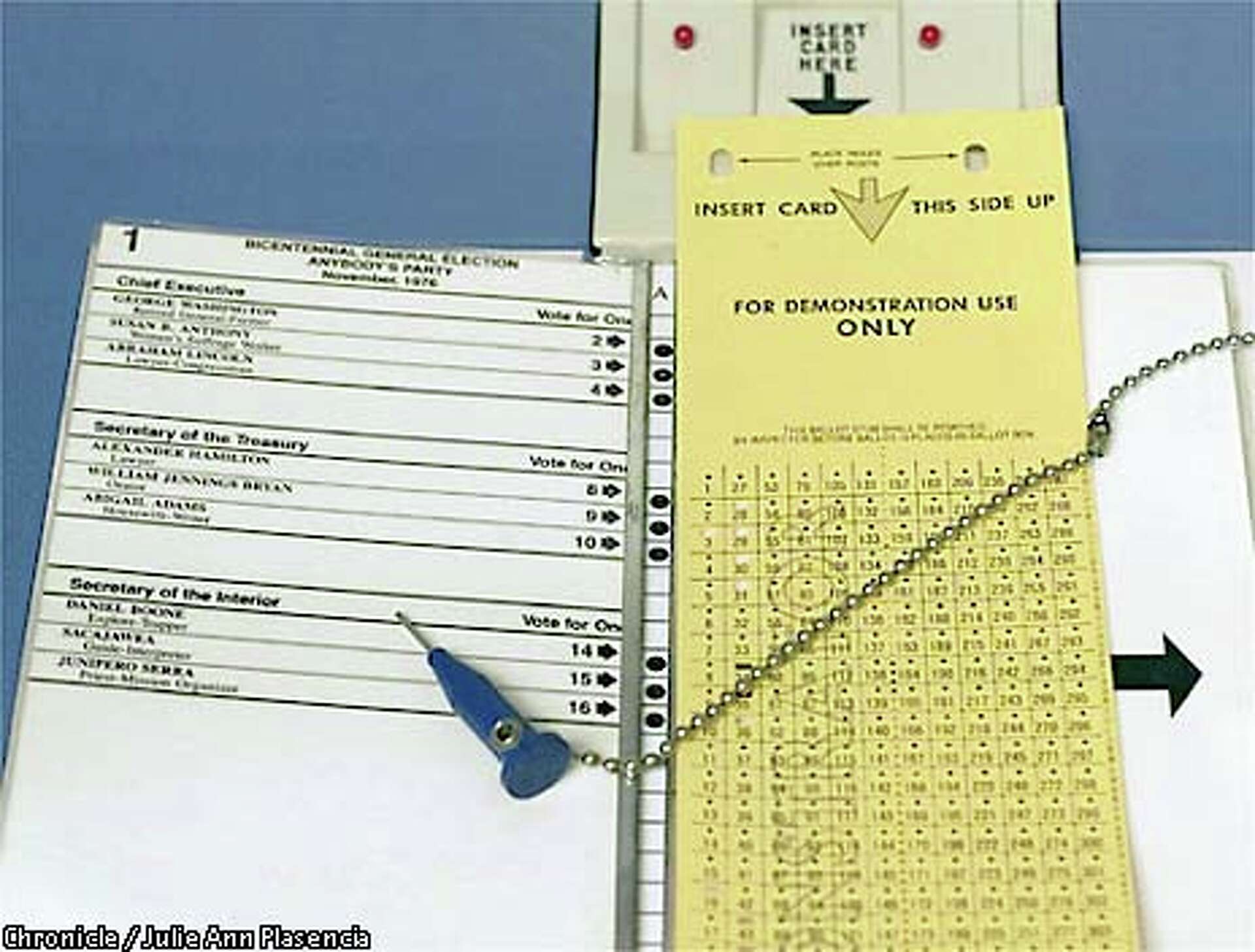
Norwood Voters to Test Computerized Punch-Card Ballots in State Primary Election-September 12, 1980
Norwood voters will use a new computerized punch-card ballot system provided by Factory Mutual Engineering Company for the upcoming state primary election.
-
Town Officials Warn of Disastrous Cuts from Proposed Proposition 2 1/2-August 20, 1980
Facing a potential $3 million budget shortfall, Norwood town officials are mobilizing an educational campaign to warn residents about the severe municipal cuts threatened by Proposition 2 1/2.
-
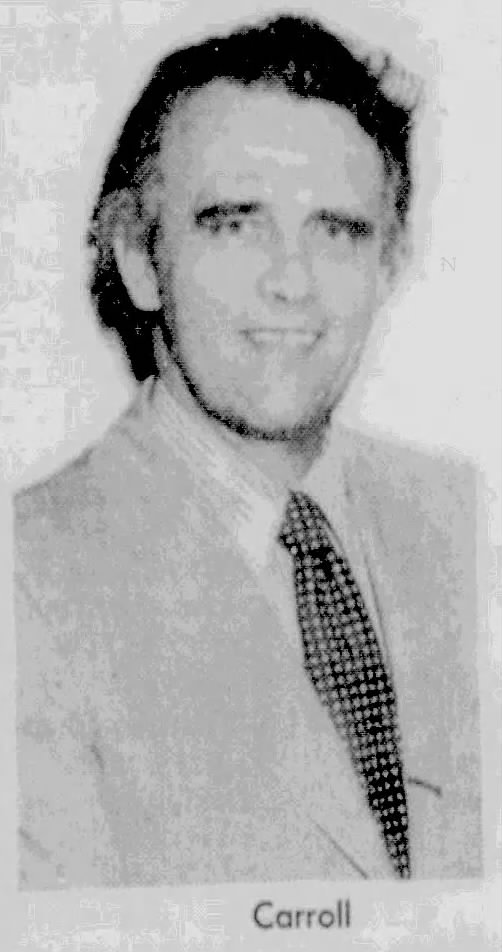
State DPW Commissioner John J. Carroll Appointed Norwood Town Manager-November 1, 1978
Leaving the outgoing Dukakis administration, State DPW Commissioner John J. Carroll was appointed Norwood’s new town manager by a 4-1 vote of the Board of Selectmen.
-
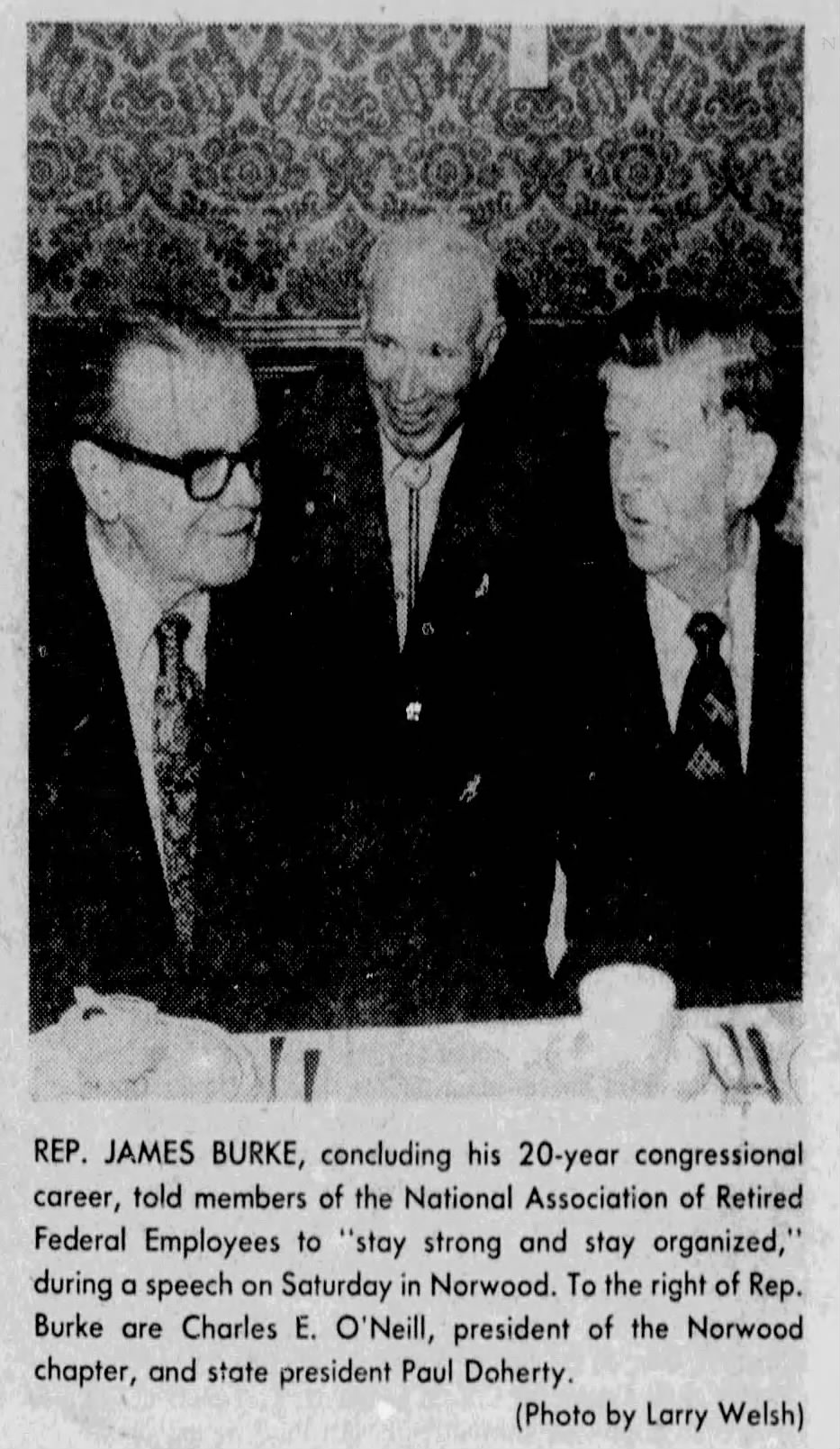
Retiring Congressman James Burke Bids Farewell to Federal Retirees at Norwood VFW Hall-October 31, 1978
Retiring 11th District U.S. Rep. James Burke reflected on his 20-year career, Medicare battles, and advocacy for seniors during an emotional farewell address to federal retirees in Norwood.
-
Republican Town Committee Delays Nominations for Board of Registrars-October 24, 1978
The Republican Town Committee delayed nominations for the Board of Registrars by one week to review candidate qualifications and procedures following A. Franklin Swift’s departure due to office-holding conflicts.

-
Property Taxes Dominate Norwood’s 1978 Special Election Amid School Committee Recall and Selectman Race-October 23, 1978
Soaring property taxes take center stage in Norwood’s special municipal election, featuring a high-stakes school committee recall, a four-way selectmen race, and a finance commission contest.
-
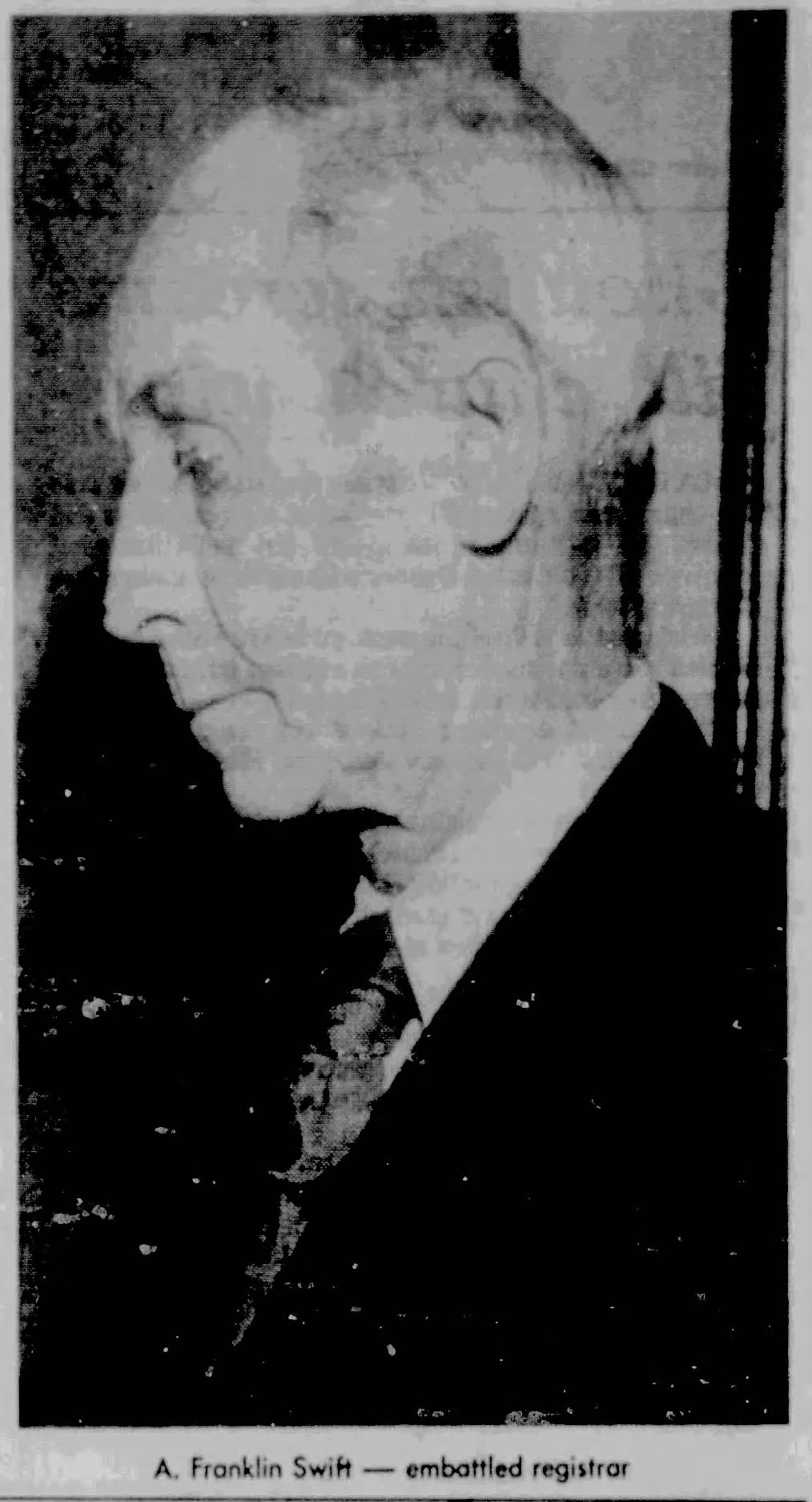
Former Registrar A. Franklin Swift Seeks Reappointment Following Conflict-of-Interest Challenge-October 12, 1978
Former registrar A. Franklin Swift asks selectmen for reappointment after clearing multiple town committee roles following a state law challenge raised by Town Meeting member Kenneth C. Ball.
Discover more from Norwood Historical Society
Subscribe to get the latest posts sent to your email.