
Superintendent Joseph Welch Warns Cemetery Will Be Full in Three Years
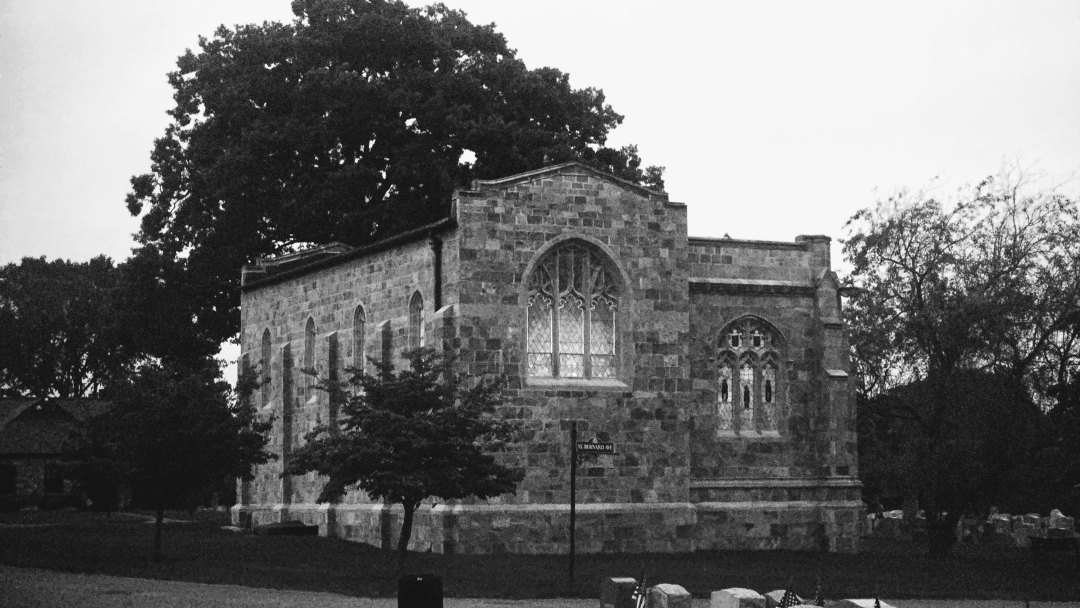
The town-owned Highland Cemetery is rapidly running out of available burial space, with Public Works Superintendent Joseph Welch warning the Board of Selectmen last night that the grounds will be completely full within three years. Welch emphasized that the town can no longer delay funding solutions: “Since 1988, I’ve been asking to set aside money for cemetery expansion. It just hasn’t been there.”
Welch announced plans to request approximately $60,000 at the upcoming annual town meeting in the spring to finance expansion efforts. Located off Winter Street, Highland Cemetery has served as the final resting place for 17,107 individuals since its incorporation in 1880. In recent years, the town has averaged between 240 and 250 burials annually, reaching 252 burials over the past year.
Expansion Proposal Targets Veterans Road Section Amid Potential Neighbor Concerns
To address the impending shortage, Welch outlined a development plan to create 400 new burial lots on an undeveloped parcel along Veterans Road that has already been designated for cemetery use. While the plot directly borders eight residential properties, Welch minimized potential friction, remarking, “You couldn’t ask for better neighbors. I wouldn’t mind living there.”
Selectmen Chairman Gary Lee expressed reservations, predicting that nearby homeowners will object to expanding cemetery operations so close to their property lines. However, Selectman Thomas Riolo voiced strong support for the project, maintaining that expanding the cemetery is the best course of action for the town.
Current Inventory and Sales Restrictions
Although 97 percent of the cemetery’s total plots have already been sold, Welch noted that roughly half of those purchased lots remain physically unused, with some plots having sat vacant for up to 30 years. Currently, only 251 burial lots remain unsold:
- 144 lots contain two graves each.
- 87 lots contain up to four graves each.
Due to the severe shortage, selectmen receive purchase inquiries nearly every week, the vast majority of which are denied. Welch confirmed that he routinely recommends rejecting all new plot purchase requests to preserve remaining space for immediate municipal need.
Archival Note: This article has been dynamically reconstructed from the original public record print archives of the Patriot Ledger
-
In Memoriam-Gary M. Lee
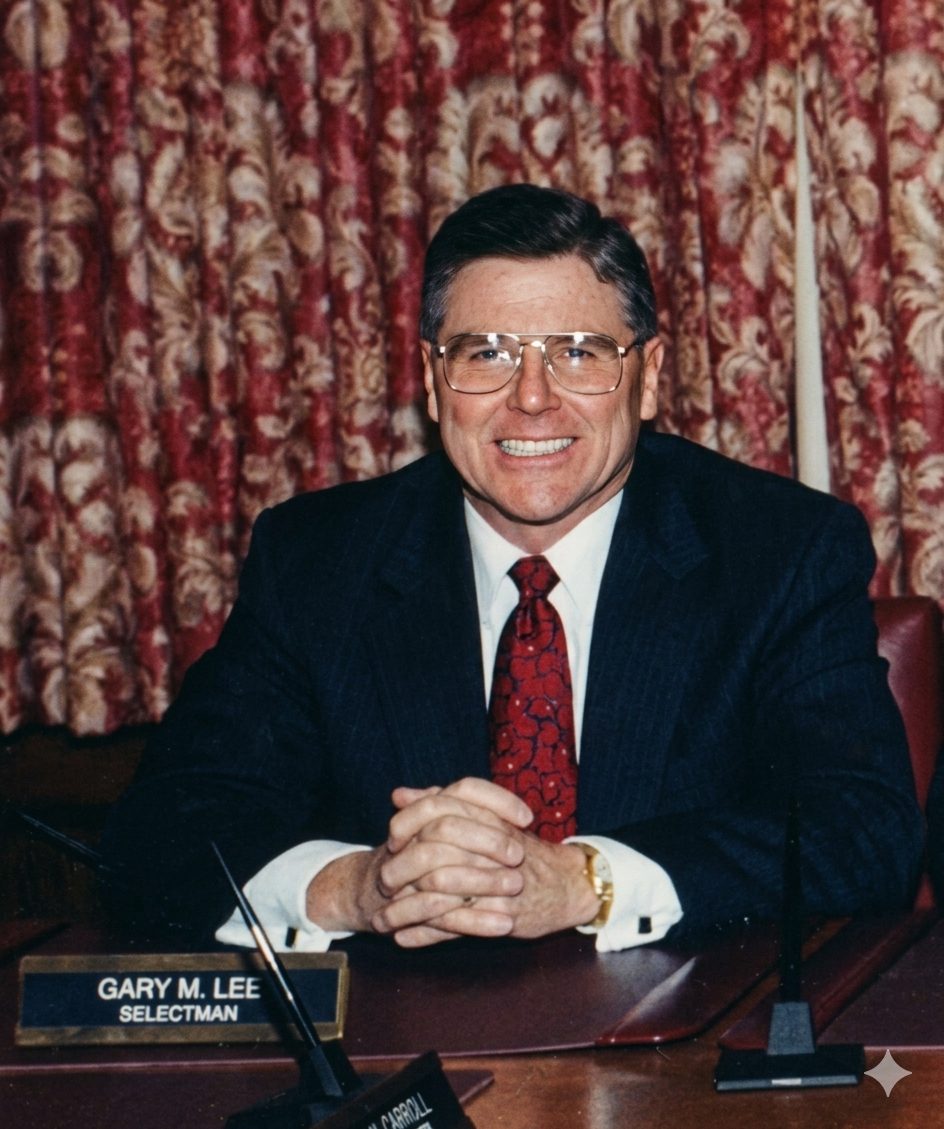
A Life of Service and Faith On April 30, 2023, the town of Norwood, Massachusetts, suddenly lost a dedicated community leader, family man, and professional with the unexpected passing of Gary M. Lee at the age of 67. Gary’s life, rooted deeply in the soil of his hometown, was a model of civic engagement, multifaceted…
-
Norwood Neighborhoods Exhibits Sources and Acknowledgements
Acknowledgements: The Norwood Historical Society would like to give a special thank you to several people, who without their knowledge, help and input made the 2022 Walking Tours both interesting and fun! A special thanks goes to: We would like to thank the many people who joined us on our walks. Especially all those who…
-
Winter Street (Walpole St to Lothrop Rich Park)

First Congregational Church. Originally was the site of the impressive house of Edmund Shattuck and his wife Emma Morrill Shattuck who was the daughter of Morrill Ink Works owner George Morrill. Edmund Shattuck managed the Ink Works one of Norwood’s prosperous industries until his death in 1903. At one point in it’s history Morrill Ink…
-
St James Avenue to St George Avenue
South Norwood Photo Studio —1 St James Avenue (now gone) John Klukas was one of two photographers who operated photo studios in South Norwood. Alexander Lapinsky had a studio around the corner at 1084 Washington. Many of Norwood’s immigrant population liked to have their pictures taken, as it was an affordable way to memorial important…
-
Cedar Street: A New Neighborhood is Established
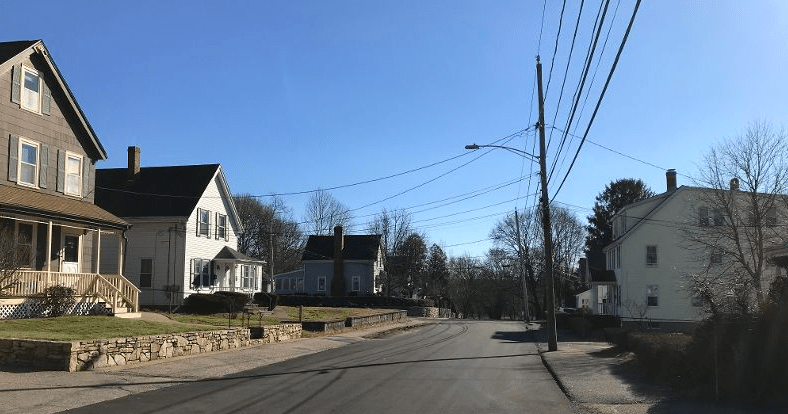
In 1888, George Winslow & George Peterson laid out Cedar Street, Quincy Avenue, and the lower portion of Savin Avenue, creating 38 house lots. What is interesting about these plans is that Winslow and Peterson created a plan for a neighborhood. Where before so many early house lots in Norwood were small lots along a…
-
12 Vernon Street – The Joel Metcalf Baker House
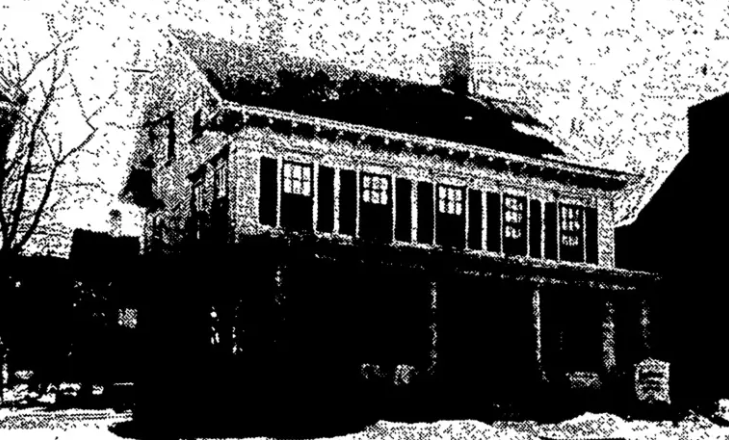
Joel M. Baker bought this house lot in 1854 from Joseph Day. It contained about a third of an acre and ran from Washington Street up the hill to Bullard Street. Baker built had local architect/builder, Tyler Thayer construct this Italianate style house in 1855. This house originally sat on the corner of Vernon &…
-
24 Cottage Street – The George B. Talbot/L. Waldo Bigelow House

George B. Talbot built this Italianate style house for himself around 1855. Originally this house was on the corner of Cottage and Washington Streets and was part of a large lot. It was moved to the back of its lot in 1905 when the center of Norwood was going through its modernization. Talbot lived here…
-
100 Cottage Street – The Henry B Mylod House

Henry B. Mylod bought his ¼ of an acre house lot on the corner of Vernon and Nichols Streets in June of 1884 from George L. Rhodes. (Rhodes purchased the property three months earlier from Priscilla C. Fairbanks). The description indicates there were no buildings on the lot when Mylod purchased the property. He would…
-
115 Nichols Street – The Frank A. Fales House

One early map of this corner of Nichols and Winter Streets indicates that Frank Bateman had his home here, but from tracing ownership deeds, Frank always owned the property located on the corner of Florence and Nichols Street (#103 Nichols) which abuts the Fales property. In 1888, Frank A Fales bought 35, 570 sq ft…
-
Stick Style
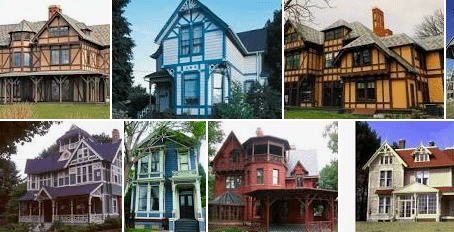
The predominant form of the stick style was a front facing gable with a steeply pitched roof and were prevalent from 1860 to 1890. There were often cross gables or dormers and one story porches. The stick style is known for its distinctive styling – decorative trusses in the apex of the gable, exposed rafter…
Discover more from Norwood Historical Society
Subscribe to get the latest posts sent to your email.