

Norwood Officials Develop $185,000 Expansion to Provide 3,200 New Graves and Extend Municipal Burial Capacity
NORWOOD — Local officials are taking proactive measures to ensure that municipal burial space remains available at Highland Cemetery for years to come. Joseph M. Welch, assistant superintendent of public works, conservatively predicts that cemetery lots will remain available for purchase for at least another 10 to 12 years thanks to ongoing expansion efforts.
At Highland, a new three-acre section initiated four years ago has been developed at an estimated cost of $185,000. Sales in the new parcel could open by the spring, offering a total capacity of 3,200 graves. According to Welch, the majority of the new area will feature companion two-grave lots, with the largest plots capped at six graves to avoid the land-lock issues created by oversized family plots in the past.
Vacant Family Plots, Pre-Need Policies, and Exceptional Waivers
The policy restricting plot sizes stems from decades of experience with older sections where massive family plots now sit largely vacant. Welch noted instances of an old 10-grave lot where only three burials have occurred since 1935, another where 17 of 20 graves have remained empty since before 1900, and a plot unused since 1885. Because locating heirs is virtually impossible, state law ties town officials’ hands regarding reclaiming unsold space. Of Highland’s approximately 250 annual burials, only about 10 occur in these older, high-capacity sections.
To prevent space from being prematurely locked up, Norwood instituted a prohibition against “pre-need” or advance sales. This policy protects residents who cannot afford immediate plot purchases while extending the working life of the cemetery:
- Current Capacity: The 101-year-old cemetery spans 34-plus developed acres with a total capacity of 25,800 graves.
- Burial Stats: Over 14,000 burials have taken place, leaving roughly 300 unsold graves in established sections.
- Case-by-Case Waivers: Selectmen occasionally grant policy waivers for compassionate exceptions, such as approving an advance purchase for grandparents grieving a teenage grandson killed in an automobile accident so they may eventually be buried alongside him.
Historic Topography and Architectural Heritage
Highland Cemetery General Foreman Philip J. McManus described the site as “one of the best kept cemeteries” in the region, offering affordable single-grave lots for $127.50 (including perpetual care). Perched near Norwood’s highest elevation near the Bellevue Avenue water tanks, the grounds offer sweeping views toward Westwood from the Winter Street entrance.
The cemetery reflects Norwood’s rich cultural and religious tapestry across its distinct sections:
- Yankee & Historic Sections: Featuring larger family plots, spacious avenues like Highland, Groveland, and Woodward, and the cemetery’s only two mausoleums.
- Denominational Avenues: Sections closer to Winter Street with avenues named after St. Cecilia, St. Andrew, and St. Anne for Catholic burials, alongside Mt. Lebanon Walk and Mt. Sinai Walk in the Jewish section.
- Nonsectarian Facilities: All newer sections are nonsectarian, and all faiths are welcomed to use the neo-Gothic Chapel of St. Gabriel the Archangel for committal services, a local architectural treasure donated by the Day family.
Highland Cemetery Expansion & Operations Overview
Expansion Details
- New Section: 3 acres developed at $185,000 cost
- Capacity: 3,200 new graves (opening spring 1982)
- Lot Limits: Primary 2-grave plots; maximum 6-grave plots
- Officials: Asst. DPW Supt. Joseph M. Welch, General Foreman Philip J. McManus
Cemetery Statistics & Features
- Overall Size: 34+ acres, 101 years old, 25,800 grave capacity
- Burial Rate: ~250 burials per year (14,000+ total to date)
- Pricing: $127.50 single-grave lot (includes perpetual care)
- Chapel: Chapel of St. Gabriel the Archangel (donated by Day family)
Archival Note: This article has been dynamically reconstructed from the original public record print archives of the Patriot Ledger
-
In Memoriam-Gary M. Lee
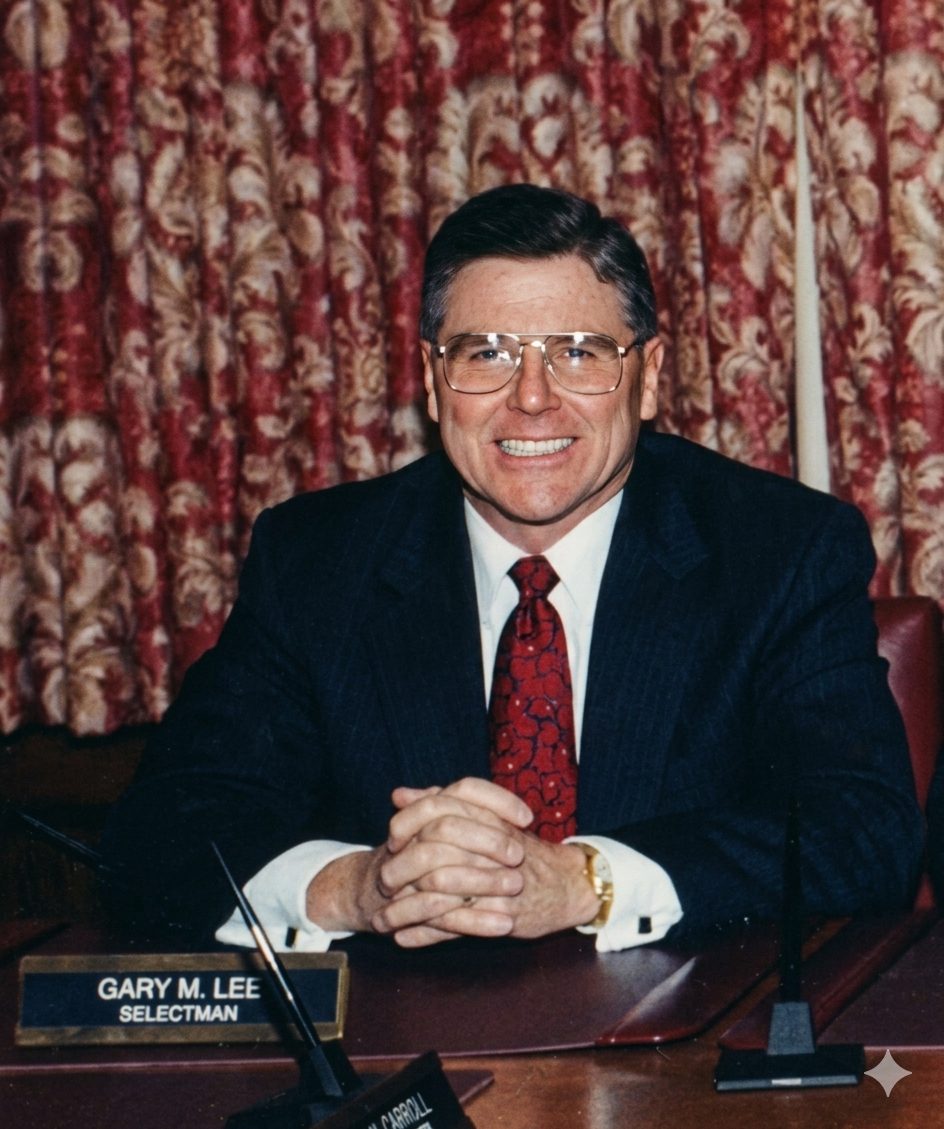
A Life of Service and Faith On April 30, 2023, the town of Norwood, Massachusetts, suddenly lost a dedicated community leader, family man, and professional with the unexpected passing of Gary M. Lee at the age of 67. Gary’s life, rooted deeply in the soil of his hometown, was a model of civic engagement, multifaceted…
-
Norwood Neighborhoods Exhibits Sources and Acknowledgements
Acknowledgements: The Norwood Historical Society would like to give a special thank you to several people, who without their knowledge, help and input made the 2022 Walking Tours both interesting and fun! A special thanks goes to: We would like to thank the many people who joined us on our walks. Especially all those who…
-
Winter Street (Walpole St to Lothrop Rich Park)

First Congregational Church. Originally was the site of the impressive house of Edmund Shattuck and his wife Emma Morrill Shattuck who was the daughter of Morrill Ink Works owner George Morrill. Edmund Shattuck managed the Ink Works one of Norwood’s prosperous industries until his death in 1903. At one point in it’s history Morrill Ink…
-
St James Avenue to St George Avenue
South Norwood Photo Studio —1 St James Avenue (now gone) John Klukas was one of two photographers who operated photo studios in South Norwood. Alexander Lapinsky had a studio around the corner at 1084 Washington. Many of Norwood’s immigrant population liked to have their pictures taken, as it was an affordable way to memorial important…
-
Cedar Street: A New Neighborhood is Established
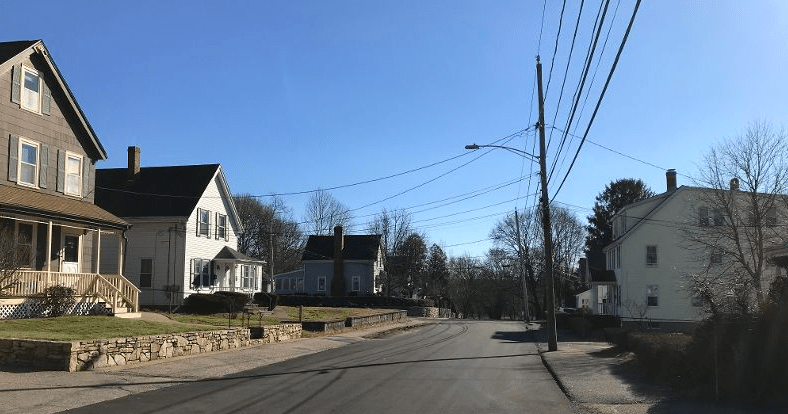
In 1888, George Winslow & George Peterson laid out Cedar Street, Quincy Avenue, and the lower portion of Savin Avenue, creating 38 house lots. What is interesting about these plans is that Winslow and Peterson created a plan for a neighborhood. Where before so many early house lots in Norwood were small lots along a…
-
12 Vernon Street – The Joel Metcalf Baker House
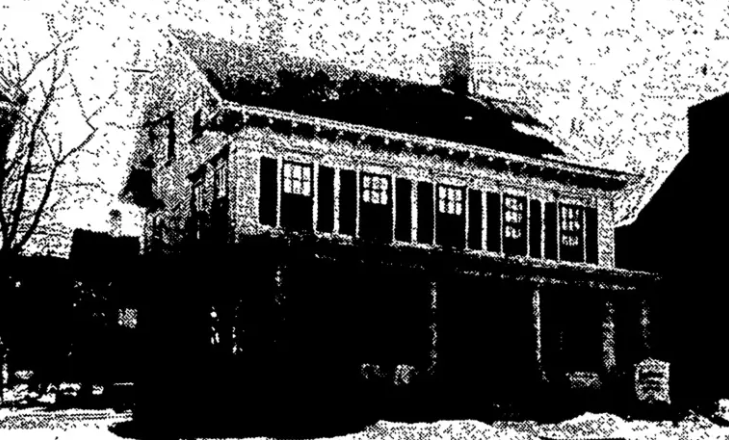
Joel M. Baker bought this house lot in 1854 from Joseph Day. It contained about a third of an acre and ran from Washington Street up the hill to Bullard Street. Baker built had local architect/builder, Tyler Thayer construct this Italianate style house in 1855. This house originally sat on the corner of Vernon &…
-
24 Cottage Street – The George B. Talbot/L. Waldo Bigelow House

George B. Talbot built this Italianate style house for himself around 1855. Originally this house was on the corner of Cottage and Washington Streets and was part of a large lot. It was moved to the back of its lot in 1905 when the center of Norwood was going through its modernization. Talbot lived here…
-
100 Cottage Street – The Henry B Mylod House

Henry B. Mylod bought his ¼ of an acre house lot on the corner of Vernon and Nichols Streets in June of 1884 from George L. Rhodes. (Rhodes purchased the property three months earlier from Priscilla C. Fairbanks). The description indicates there were no buildings on the lot when Mylod purchased the property. He would…
-
115 Nichols Street – The Frank A. Fales House

One early map of this corner of Nichols and Winter Streets indicates that Frank Bateman had his home here, but from tracing ownership deeds, Frank always owned the property located on the corner of Florence and Nichols Street (#103 Nichols) which abuts the Fales property. In 1888, Frank A Fales bought 35, 570 sq ft…
-
Stick Style
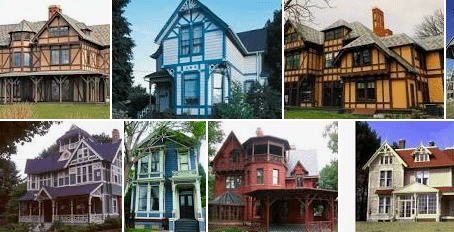
The predominant form of the stick style was a front facing gable with a steeply pitched roof and were prevalent from 1860 to 1890. There were often cross gables or dormers and one story porches. The stick style is known for its distinctive styling – decorative trusses in the apex of the gable, exposed rafter…
Discover more from Norwood Historical Society
Subscribe to get the latest posts sent to your email.