
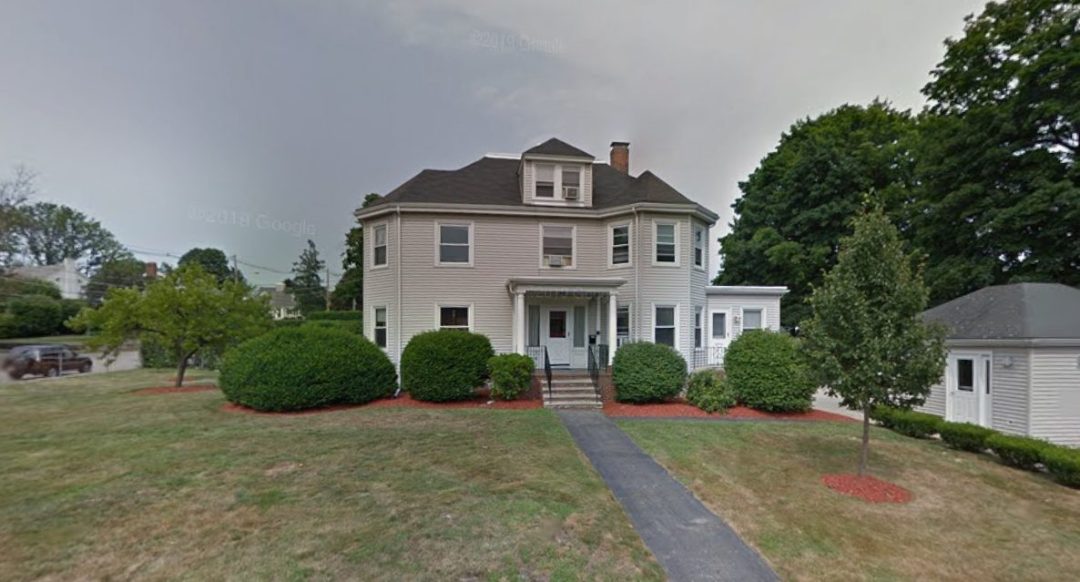
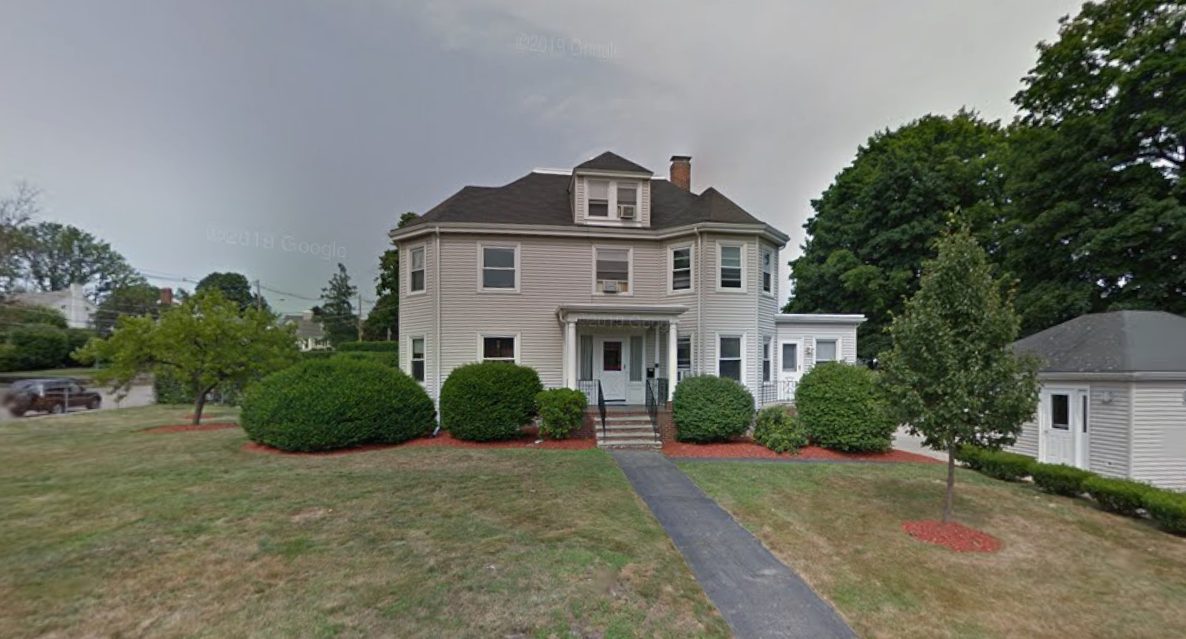
(81 Walpole Street, former location of the New England Home for Little Wanderers)
In the sweltering summer of 1983, the town was abuzz with a pressing concern: the shortage of foster-care parents. The New England Home for Little Wanderers and the state Department of Social Services had formed a five-member committee to tackle this issue head-on. This group, comprising local residents with strong ties to the community, aimed to recruit foster parents through innovative means.
The committee was spearheaded by Pam Flynn, director of the Foster Family Network, a joint venture between the state agency and the Little Wanderers. Flynn had organized the group, carefully selecting members based on their extensive connections within Norwood. The team included a high school student, Kathy Lee Zilfi, who would be a senior in September; two real estate agents, Jerry Armstrong and Dick Smith; Nancy Clark, Norwood’s mother of the year; and Thomas C. Coen, a district town meeting representative.
The committee’s approach was revolutionary for its time. Rather than relying on social workers from outside the community to search for foster-parent candidates, they opted for a more personal and localized strategy. As Pam Flynn astutely observed, “People are much more apt to talk to someone from their own town.” This grassroots approach was designed to tap into the strong sense of community that defined Norwood, where residents knew and trusted one another.
Flynn emphasized the importance of recruiting individuals with experience dealing with the public. By selecting committee members who were well-known and respected in the community, they hoped to establish a network of trusted advocates who could effectively promote the foster-care program. As Nancy Clark noted, “It’s the personal contact — the people are right here in the town.” This localized approach had already shown promise in **Walpole**, where a similar effort was underway.
Thomas C. Coen, a member of the United Church Council and manager of the Showcase Cinema in Dedham, highlighted the benefits of this community-driven initiative. “Especially in Norwood, which is a real ‘community town’, people know each other better and can work through local channels better than someone from the outside,” he said. Coen’s words underscored the significance of building relationships within the community to address social issues.
The committee’s plan was multifaceted, involving the distribution of posters and brochures around Norwood, press coverage, outreach to the school system, and connections with local clergy. Social workers would provide foster-care training for those recruited by the group. The committee’s efforts were designed to be a model for a statewide drive, demonstrating the effectiveness of community-based initiatives in addressing complex social problems.
As the committee met for the second time on July 15, 1983, they were optimistic about their prospects. With their localized approach and strong community ties, they hoped to attract foster parents who would provide loving homes for Norwood children in need.
The story of the Norwood citizens group serves as a testament to the power of community-driven initiatives in addressing social issues. By leveraging their strong connections within the town, they were able to develop a unique and effective approach to recruiting foster-care parents. As the town of Norwood continues to evolve, this pioneering effort remains an important chapter in its history.
Archival Note: This article has been dynamically reconstructed from the original public record print archives of the Patriot Ledger
-
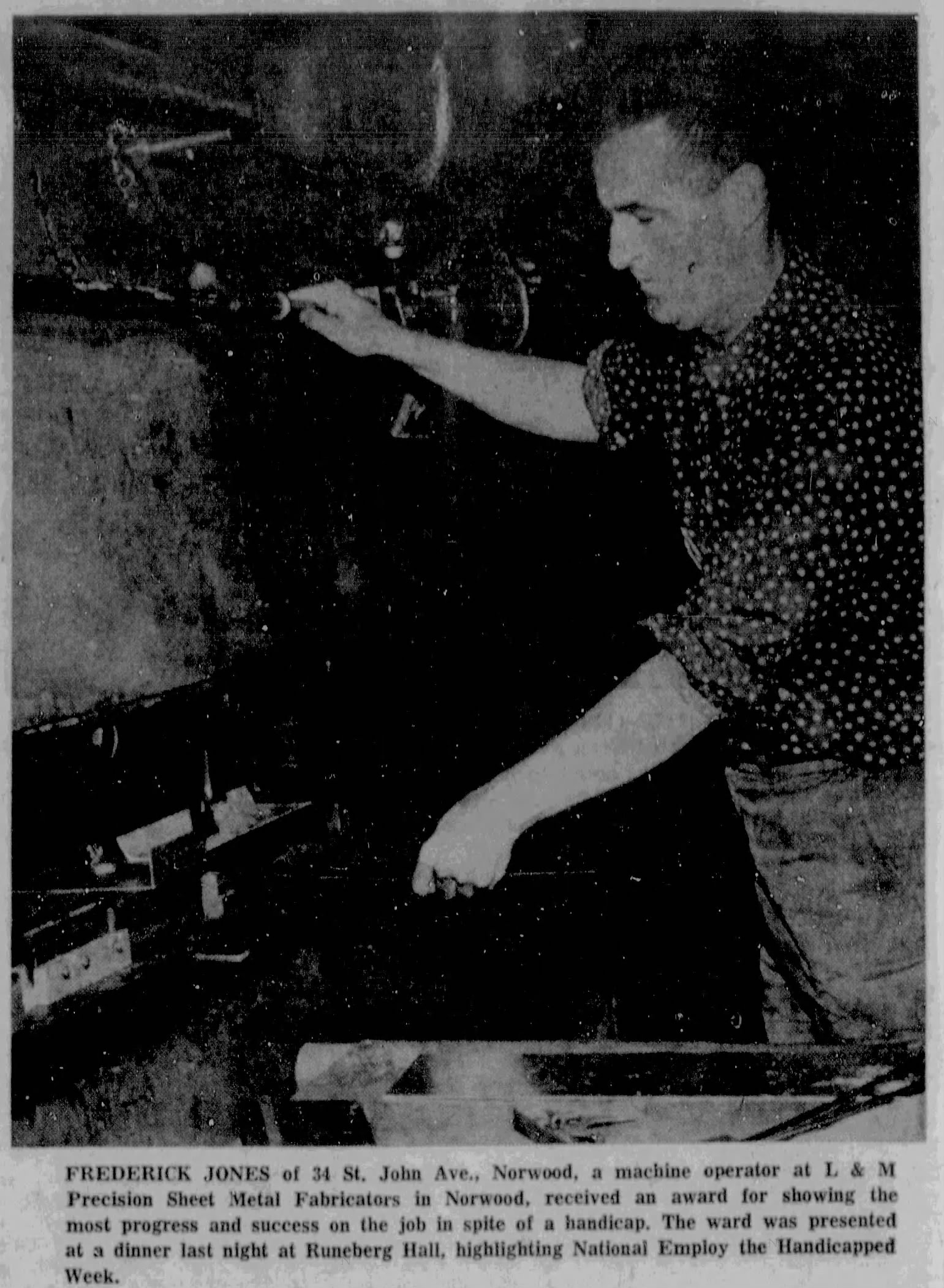
Norwood Man Proves Handicap Doesn’t Limit Skills as Worker-October 7, 1969
Frederick Jones of St. John Avenue is honored by the Norwood Rotary Club for overcoming physical disabilities to become a master machinist at L & M Precision Sheet Metal.
-
Civil Rights Must Begin at Home-October 17, 1968
Challenging local residents to examine their own community, Kenneth P. Guscott, president of the Boston chapter of the NAACP, addressed roughly 100 members and guests at a meeting of the Norwood Human Rights Commission last night. Guscott asserted that anyone genuinely interested in furthering civil rights in the United States must first question why fewer…
-
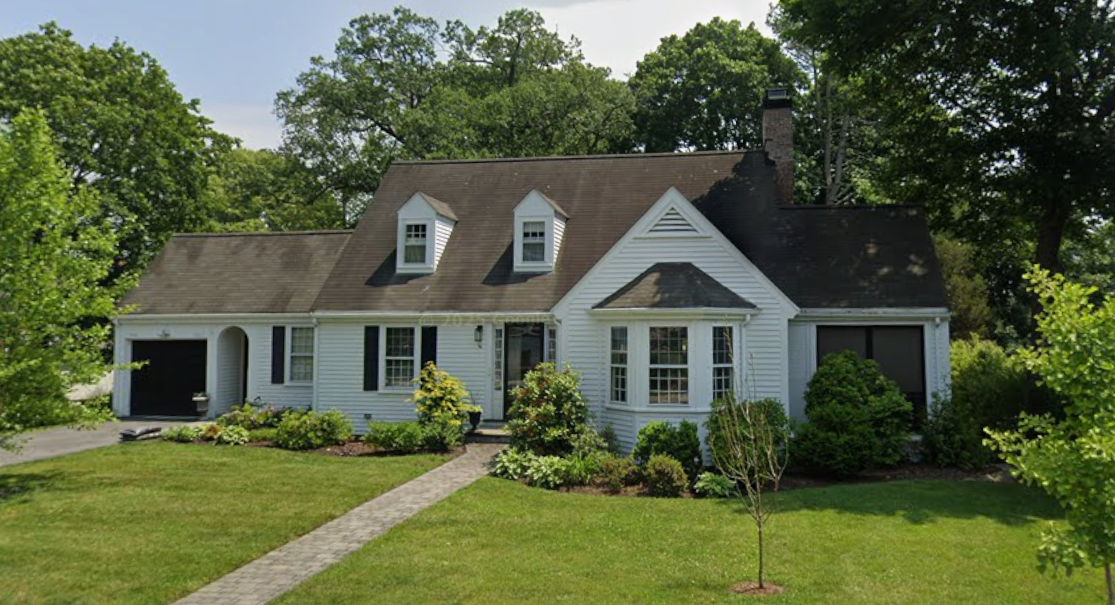
Norwood Resident Anna M. Roundy Leaves $125,000 in Charitable Bequests from $500,000 Estate-November 16, 1966
Probate records allowed by Judge James F. Reynolds revealed that Norwood resident Anna M. Roundy left $125,000 to charities, including $20,000 to Norwood Hospital and gifts to the Norwood Historical Society and Women’s Club.
-
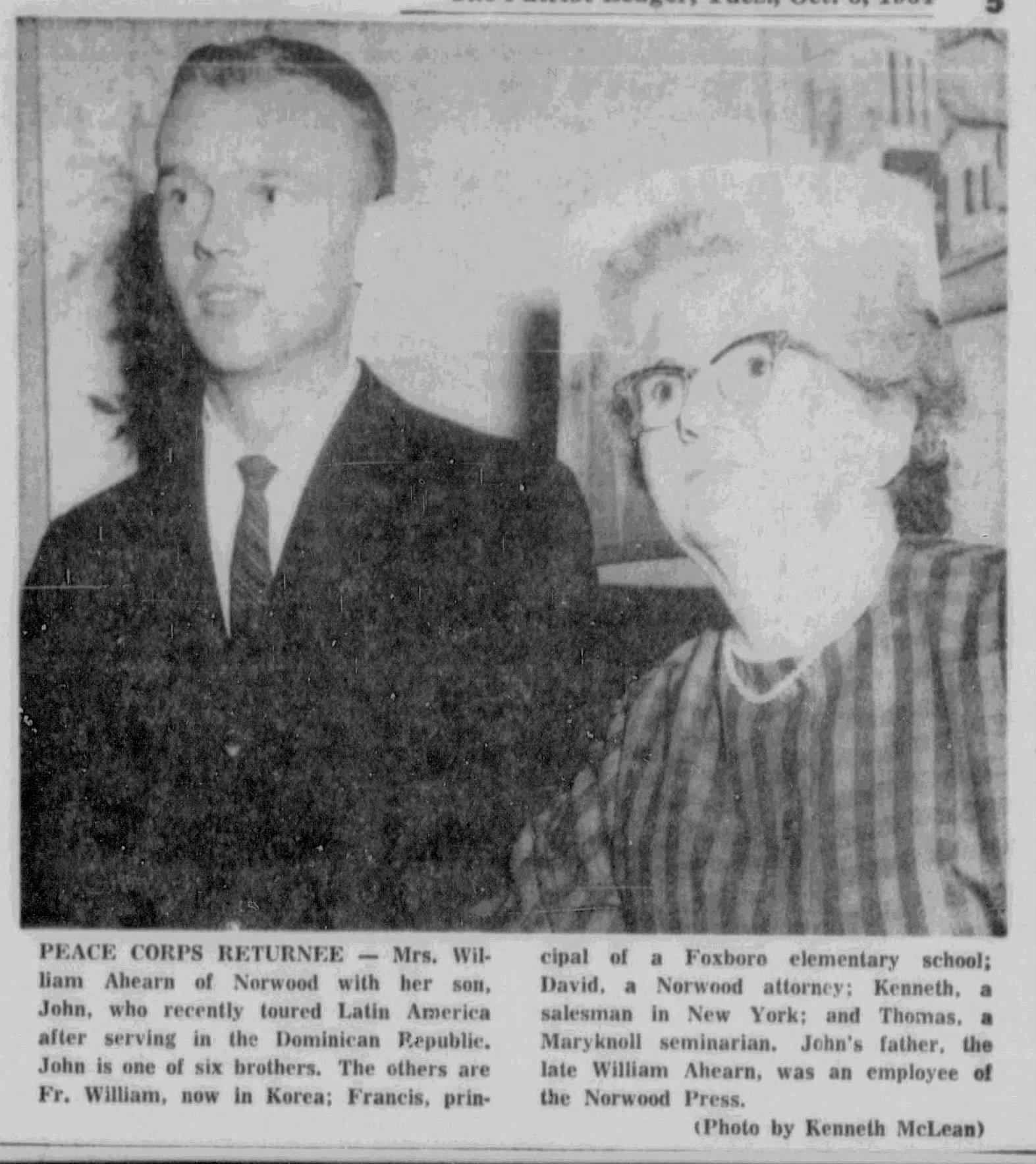
Norwood Peace Corps Returnee John A. Ahearn Recalls Dominican Republic Service and Grassroots Co-Op Development-October 6, 1964
Norwood’s John A. Ahearn returns from an 18-month Peace Corps assignment in the Dominican Republic, detailing grassroots cooperatives and economic development.
-
Norwood Man Named New Dean At Brandeis University-July 16, 1963
Formerly the State Budget Commissioner, Morrissey takes on oversight of student services while continuing to lecture in politics.

-
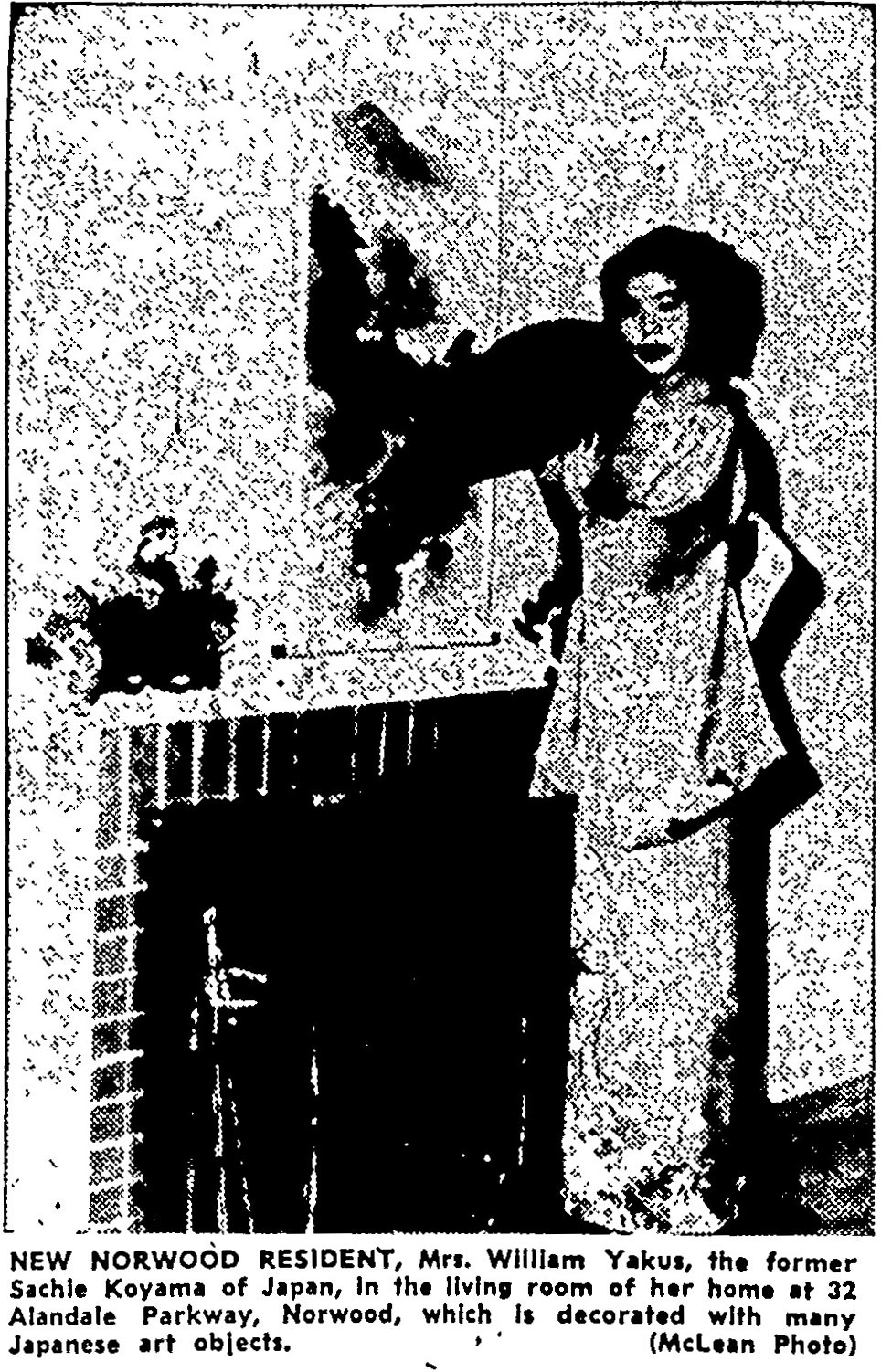
Japanese Bride Happy in New Norwood Home-November 3, 1956
Former Military Police Sergeant William Yakus and his bride Sachle have settled into an Alandale Parkway bungalow after marrying in Yokohama and moving to Norwood.
-
Norwood Welcomes New Residents Via Welcome Wagon-August 25, 1955
The Norwood Messenger welcomed numerous new families to town who were greeted in person by the official Welcome Wagon Hostess.

-
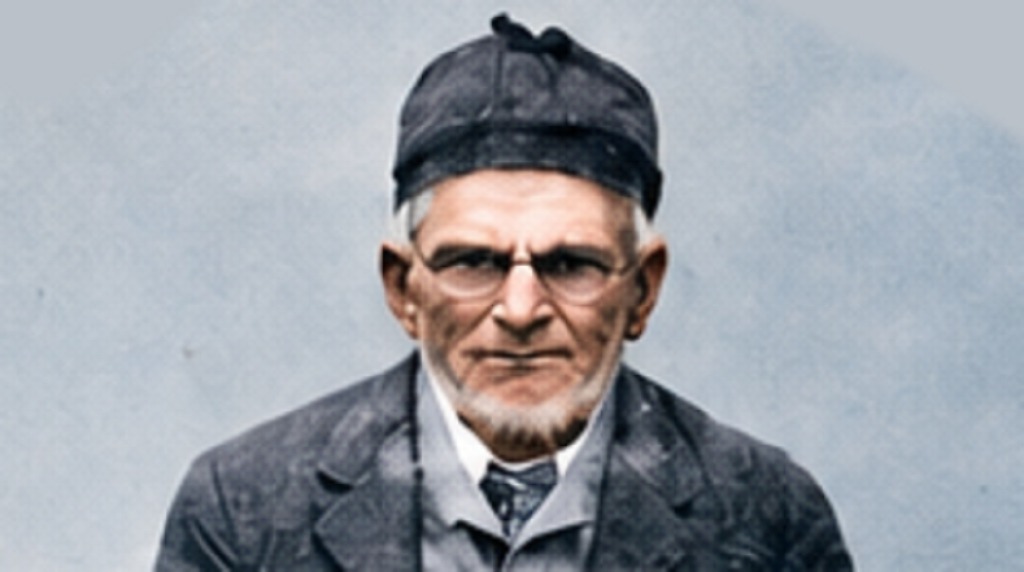
Jabez Sumner of Norwood Remembers Old Stage Coaching Days, And Relates Interesting Reminiscences-This Day In Norwood History-June 22, 1902
CHAMPION OF MODERN RAILROADS. One of the unique and interesting characters in Norwood is Jabez Sumner, who lives alone in Nahatan St, a very pretty residential thoroughfare, and who, for two or three generations, has been one of the best-known men in the village. He leads in part the life of a hermit, but takes…
Discover more from Norwood Historical Society
Subscribe to get the latest posts sent to your email.