
Route 1 Complex Led by John M. Rhodes, Raymond Friedman, and Paul Cotton Conducts Cutting-Edge Studies on Combustion Toxics, High-Rise Evacuation, and Economical Home Sprinklers for Federal Agencies

“Fire!” is perhaps one of the most fearsome cries in an increasingly populated and industrialized society, but federal agencies and business organizations are placing growing faith in scientific approaches to preventing and containing blazes. At the very forefront of this global fire research is the internationally known Factory Mutual Research Corp., located in a handsome brick complex along Route 1 in Norwood. Known overall as the Factory Mutual System—founded in 1835 in Providence by enterprising mill owner Zachariah Allen—the worldwide enterprise comprises major mutual insurance firms including Allendale, Arkwright-Boston, Philadelphia Manufacturers, and Protection Mutual, alongside operational arms like Factory Mutual Engineering Corp. and Factory Mutual Engineering Association.
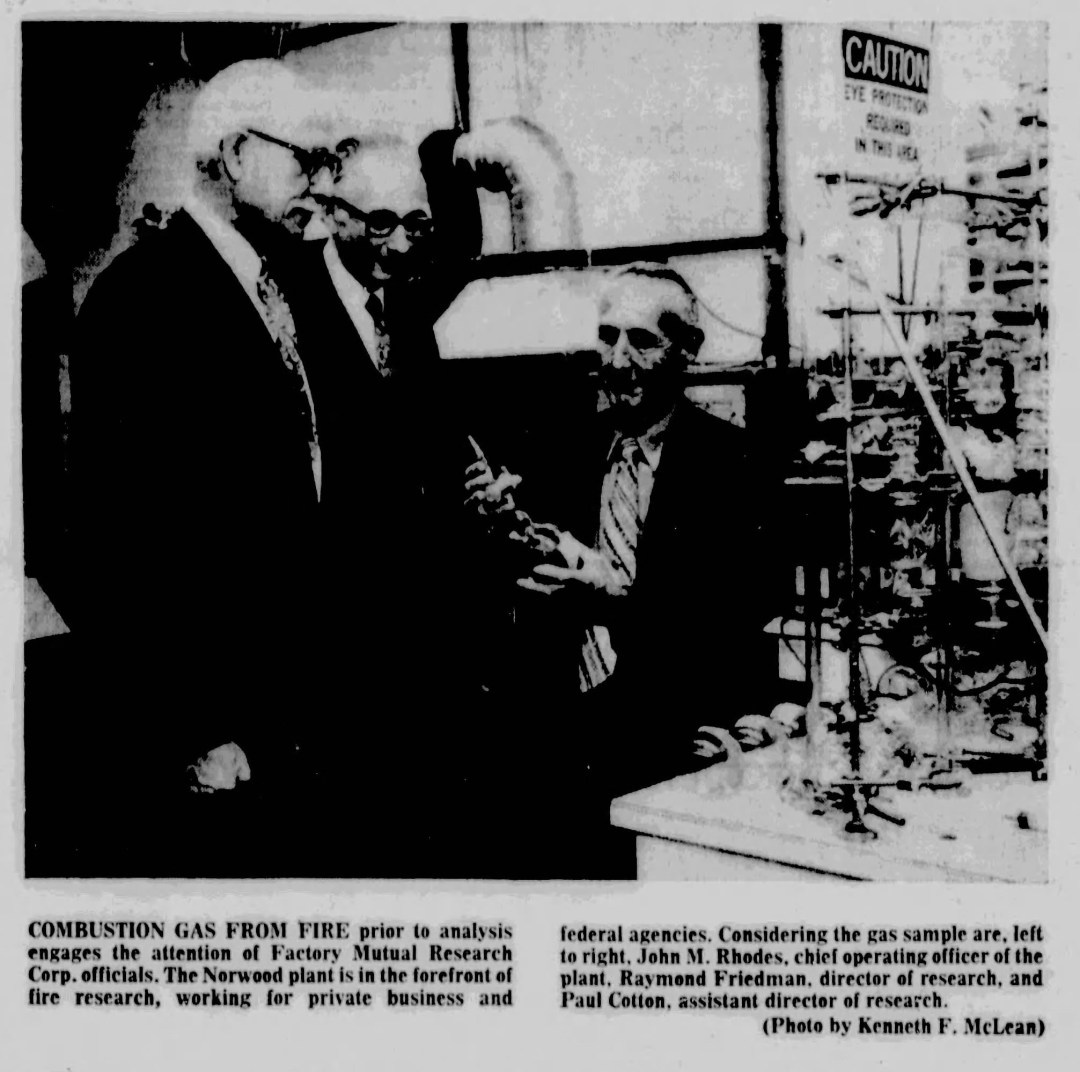
Inside the Norwood plant’s rabbit warren of laboratories, offices with wall-size blackboards covered in complex equations, and conference rooms, a highly specialized staff of experts works to understand the fundamental mechanics of fire. The personnel includes Ph.D.s in mathematics, physics, chemistry, and chemical engineering, as well as specialists in heat transfer, fluid dynamics, and mass transfer. “Our philosophy is that losses can be controlled,” stated John M. Rhodes of Medfield, chief operating officer of Factory Mutual Research. Working alongside Raymond Friedman, director of research, and Paul Cotton, assistant director of research—as captured in a staff photograph by Kenneth F. McLean—Rhodes emphasized that conquering fire hazards requires deep scientific understanding. “The more we know the better we can control it,” he asserted, noting variables ranging from draft effects and material positioning to chemical interactions and toxic gas releases.
Among its many initiatives, Factory Mutual is conducting significant research for federal agencies. For the Department of Health, Education, and Welfare (HEW), the firm is identifying products of combustion—such as methane, acids, and carbon monoxide—to ascertain their toxic effects and help toxicologists determine treatments for exposure. For the Department of Housing and Urban Development (HUD), the facility recently completed a study on the extinction process in enclosures to help develop more economical sprinkler systems for general residential use, high-rise buildings, elderly housing, and rest homes. While acknowledging obstacles such as high plumbing costs, water pressure limitations, aesthetic resistance to exposed piping, and the high threshold required to trigger traditional sprinklers, Rhodes noted that manufacturers are exploring discreet ceiling designs. Furthermore, Massachusetts stands out as one of the few states requiring sprinklers on every floor above a certain height.
Archival Note: This article has been dynamically reconstructed from the original public record print archives of the Patriot Ledger
More Norwood Business History
-
New Reliance Electric Service Center-July 17, 1979
Reliance Electric, which services and repairs industrial electric motors, will move its regional service center here from South Boston on Sept. 1. The new facility in a 19,000-square-foot location in the Park Place industrial development off Route 1 will employ some 30 persons, an increase of five over current levels. The company, with headquarters in…

-
Andrew Venskus Announces Closing of 33-Year Guild Square Jewelry Store Following Armed Robbery and Shootout-September 13, 1978
Andrew Venskus announces the permanent closure of Venskus Jewelers in Guild Square after 33 years following a violent armed robbery and shootout.
-
Norwood Park Place Industrial Park Advances-September 12, 1978
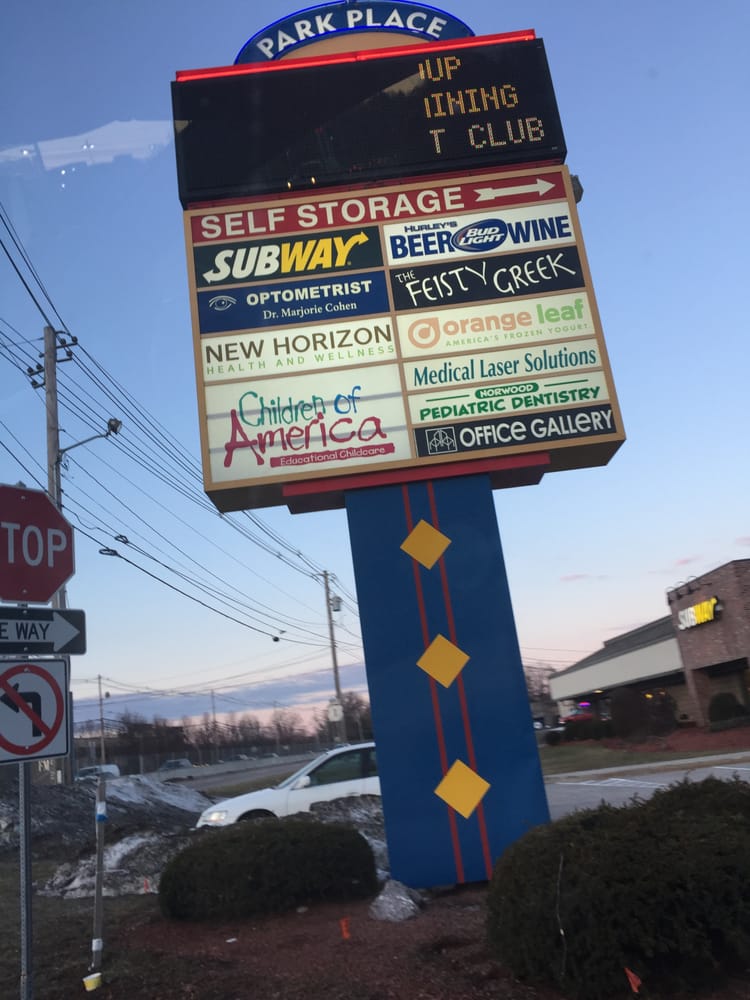
Norwood Planning Board releases $50,000 in performance bonding for the Park Place industrial park on Route 1 as roadway and building construction progresses.
-
Plans Unveiled to Revitalize Norwood Central Business District with Traffic Improvements-September 12, 1978
Consultants unveil a revitalization plan for Norwood’s central business district featuring traffic modifications, pedestrian amenities, and parking optimization.

-
Analog Devices Plans Major World Headquarters Expansion Into New 33-Acre Norwood Industrial Park-August 23, 1978
Computer equipment giant Analog Devices plans a 50,000-square-foot headquarters facility in a new 33-acre Route 1 industrial park, pending state and local sewer connection approvals.

-
Selectmen Support Park Place Industrial Park Owner in Seeking Temporary Portable Toilet Approval-August 9, 1978
Selectmen backed Park Place Industrial Park owner James H. Shane in seeking Board of Health reconsideration for temporary portable toilets amid sewer connection delays.

-
John Shalbey Jr. Proposes Office Building Behind Ro-Jo Car Wash-August 9, 1978
Local businessman John Shalbey Jr. faced mixed reactions from David Terrace residents while seeking a zoning variance for an office building behind his Route 1 car wash.
-
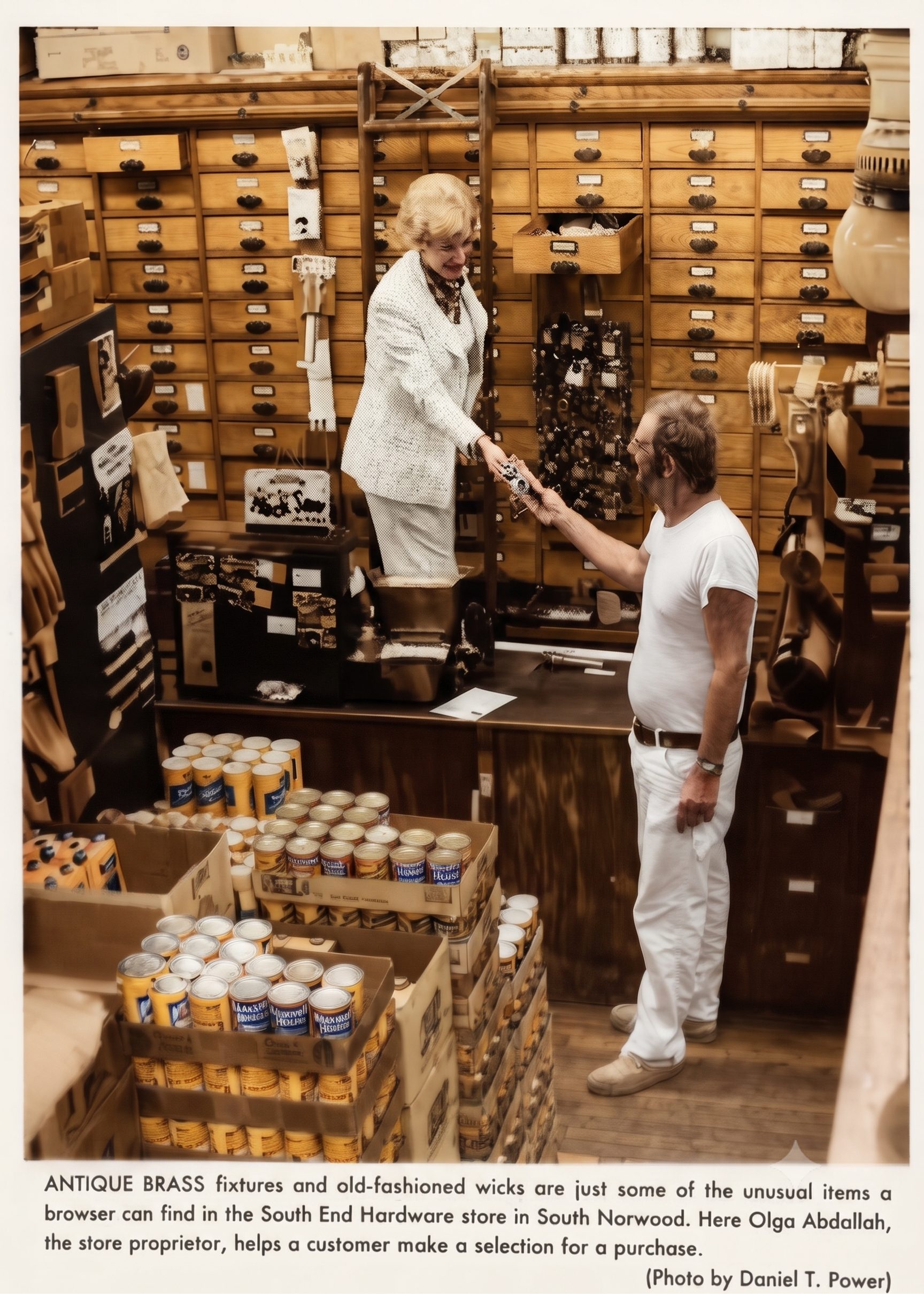
South End Hardware: A Landmark Institution-July 5, 1978
In 1978, the Abdallah family’s South End Hardware in South Norwood stood as a testament to four generations of community service and local history.
-
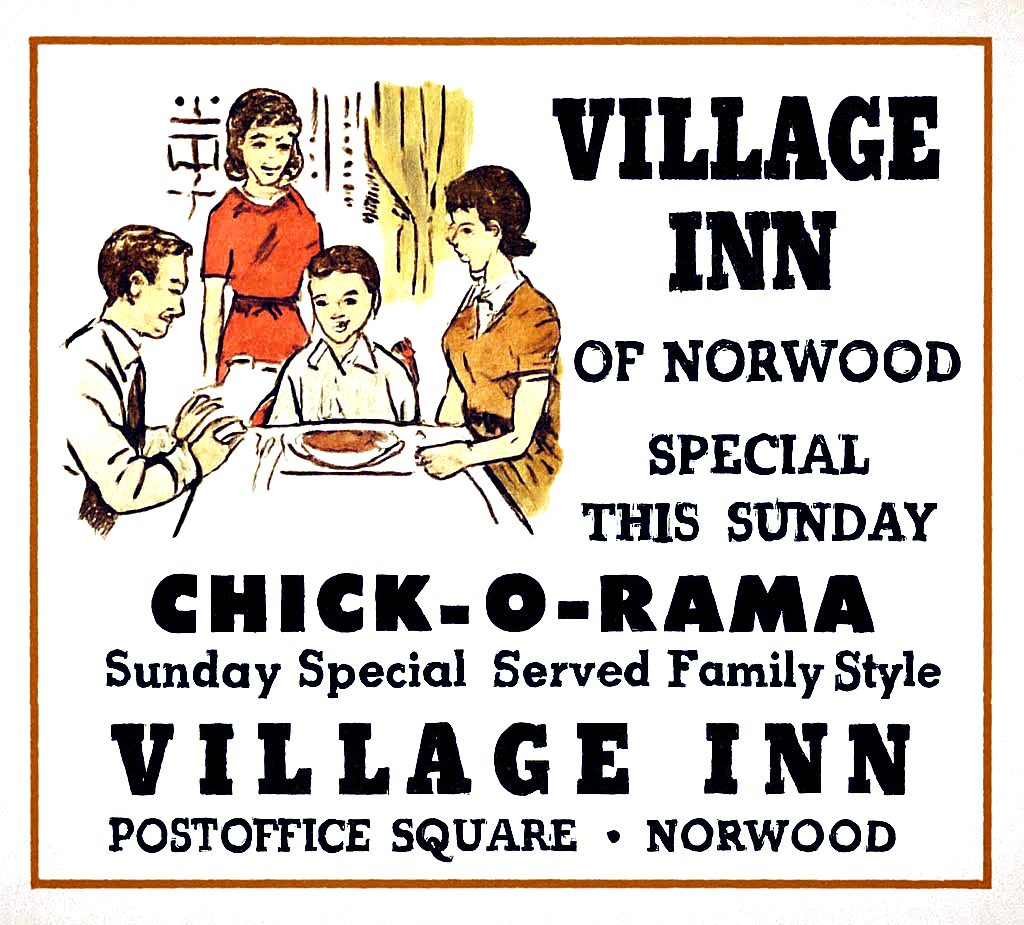
LaRosa Brothers Step Down from The Village Inn after 15 Years-June 7, 1978
A beloved Guild Square culinary staple prepares for a structural transition as its founding brothers head toward retirement after a 15-year run.
-
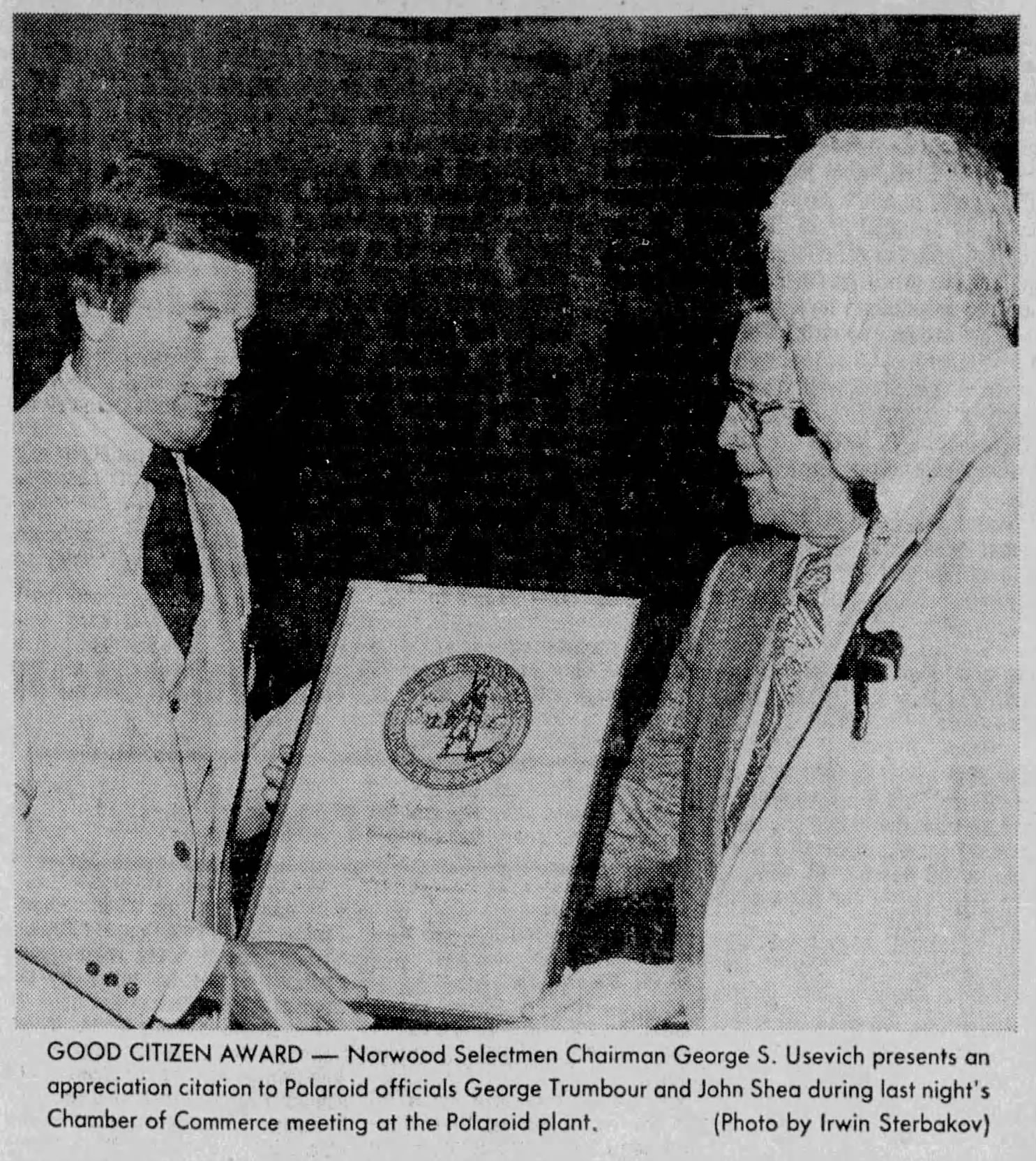
Polaroid Studies Route 1A Access Road to Resolve Expansion and Traffic Concerns-November 2, 1977
Responding to resident protests over Nahatan Street traffic, Polaroid is studying a Route 1A access artery to clear the way for plant expansions that could grow employment to 5,000.
Discover more from Norwood Historical Society
Subscribe to get the latest posts sent to your email.