Overcoming Adversity to Build a Career at Polaroid-October 19, 1970
For 22-year-old Edward Plausky of 26 Pleasant Court, catching the bus or driving to work involves far more than an ordinary morning commute. Plausky, who lives with his parents, Mr. and Mrs. Norman Plausky, has cerebral palsy—a condition that affects his gait and coordination—along with a severe hearing loss that impairs his ability to communicate.
Despite these formidable hurdles, Plausky is a dedicated employee at the Polaroid Corporation in Cambridge, where he earns over $100 a week working as a product handler. His journey to employment required extraordinary perseverance. According to his rehabilitation counselor, Richard Norcroft of the Massachusetts Rehabilitation Commission, Plausky graduated from the Boston School for the Deaf in 1968 with “no work experience or further training.” For seven months following graduation, he attended specialized training classes in machine operation in Boston and received local speech therapy.
His job hunt, which culminated in being hired by Polaroid in August 1969, spanned over a year. “By the end of this period he had demonstrated the interest, ability and work habits to be ready for outside employment,” his official evaluation records noted.
Plausky’s daily routine is a family-supported endeavor: his father drives him to and from work daily, including Saturdays. While the commute totals nearly three hours round-trip, future plans include potentially transferring Plausky to Polaroid’s Norwood operation to eliminate the grueling travel time. Despite the physical toll—his mother noted that the daily grind tires him to the point that he falls asleep immediately after supper—Plausky remains deeply dedicated. “He enjoys working even on the Saturday,” his mother shared. “He likes the people he’s working with.”
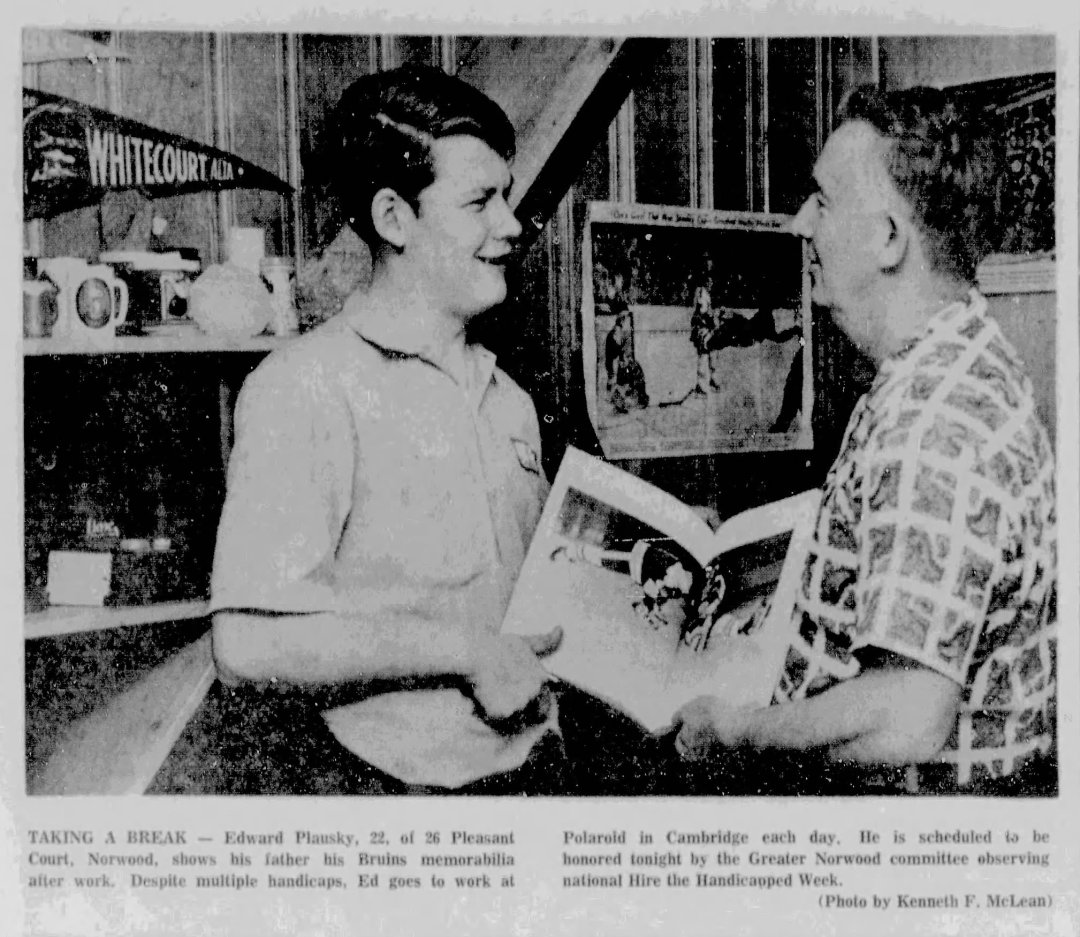
In recognition of his triumph over adversity, Plausky was scheduled to be honored tonight alongside the Raytheon Company at an awards dinner hosted by the Greater Norwood Committee observing national Hire the Handicapped Week at Mary Hartigan’s Restaurant in Dedham. A photograph by Kenneth F. McLean captured Plausky showing his Boston Bruins memorabilia to his father after returning home from work.
Raytheon’s Inclusive Initiatives and Progressive Policies-October 19, 1970
Sharing the spotlight during Hire the Handicapped Week, the Norwood Division of Raytheon Company was praised by Edward M. Ghiz, office manager at the local Division of Employment Security, for its proactive employment and rehabilitation initiatives.
Raytheon was specifically recognized for its successful summer hiring program, which brought in five students aged 18 to 21 from the Massachusetts Hospital School for Crippled Children in Canton. Employed as electronic assemblers in the mechanical and printed circuit board assembly area from June through August, the youths integrated smoothly into the assembly lines.
“They performed up to standard, fitting into the assembly line with a minimum of effort on the part of the company,” an official report stated. Frank Taylor, a spokesman for Raytheon, noted that the initiative was so successful that next summer’s program was already planned, though he expressed a hopeful caveat: “We’d like to see the ones who are graduating in June go on to college and not return to the assembly line permanently.”
Beyond hiring young people with disabilities, Raytheon drew praise for its progressive employee welfare policies—notably its pioneering corporate approach to treating alcoholism. Under company policy, alcoholism is treated strictly as an illness rather than a disciplinary infraction. Employees suspected of struggling with problem drinking are referred directly to Dr. Norman A. Bruce, Raytheon’s medical director and a pioneer in alcoholism treatment. Dr. Bruce and his dedicated medical staff work confidentially with the employee and their family to provide medical care, rehabilitation, and support, aiming to retain workers rather than resorting to dismissal.
Archival Note: This article has been dynamically reconstructed from the original public record print archives of the Patriot Ledger
-
Norwood Cat “Ginger” Saved After Car Accident-August 30, 1997
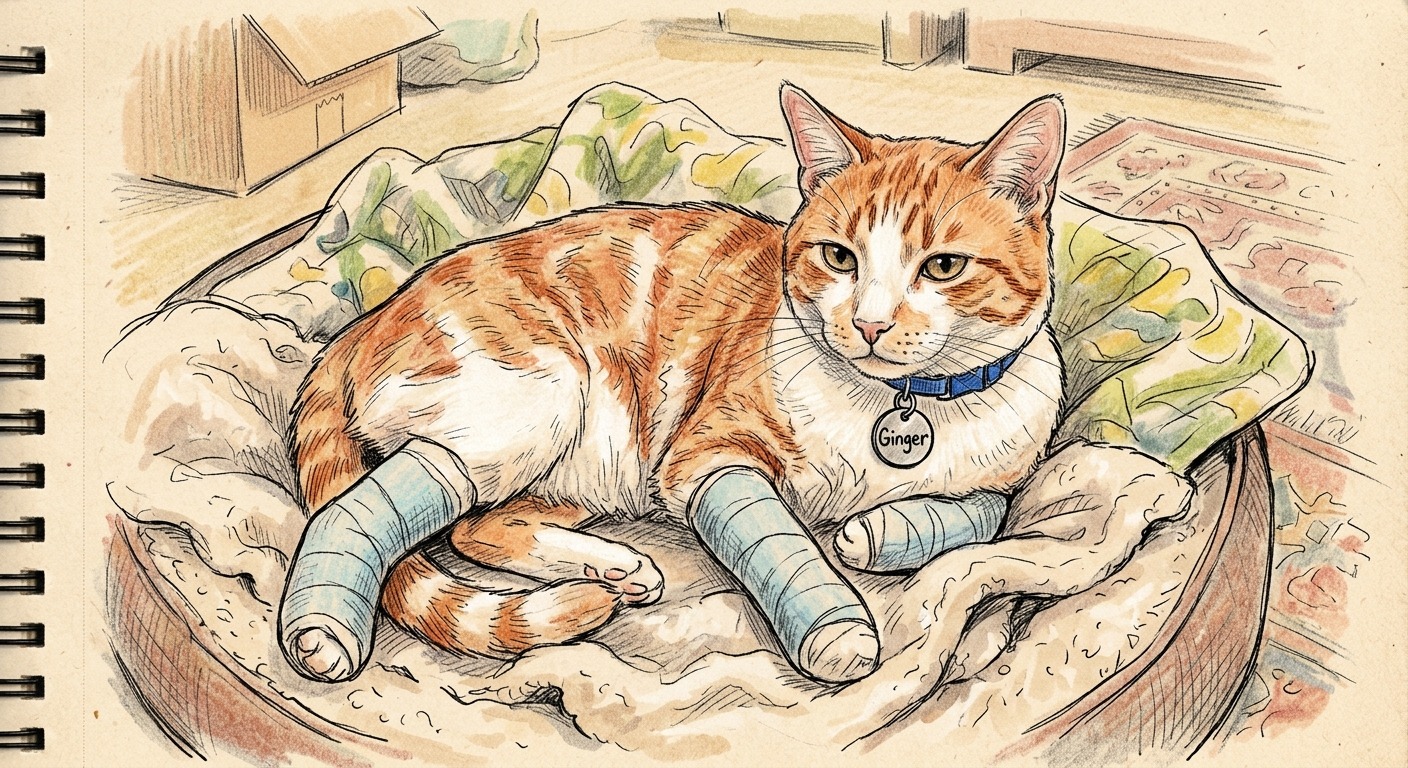
An elderly Norwood woman’s cat, Ginger, survives a car accident and costly leg surgery thanks to a mix-up by two neighbors, the Neponset Valley Humane Society, and community kindness.
-
Michael and Margaret Malacaria: Finding Rewards in Retirement Through Dedicated Community Service-September 24, 1996
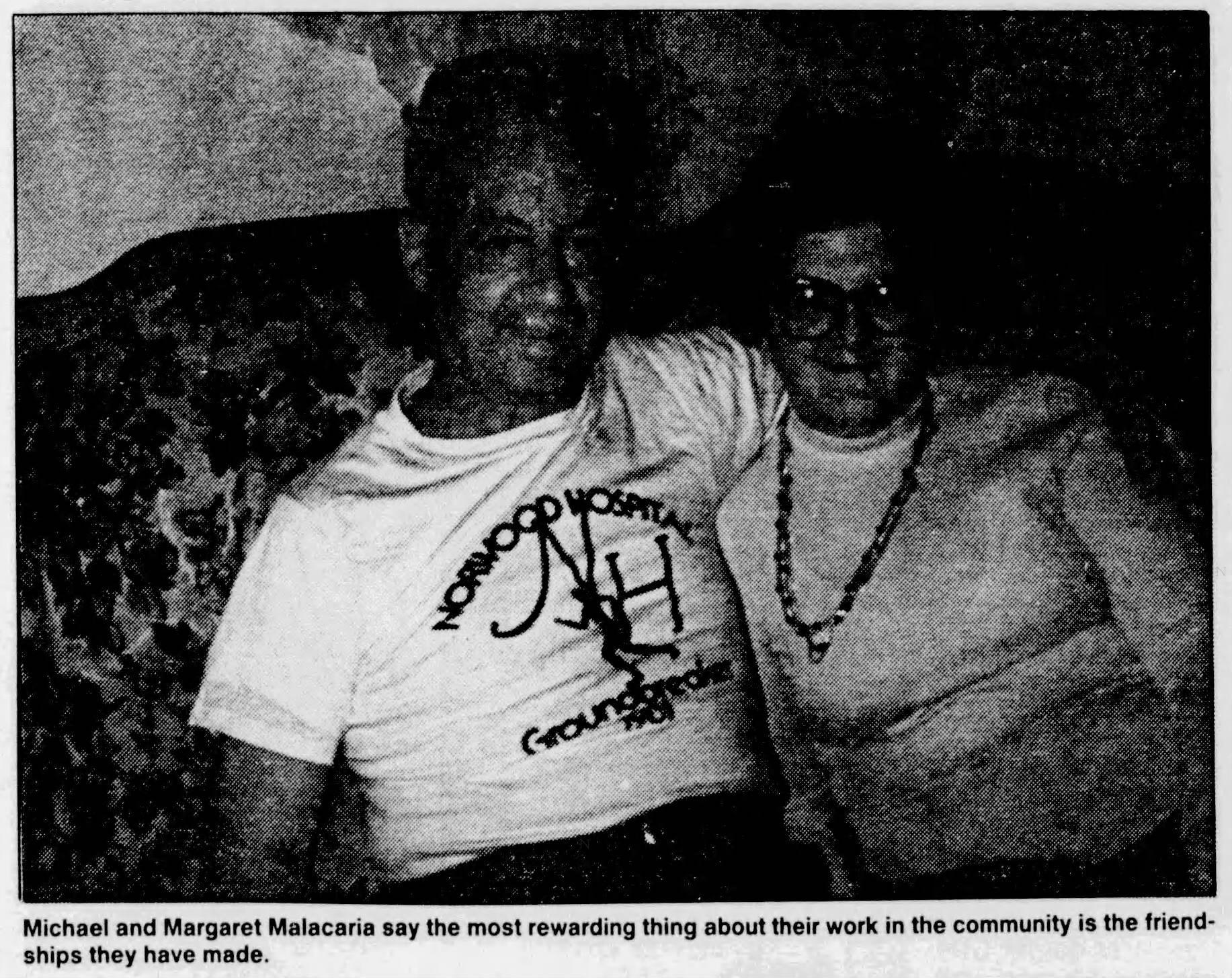
Retired Norwood residents Michael and Margaret Malacaria dedicate their post-work years to tireless community volunteering, earning recognition as RSVP Volunteers of the Year.
-
Norwood Woman Continues to Care with Program’s Help-July 19, 1993
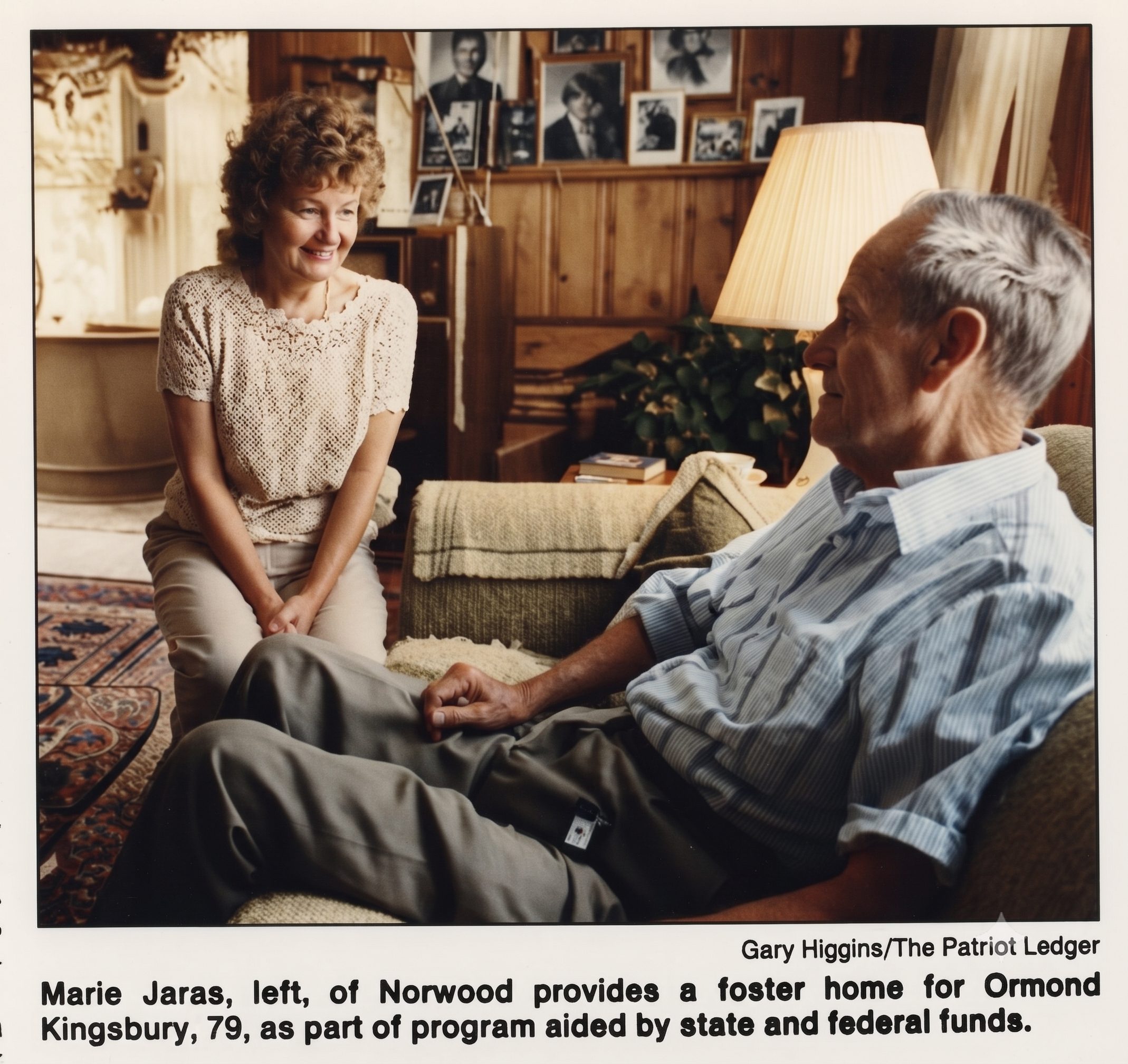
/In the quaint town of Norwood, Massachusetts, a remarkable story of compassion and dedication has unfolded over the past twelve years. Marie Jaras, a widow in her mid-sixties, has been providing a foster home for Ormond Kingsbury, an elderly man who had been her boss at the Plympton Press. The arrangement began informally, with Kingsbury…
-
Breaking the Silence on Brittle Bone Disorder-This Day in Norwood History-June 28, 1991
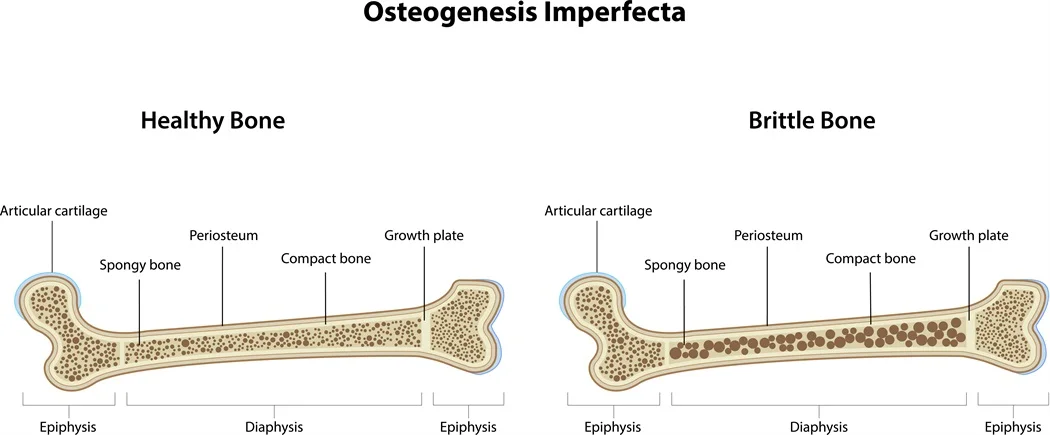
A Norwood family’s national custody battle over a rare bone disorder inspires a new library support group to protect innocent parents.
-
General Hospital Stars Ian Buchanan and Finola Hughes Draw Big Crowd at Norwood Junior High-October 19, 1987
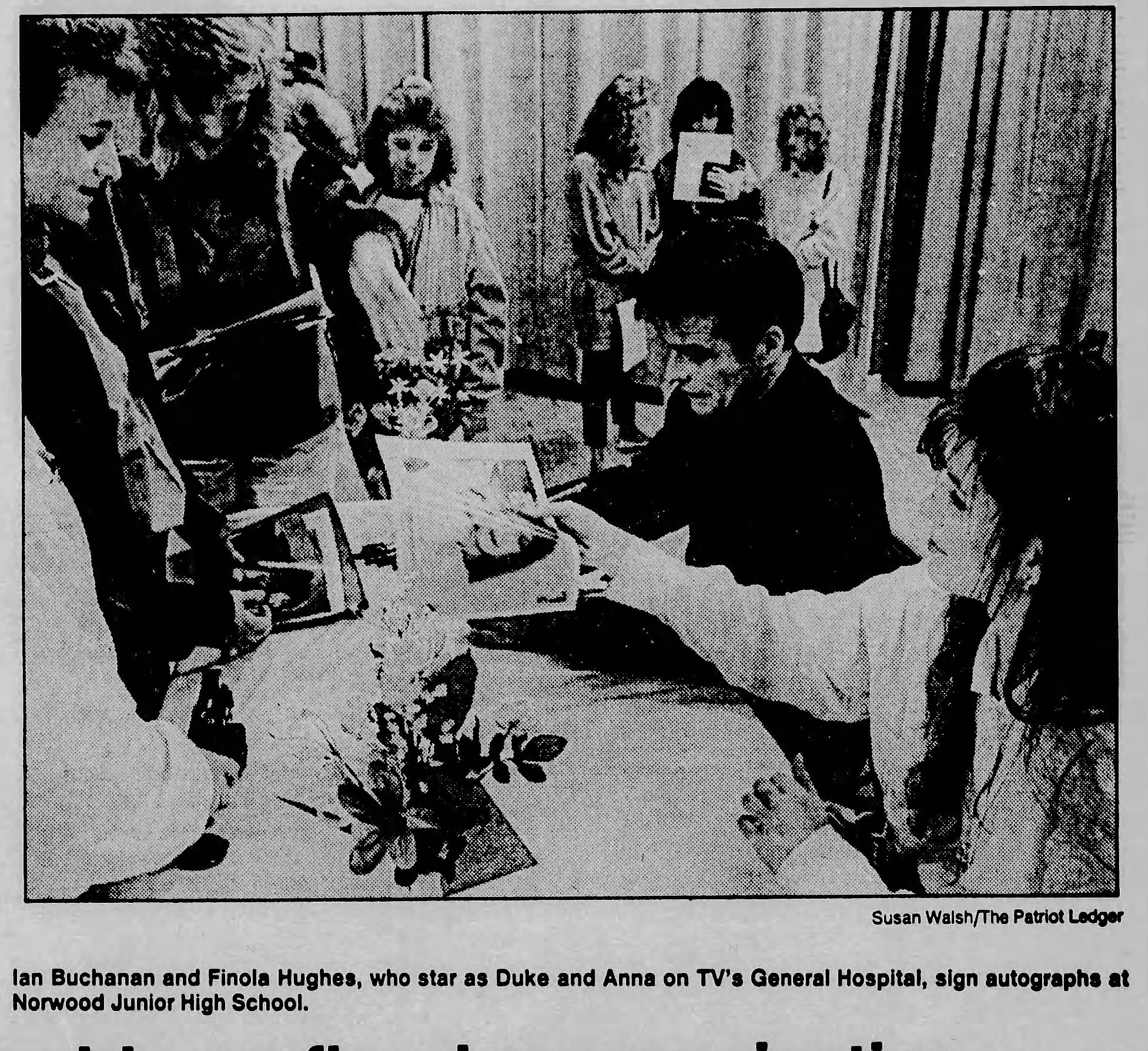
Soap Opera Stars Draw 200 Fans to Norwood Junior High-October 19, 1987 Nearly 200 devoted fans packed the auditorium at Norwood Junior High School yesterday, shelling out $12 in advance or $15 at the door for a chance to meet television stars Ian Buchanan and Finola Hughes, best known for playing the beloved characters Duke…
-
Former Norwood Resident Robert Iantosca Named Winemaker at Sonoma County’s Gloria Ferrer Winery-August 19, 1987
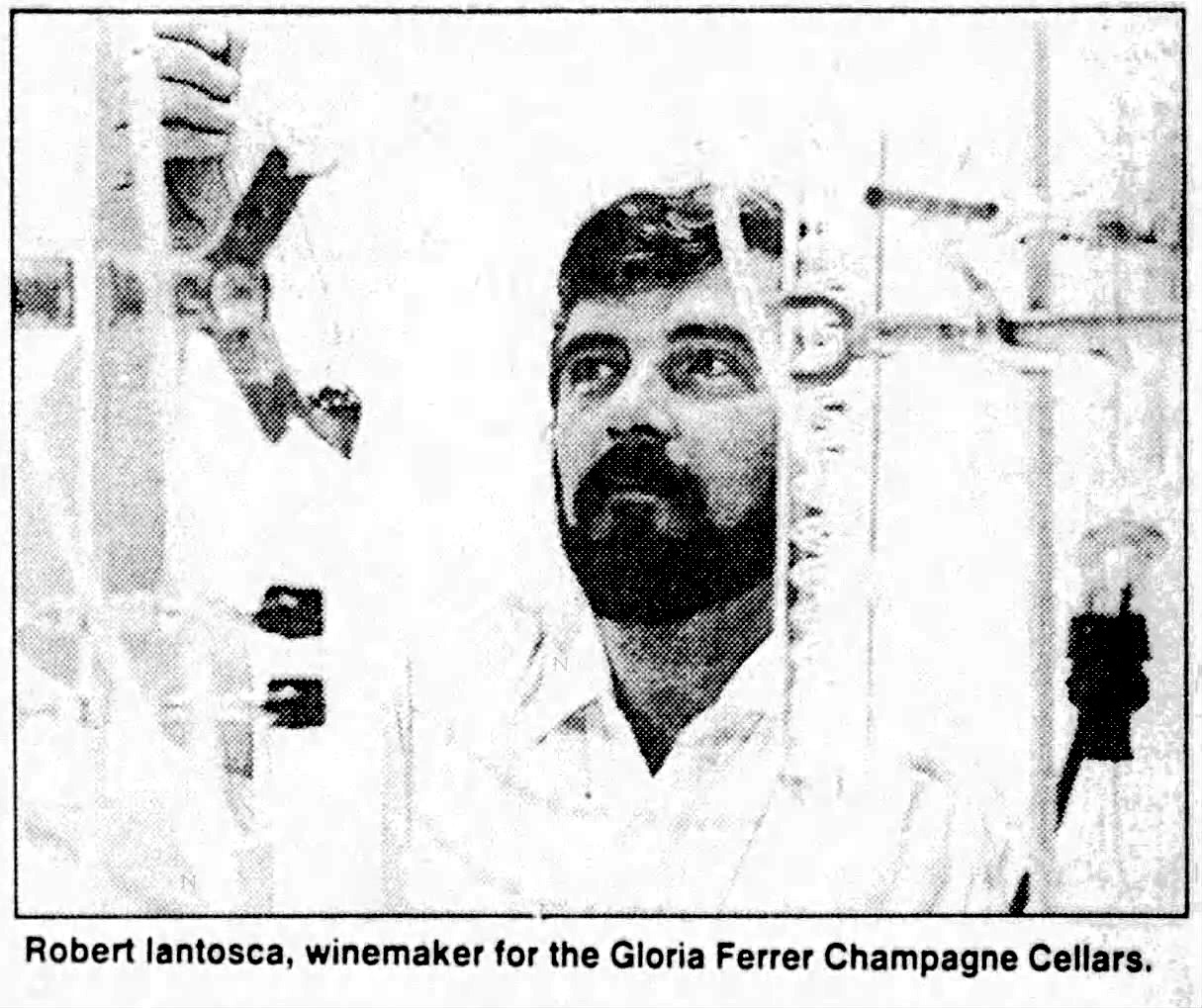
Robert Iantosca, formerly of Norwood, has been named winemaker at Sonoma County’s renowned Gloria Ferrer Winery, bringing hands-on expertise and innovative sparkling wine techniques.
-
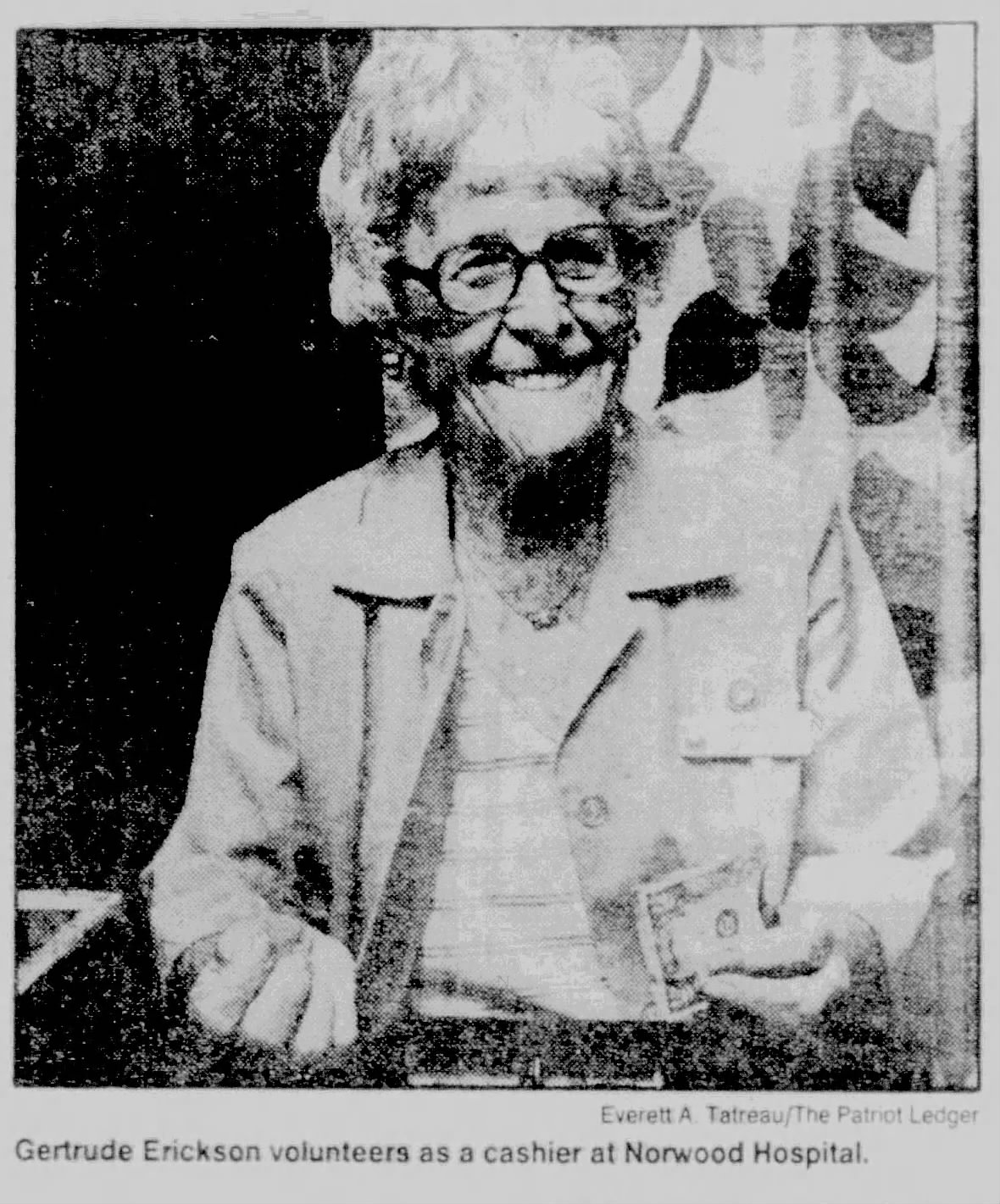
Eighty-Year-Old Volunteer Gertrude “Gertie” Erickson Celebrated as a Beloved Institution at Norwood Hospital-August 22, 1985
Known as the whistling cashier, 80-year-old Gertrude Erickson is celebrated for her 13 years of dedicated volunteer service at Norwood Hospital’s coffee shop.
-
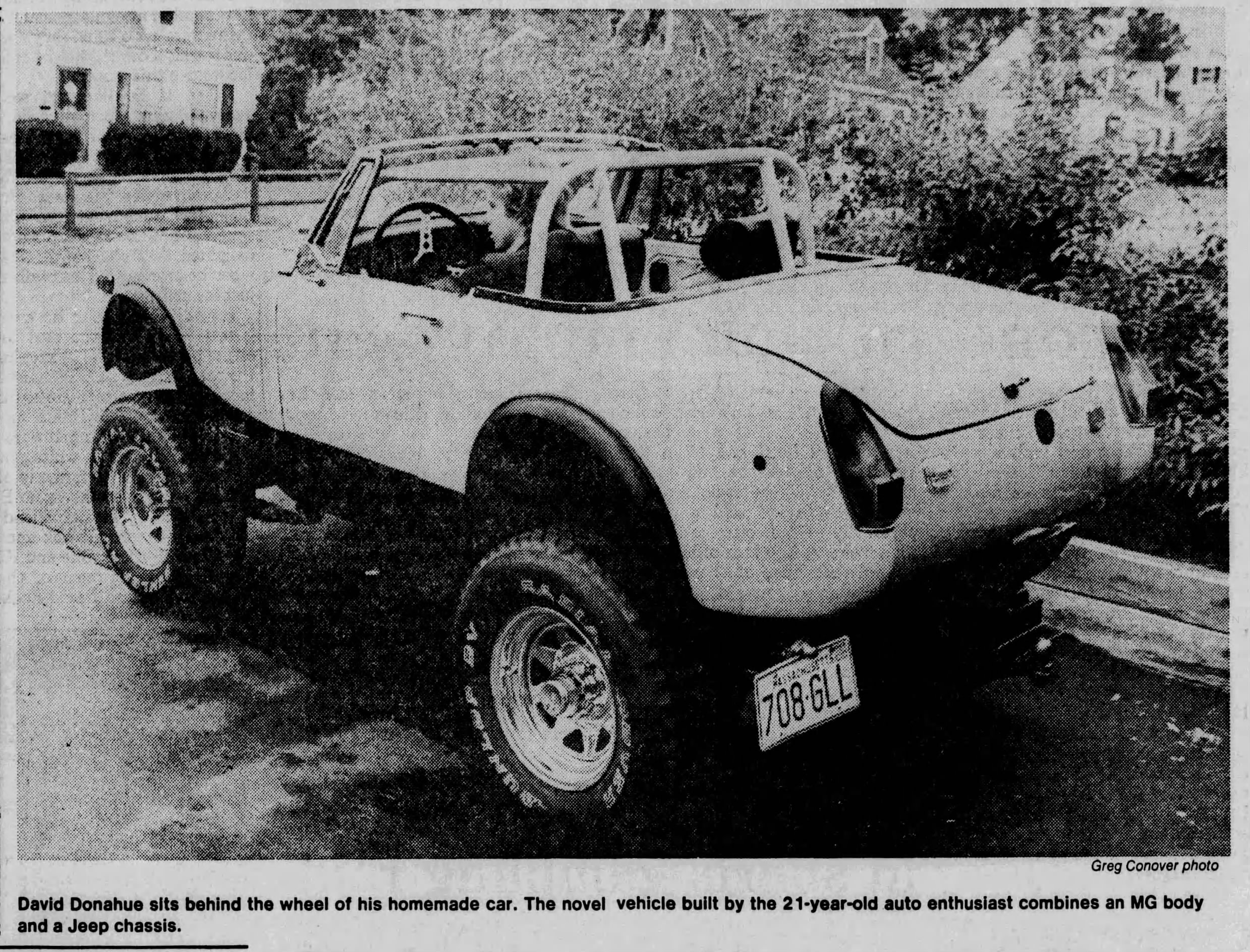
Young Norwood Mechanic Builds Custom MG-Jeep Hybrid-October 18, 1982
The Birth of a Bright Yellow Hybrid-October 18, 1982 Motorists traveling around Norwood have likely caught sight of an unusual, eye-catching vehicle cruising local streets. From a distance, the bright yellow automobile resembles a chubby old-time roadster, though it rides much higher on its wheels. A closer inspection, however, reveals a mechanical chimera: a custom…
-
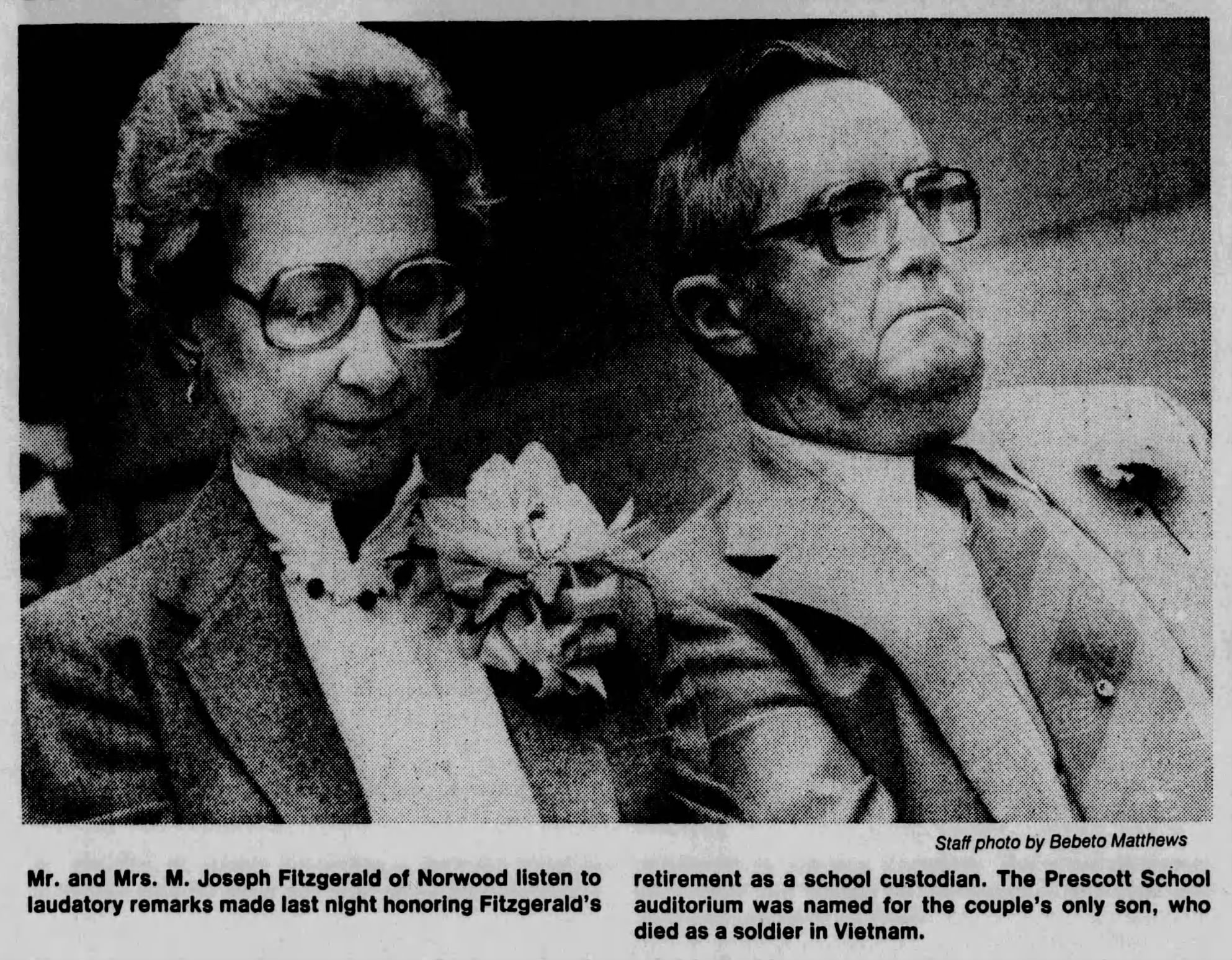
Norwood Honors Retiring Senior Custodian M. Joseph Fitzgerald and Dedicates Prescott School Auditorium in Memory of His Late Son-October 14, 1982
Retiring after 32 years as a school custodian, M. Joseph Fitzgerald is celebrated by Norwood parents and teachers with a plaque and the touching dedication of the Prescott School auditorium to his late son.
-
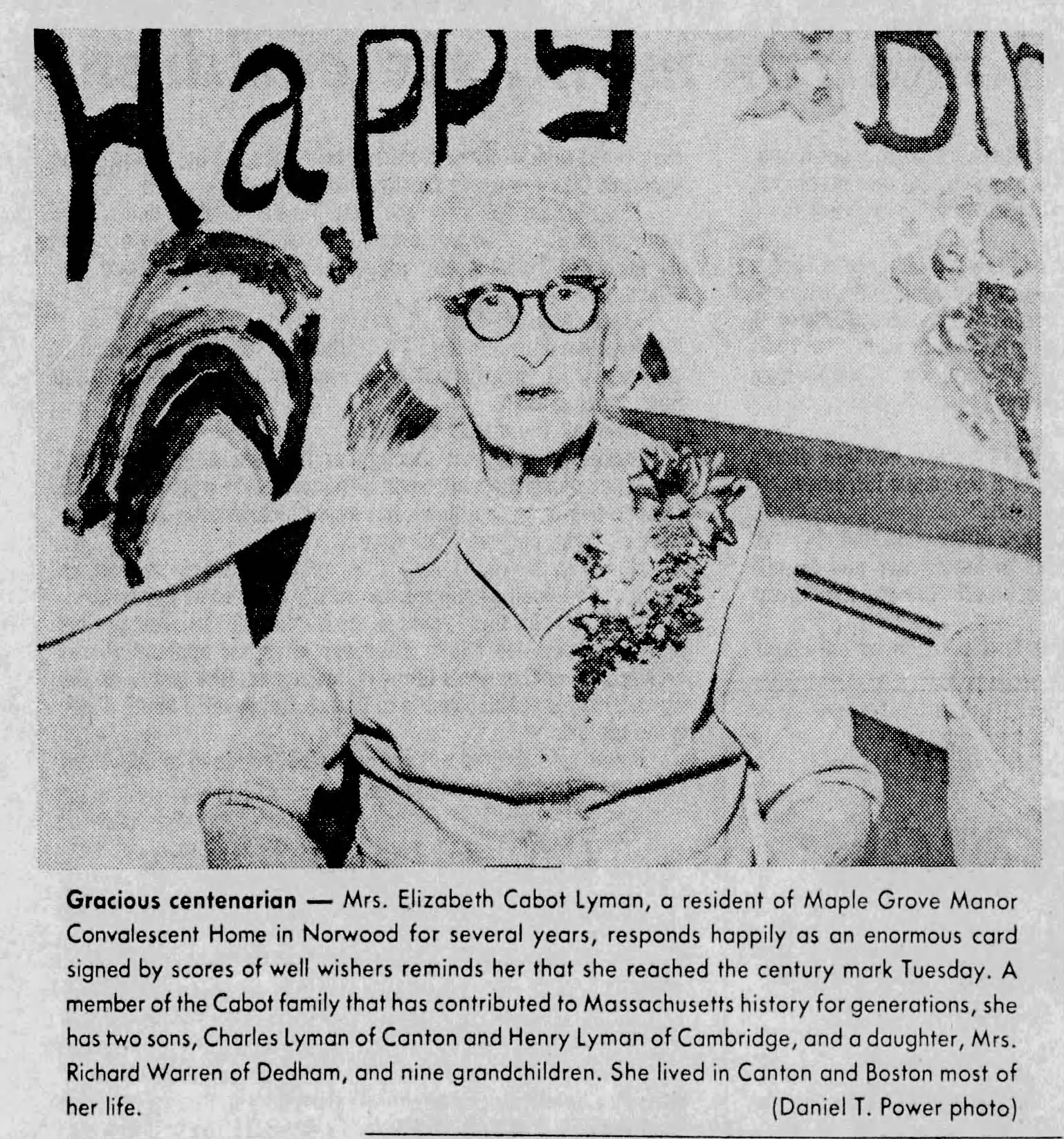
Norwood Centenarian Mary Ferioli Celebrates 100th Birthday at The Ellis Nursing Center-October 8, 1982
Mary Ferioli celebrates her 100th birthday surrounded by family at The Ellis Nursing Center, reflecting on a century marked by immigration, hard work at Norwood Hospital, and deep community ties.
Discover more from Norwood Historical Society
Subscribe to get the latest posts sent to your email.