
Strict Military Chain of Command Boosts Morale and Productivity
Marking his first full year at the helm, Norwood Police Chief George J. DiBlasi has successfully transformed the town’s law enforcement agency. Taking over a department previously plagued by low morale, poor discipline, loose procedures, and inadequate equipment following the retirement of Chief Joseph F. Curran, the 41-year-old chief instituted rigorous organizational reforms.
A former Air Force military police officer and veteran of the Framingham and Westwood police departments, DiBlasi brought a structured, quasi-military philosophy to Town Hall.
“Police are a quasi-military organization,” DiBlasi stated in a recent interview. “There are no two ways about it. There has to be order—rules, regulations and guidelines.” Working grueling 50- to 60-hour weeks to implement these changes, DiBlasi added: “I like the job. It’s never dull. There are changes every minute, not every day—every minute.”
Norwood Police Department First-Year Statistics & Reforms
Productivity & Attendance Metrics (First 8 Months)
- Total Arrests: Up 41% compared to the previous year
- Public Drinking Arrests: Surged by 657%
- Motor Vehicle Citations: Increased by 65%
- Parking Tickets Issued: Rose by 126%
- Sick Leave: Dropped significantly by 39%
- Injured Leave: Decreased by 6%
Key Internal & Operational Reforms
- Daily Roll Call: Instituted daily briefings to keep officers fully informed.
- Specialized Impact Unit: Deployed a dedicated van unit to crack down on underage drinking and liquor violations.
- Enhanced Training: Upgraded instruction in firearms, first aid, psychology, and stress management.
- Administrative Support: Appointed an information officer to improve public and press relations, and added a fourth lieutenant.
- Optimized Patrols: Shortened emergency response times via redesigned patrol patterns.
High Morale Drives Dramatic Enforcement Gains
The structural changes have yielded immediate, measurable results across town. According to department data covering the first eight months of the year, enforcement activity has spiked dramatically while indicators of professional burnout have plummeted.
Reflecting on the turnaround, DiBlasi noted: “It’s simple. High morale means high productivity. Poor morale means low productivity… When somebody’s wrong, I let them know right up front. Men want to know where they stand.”
Among the most visible operational changes is the creation of a specialized “impact unit” designed to crack down on public drinking and alcohol violations among juveniles. Equipped with a dedicated transport van capable of hauling a half-dozen offenders at once, the unit frees up standard cruisers for routine patrols.
“We got the kids drinking all summer,” DiBlasi remarked. “We’ve gone after the drunk driver. Now we’re going after the guy who’s buying for the kids.”
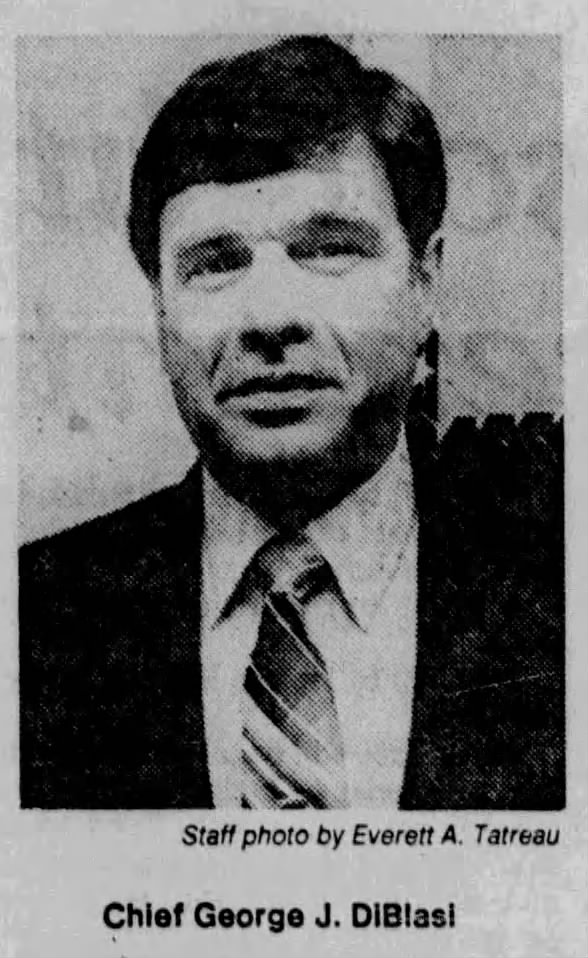
Looking toward the future—with an expressive portrait captured by staff photographer Everett A. Tatreau documenting his command—Chief DiBlasi outlines a straightforward, ambitious objective: “I want to be a good police chief and have the best department in the commonwealth.”
Archival Note: This article has been dynamically reconstructed from the original public record print archives of the Patriot Ledger
More Norwood Police Stories
-
Murphys of Norwood Have Done Their Share In the Interest of Law and Order-October 5, 1912
Murphys of Norwood Have Done Their Share In the Interest of Law and Order-This Day in Norwood History-October 5, 1912

Discover more from Norwood Historical Society
Subscribe to get the latest posts sent to your email.