
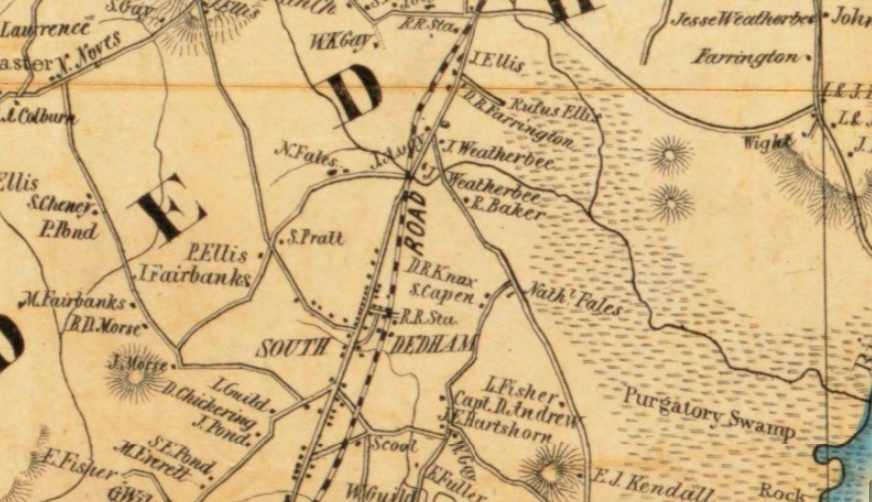
From the end of the Civil War to the Stock Market crash of 1929, what was happening in Norwood reflects what was happening in the United States, with the US leading they way with policy and reform, and Norwood adopting changes sometime after the US. During the Reconstruction Era, Norwood (or South Dedham) was struggling with Dedham proper, feeling they did not have the best interests of their village at heart. Once they became a town, they began to look at how to grow their tax base of industries and citizens, starting their own little Gilded Age, which leads to many Progressive Era reforms.
| United States | Year | Norwood, Massachusetts |
| Civil War ends; Reconstruction begins, with the U.S. looking for ways to unify a divided country. | 1865 | The future Town of Norwood was then known as the village of South Dedham in the Town of Dedham, Massachusetts. |
| Gilded Age begins, bringing a second era of industrialization characterized by rapid growth in new communications and transportation technologies and business and government corruption. | 1868 | |
| 1872 | After years of struggling for local autonomy and town resources, the village of South Dedham breaks from the Town of Dedham and establishes the Town of Norwood. | |
| Panic of 1873, a financial crisis leading to an economic depression. | 1873 | The New York & New England Railroad open their car shops in Norwood. |
| 1876 | The New York & New England Railroad open their car shops in Norwood. | |
| Reconstruction Era ends | 1877 |
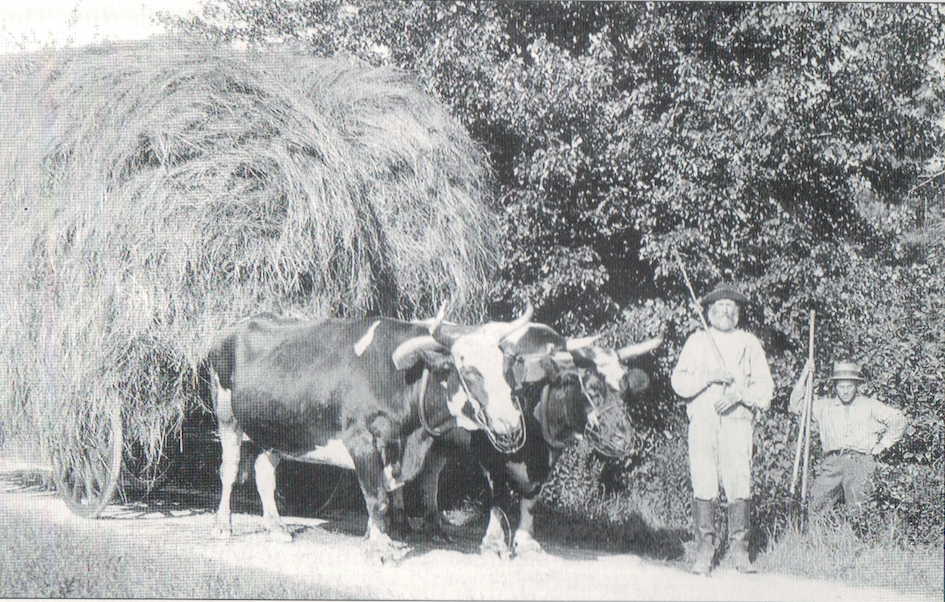
| Gilded Age ends; Progressive Era begins, characterized by tremendous amount of economic, social and political change. | 1890 | Norwood’s populations reaches 3,733 |
| Sherman Antitrust Act, a federal act prohibiting companies from forming monopolies, is passed. | 1891 | Norwood forms a committee to discuss growth opportunities for the town. |
| 1893 | Growth committee evolves into the larger Norwood Business Association, which makes the deal to create the Norwood Press; the Security Manufacturing Co., opens. | |
| 1894 | Norwood Press opens. | |
| 1895 | The Security Manufacturing Co., changes name to Holliston Mills. | |
| 1897 | E. Fleming & Co., bookbinders joins the Norwood Press; Plimpton Press opens in Norwood. | |
| 1900 | Norwood Women’s Club is established and begins many helpful programs to the citizens of Norwood. | |
| President McKinley is killed and Theodore Roosevelt becomes one of America’s most progressive Presidents. | 1901 |
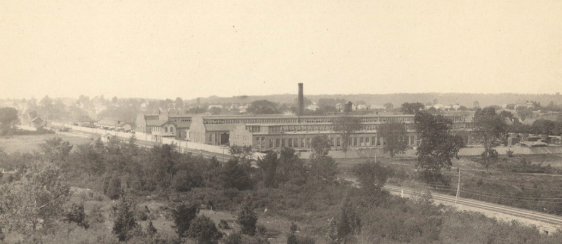
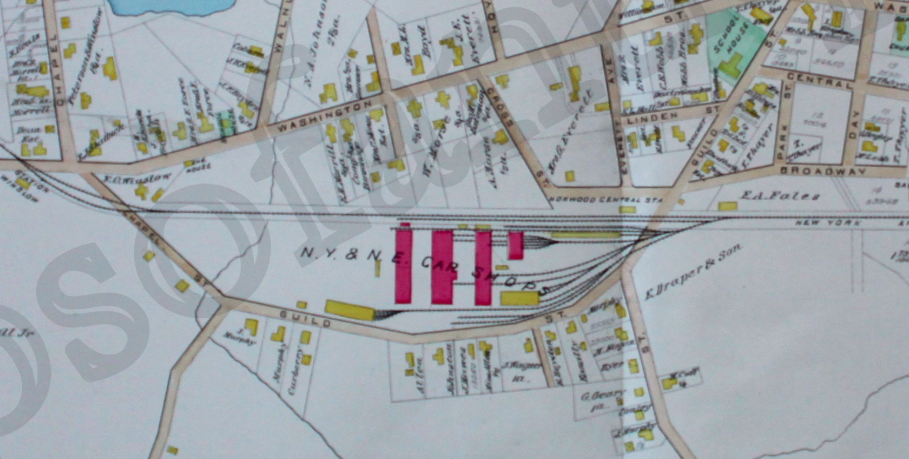
| 1903 | Railroad “car shops” leave Norwood | |
| 1906 | Visiting Nurse program begins; Norwood Civic Association opens; and Printers in Norwood strike for shorter work days. | |
| City-Manager form of government is introduced. Sumter, NC first city to successfully use this system. | 1908 | Eight-hour workday established in the presses. |
| 1910 | The First Church of Norwood establishes Mrs.May Millett as “Friendly Visitor” Norwood’s population is 8,014. | |
| Frederick W. Taylor publishes his book 1911 Principles of Scientific Management. His style of management is known as “Taylorism.” | 1911 |
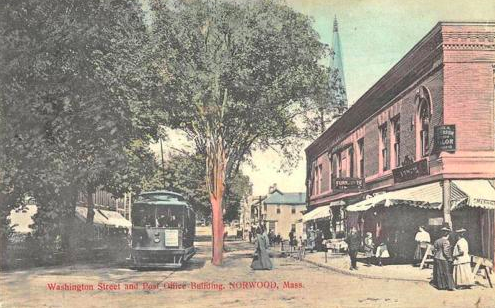
| 1915 | Norwood writes new charter establishing a city-manager style of government. George Willett is first town manager. | |
| American officially enters WWI | 1917 | Over 200 multi-family homes have been built in the Flats; Jane C. Williams publishes an article, and begins to speak on the benefits of “Taylorism.” |
| Global Influenza (The Spanish Flu) Outbreak. | 1918 | Local influenza outbreaks led to illness and death in Norwood, causing organizations to rally together to respond to the crisis. |
| The Progressive Era ends. The 19th Amendment is established, giving women the right to vote. | 1920 | Norwood’s printing industries enter into their most successful decade. Norwood’s population is 12,627; Henry P. Kendall serves as president for the Taylor Society. “Taylorism” |
| 1925 | Women’s Community Committee starts a service to help needy. | |
| Stock market crash. (a financial crisis that began the Great Depression) | 1929 | This starts a slow decline in business for Norwood’s printing industries, which continues to decline through WWII and into the 1950s. |
Back to Exhibit Home Page –>

Top Posts From August 2025 (Part II)
Welcome back to Part 2 of our countdown of the top 50 “This Day in Norwood History” articles from August — the stories that captured imaginations, sparked conversations, and reminded … Continue reading Top Posts From August 2025 (Part II)

Top Posts From August 2025 (Part I)
Every morning, Norwood wakes up to a moment from its past — a civic milestone, a family triumph, a storefront opening, or a quiet turning point that shaped the town’s … Continue reading Top Posts From August 2025 (Part I)

On This Day In Norwood History- August 31
🏥 In 1926, Norwood proudly invited the public to inspect its new hospital, a symbol of civic advancement.🚒 In 1945, an 85-foot aerial ladder truck boosted the town’s firefighting capabilities.🇺🇸 … Continue reading On This Day In Norwood History- August…

On This Day In Norwood History- August 30
🗞️ Norwood Highlights Through the Years Lifeguards wrap up summer at Hawes Pool; Ortins cops local softball title. A Norwood man trains with Harbor Defense. Over 500 attend hospital dedication. … Continue reading On This Day In Norwood History- August…

On This Day In Norwood History- August 29
🕰️ Norwood highlights from 1896 to 1957: In 1957, Ann O’Neil and Catherine O’Toole graduated from Laboure Nursing School, while the Henry O. Peabody School promoted vocational training for girls. … Continue reading On This Day In Norwood History- August…