

This mother-daughter duo runs a joyful, disability-friendly short-term rental
Travel presented challenges for those with disabilities, especially when searching for accommodations that met their needs.
Mother and daughter Dara and Paige Adams opened their Norwood-based rental, the house of id, in 2023. Paige had been diagnosed with circulatory and connective tissue disorders that affected her mobility. While attending the University of Massachusetts, her parents moved from Virginia to assist her.
“My mom took off work and became my full-time caregiver, so it really became a joint effort of creating joy and also practical ways to feel good physically and mentally,” said Paige.
“My husband and I actually met at Clark, back in 1987 or ‘88. We decided to move up this way because I had been making the commute eight hours every time Paige wasn’t able to be independent,” added Dara.
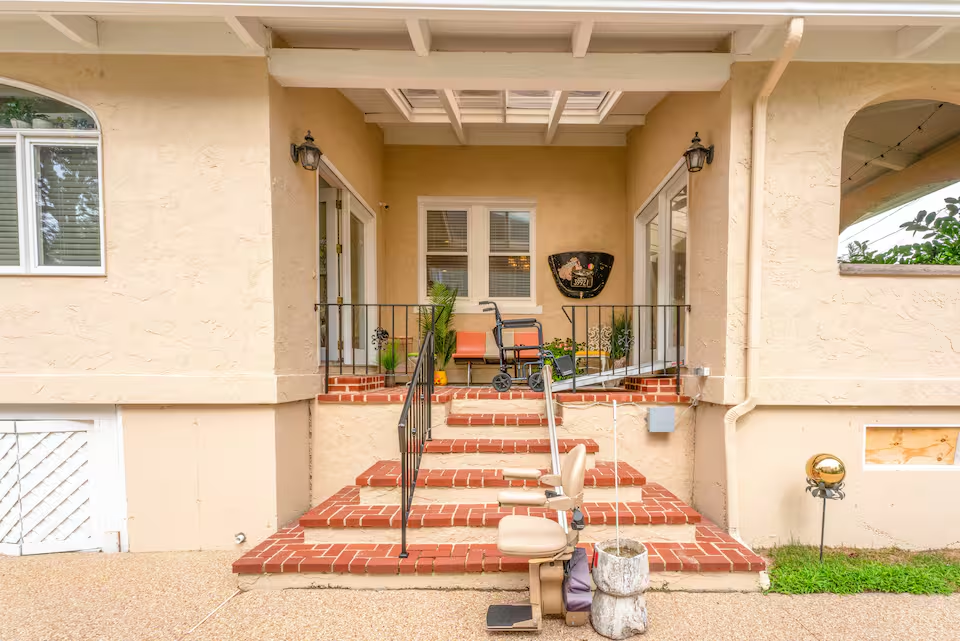
They found a 1911 Spanish stucco bungalow among Cape Cod-style homes and began a yearlong renovation. Paige lived there during the process.

“We found the house… or the house found us. We didn’t look at any other place,” said Dara. “It was right at the epicenter of a lot of the places that were disability-friendly in terms of accessibility to find things.”
This included proximity to the commuter rail and Beth Israel Deaconess Hospital.
The home was designed with accessibility in mind, including ramps, a chair lift, a shower chair, remote lights, and grab bars. Though not ADA-accessible, it was thoughtfully prepared for travelers with varying needs. The house earned designation from Becoming RentABLE, an organization that certifies accessible rental homes.
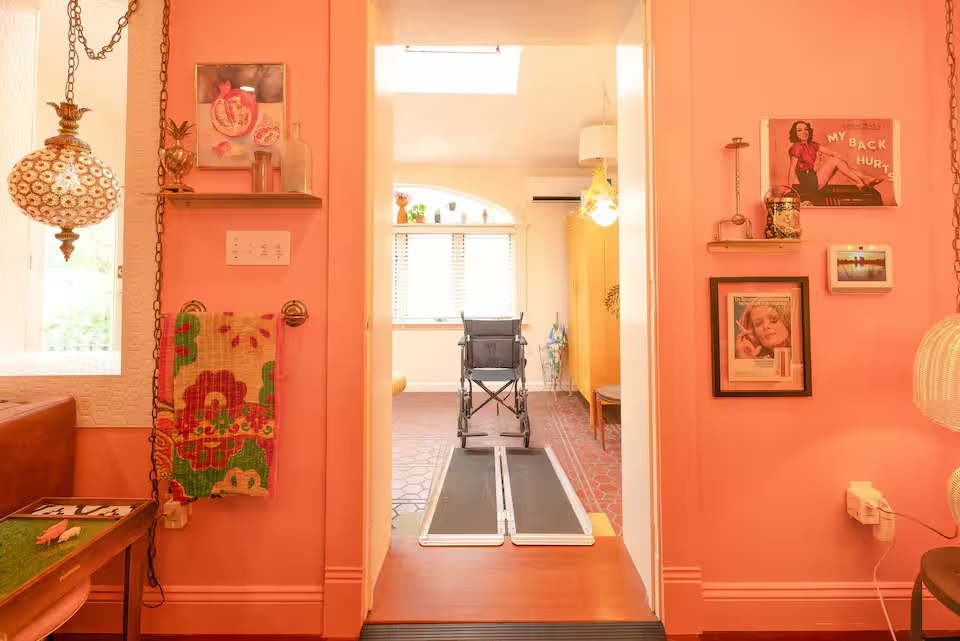
The name “house of id” reflected their psychological interests and the desire to indulge impulses through decor.
“We’re both huge psychology nerds. It felt like indulging your id is not something that you get to do a lot with disabilities,” said Paige. “So we made a space for your id as opposed to your ego.”
Guests contributed to the evolution of the house.
“We’ve gotten great feedback from people. We added a microwave that you could put on the counter, so if you can’t reach down to the microwave, you can. So we’re learning from our guests, for sure,” said Dara.

Decor included vintage glassware, crocheted afghans, and lamps sourced from thrift shops and Facebook Marketplace.
“It would be my practical exercise. We would go to a vintage shop. Either I’d get pushed around, or I’d walk around. We would just accessorize our space to feel more like us,” said Paige. “That’s the idea of having joy right around you, at your fingertips.”
Dara used shopping trips to learn the area.
“I got here and didn’t know anyone, anything. We started to do what we had done before, which was learn the area via thrift shops and antique shops.”
Guests could purchase items in the home.
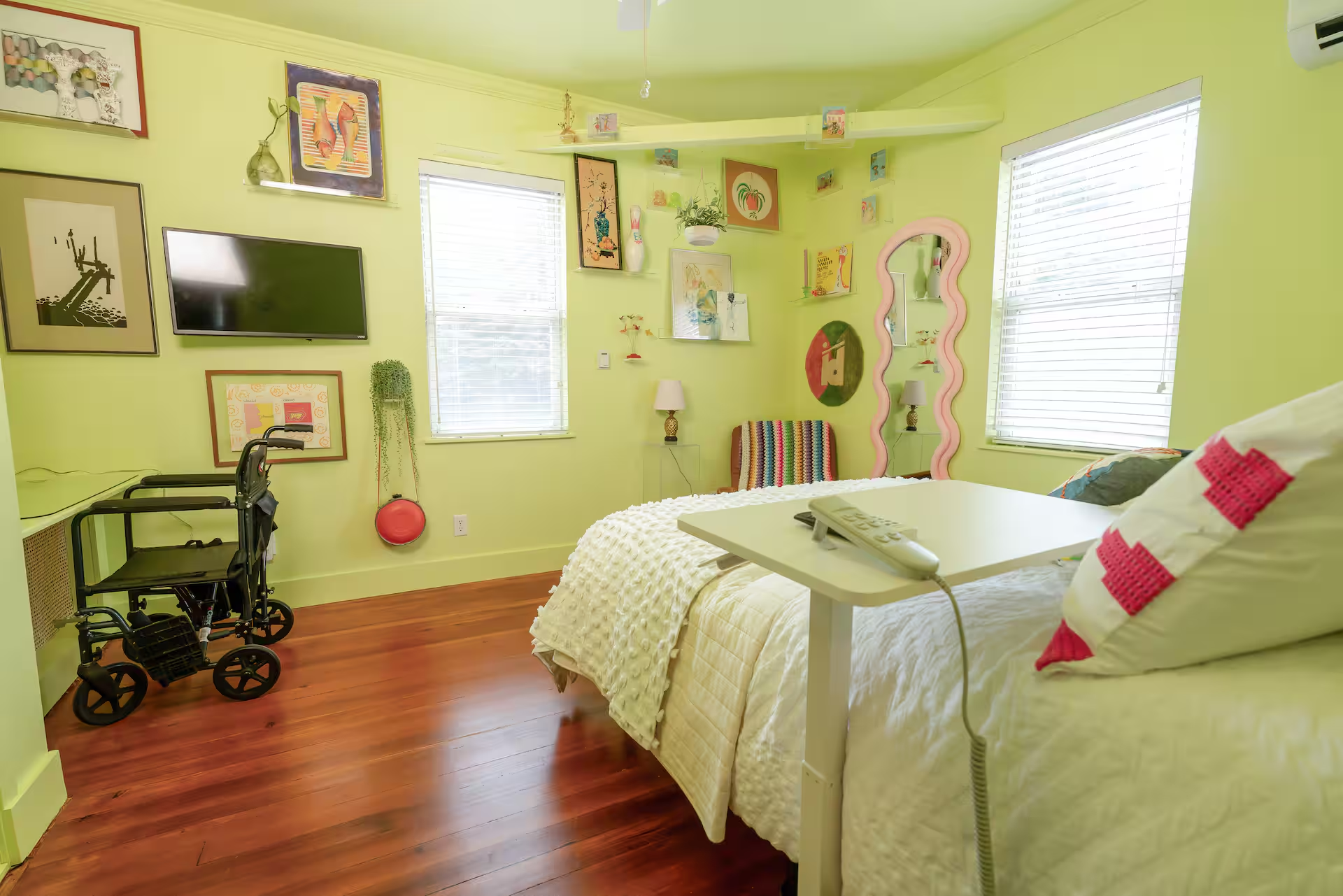
“You are here, you’re existing in the space, you get to play records, you get to experience the plants, you get to experience the decorations, you can move all the decorations, you can change the space how you want to change it,” said Paige.
“We found that a lot of the people that come to us, they are not able to go to a million places [to shop for vintage items],” said Dara.
They sold items like a vintage pink lotus floor lamp and a Curtis Jere Parisian café scene.
“The disability umbrella is just the same as it is with everything else. Our particular flavor of that is that sometimes Paige is able, and sometimes she isn’t,” said Dara. “We wanted this business to be for people across a broad range, because when you think of disability, sometimes people just think wheelchair. And that’s not what’s going on here.”
Guests visited for various reasons — some to explore Boston, others for events or emergencies.
“We had local people, who came because a tree fell on their house. One of my favorites is a sister and her mother and her daughter came because their brother is in a group home here. It was his birthday, and he wanted to do something special,” said Dara. “We have people going to Foxborough to see the Army-Navy game.”
Dara and Paige partnered with Hospitality Homes as hosts and fundraisers.
“They provide housing for people who come to Boston for medical care and can’t afford housing,” explained Dara.
Paige described the house:
“The house itself is not only colorful and vibrant, and we have these fun different types of artwork, but it’s also the inclusivity of it all. You want to show that we are a women-owned space, that we’re a half queer-owned space, that we are disability-owned, that we are accepting of really any shape, size, gender, sexuality, nationality, whatever it is.”

Source: The Boston Globe, March 30, 2025, airbnb.com, thehouseofid.com
Compiled by the Norwood Historical Society, with the assistance of Microsoft Copilot and Google Gemini.